Göbekli Tepe: Unlocking the Secrets of Our Earliest Sacred Spaces
Göbekli Tepe: A Revolutionary Window into Prehistoric Religious Practices
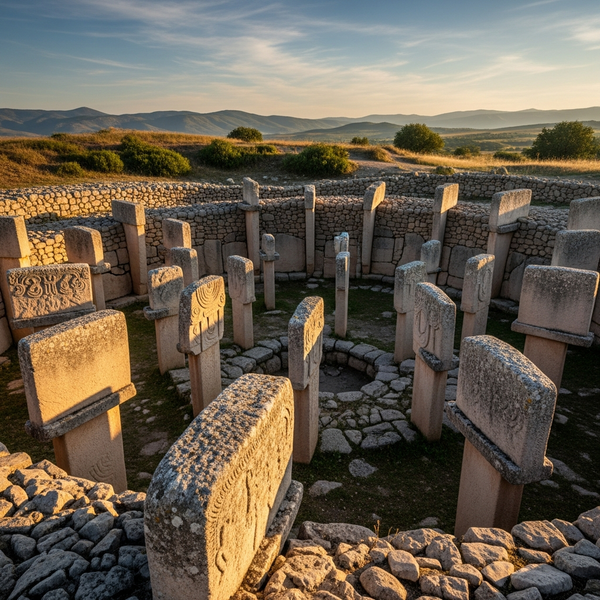
Imagine a sprawling series of circular stone enclosures, early 12,000 years ago, hidden in the rugged hills of southeastern Turkey. This is Göbekli Tepe, an archaeological site that has radically altered our perception of prehistoric humans. Unlike any other discovery from its era, Göbekli Tepe features massive limestone pillars engraved with intricate carvings of animals and abstract symbols, suggestive of complex ritualistic practices. The significance of these structures lies in their age—predating the advent of agriculture—and their sophisticated craftsmanship. Traditional theories once believed that organized religion or spiritual practice developed after settled farming communities; however, Göbekli Tepe indicates that spiritual or ritual activities may have been a catalyst for societal cohesion, even before humans transitioned to farming and permanent settlements. This site challenges us to reconsider how early humans expressed their beliefs and social organization, suggesting that religion may have played a foundational role in the development of complex societies. The discovery of such elaborate structures, built by hunter-gatherers, points to a sophisticated social fabric where communal effort was directed toward spiritual and ritualistic purposes, unraveling a history long thought to be simpler and less organized. As we analyze the carvings and placements of the pillars, we see a reflection of early human creativity—not merely functional but deeply symbolic—underscoring a capacity for abstract thinking and social bonding that predates the Neolithic revolution. For those interested, exploring in-depth research from institutions like the Archaeological Institute of Turkey can offer a clearer picture of how Göbekli Tepe stands as a cornerstone of our understanding of early human spirituality.

Deciphering the Art and Symbols Carved on the Pillars of Göbekli Tepe
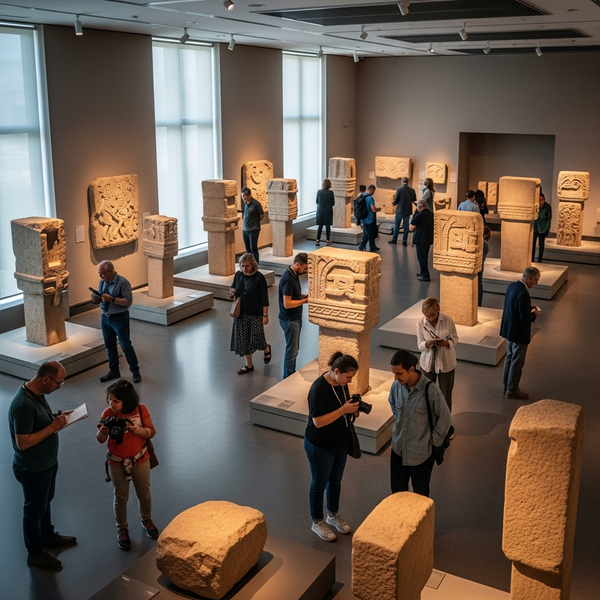
One of the most captivating aspects of Göbekli Tepe is the detailed carvings etched into its massive limestone pillars. These engravings depict a variety of animals—foxes, snakes, birds, and bulls—with some appearing in dynamic motion, suggesting a rich narrative or symbolic language central to the community’s spiritual life. The motifs are not random; they seem deliberately placed, possibly serving as protective symbols or divine representations. Researchers and archaeologists have long debated their meaning, speculating that they might represent mythological stories or totemic beliefs integrated into their rituals. The intricate nature of these carvings demonstrates a remarkable level of craftsmanship and artistry, pushing back the assumed timeline of symbolic art by thousands of years. Some scholars believe these symbols were part of early shamanic practices or animist beliefs, indicating a highly developed spiritual philosophy among hunter-gatherer groups. Unraveling their meaning provides a glimpse into the minds of our ancestors, showing their complex worldview and their desire to connect with unseen forces or deities. For enthusiasts and researchers alike, studying Göbekli Tepe’s carvings offers invaluable insights into how early humans communicated their spiritual ideas visually, shaping the development of symbolic language used across future civilizations.

The Implications of Göbekli Tepe for Understanding Human Societal Evolution
The existence of Göbekli Tepe has prompted a reevaluation of how early human societies organized themselves and what drove their cultural development. Traditionally, archaeology posited that social complexity and religious expression followed the development of agriculture, leading to permanent settlements and civilization. However, Göbekli Tepe predates agriculture by at least 2,000 years, suggesting that the desire for communal ritual spaces could have been a significant motivating factor compelling hunter-gatherers to undertake monumental construction projects. This hypothesis raises critical questions about the origins of social hierarchy, cooperation, and spirituality. It implies that the quest for meaning and the establishment of religious or spiritual communal spaces may have been catalysts for social cohesion, fostering shared identities and cooperation long before farming. Such insights have far-reaching implications, opening new discussions on the evolution of social structures, the origins of religion, and the early roots of civilization itself. As ongoing excavations continue to reveal more about the site, scholars are gradually forming a more nuanced picture—a picture that emphasizes the importance of symbolic and ritual practices as foundational pillars for societal development. For those with an interest in anthropology or history, understanding Göbekli Tepe is crucial, as it pushes the boundaries of what we know about human ingenuity and collective effort during prehistoric times.