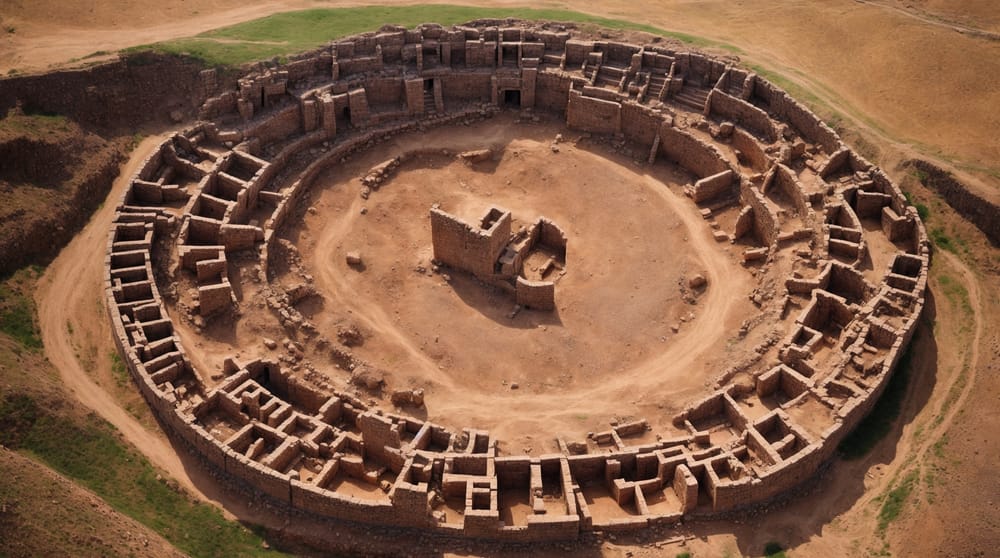
Göbeklitepe Unearthed The Rise of Monumental Structures in Prehistory
Unveiling Göbeklitepe's Monumental Beginnings
Recognized as one of the most significant archaeological sites in the world, Göbeklitepe offers unparalleled insights into the early Neolithic era. This site, located in southeastern Turkey, has turned heads with its sophisticated megalithic structures and distinct pillars carved with intricate animal motifs. Researchers believe these findings challenge traditional notions of human development during the Neolithic period, suggesting a society capable of collaborative, complex construction efforts long before the establishment of settled agricultural communities.

Architectural Mastery in Stone
The architectural sophistication of Göbeklitepe's stone circles, with centrally positioned T-shaped pillars, showcases a level of planning and engineering prowess that was previously unthinkable for such an early era. The site's organizers orchestrated the quarrying, sculpting, and construction of massive stone pillars, which implies a high level of organizational skill. Furthermore, the layout of the site suggests astronomical alignments and social rituality, indicating a deep intellectual and cultural development among its builders.

Cultural Implications of Göbeklitepe's Discoveries
Göbeklitepe has not only reshaped our understanding of Neolithic architecture but also of social and religious practices during the period. The site's carvings, which feature wild animals and abstract symbols, are thought to be part of an early ritualistic or religious system. This spiritual aspect, combined with the communal efforts required for the monument's construction, suggests that Göbeklitepe was a place of great importance, possibly for gatherings, rituals, or early forms of worship, predating any known written records.
The Broader Impact on Historical Understanding
The ramifications of Göbeklitepe's findings extend beyond the realm of archaeology, influencing theories related to human societal organization, the development of technology, and the origins of agriculture and sedentism. By providing concrete evidence of monumental construction dating back to around 9600 BCE, Göbeklitepe forces a reevaluation of the timeline and development of early human civilizations, setting a new precedent for future archaeological studies and resetting historical narratives worldwide.