Göbeklitepe Unveiled: The 12 000-Year-Old Site That Challenges Human History
Göbeklitepe's Extraordinary Heritage and Its Impact on Our Understanding of Prehistory
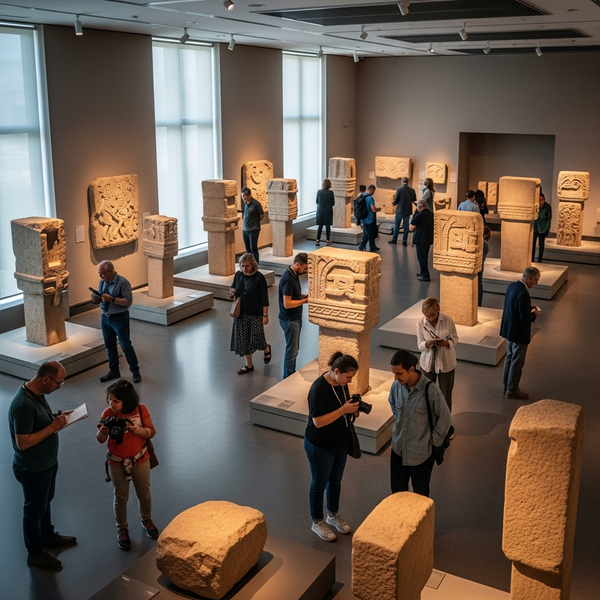
Imagine standing at the dawn of human civilization, surrounded by monumental stone circles that predate Stonehenge by thousands of years. Göbeklitepe, located in southeastern Turkey, is not just an archaeological site but a groundbreaking discovery that profoundly shifts our perception of early human history. Dating back nearly 12,000 years to the Epipaleolithic or Pre-Pottery Neolithic period, Göbeklitepe is considered one of the world’s oldest known temples, challenging the notion that early humans were primarily nomadic hunter-gatherers without complex spiritual or social structures. The site features massive T-shaped limestone pillars arranged in circular enclosures, impressively carved with intricate animal figures and abstract symbols—testaments to the sophisticated symbolic and ritual practices of its creators. This discovery fuels ongoing debates among archaeologists and historians about the origins of organized religion and communal life, suggesting that spiritual beliefs and social cohesion may have emerged much earlier than previously thought. As excavations continue, Göbeklitepe's enigmatic carvings and structural complexity seem to hint at a society that valued ritual, community, and perhaps even early forms of governance—elements once believed to have developed only much later in human history. The site’s preservation allows scientists to study the transition from foraging to early forms of sedentism and social organization. The profound implications of Göbeklitepe extend beyond just its age; it prompts us to reconsider the narrative of human evolution, challenging linear progressions and highlighting the rich cultural and spiritual fabric woven into humanity’s earliest days.

Decoding the Symbols and Their Significance in Early Human Belief Systems
One of the most captivating aspects of Göbeklitepe is the abundance of carved symbols and animal depictions on its stones. These carvings include foxes, snakes, boars, and birds, alongside abstract motifs that remain enigmatic to this day. Many researchers believe that these symbols held religious or spiritual significance, possibly representing deities, spirits, or mythological stories central to the Neolithic people's worldview. Unlike later civilizations with written language, Göbeklitepe’s creators relied on visual storytelling, suggesting that their beliefs and rituals may have been passed down through oral tradition and symbolic art. The site challenges the misconception that spirituality is a later development, revealing that early humans already engaged in complex ritual practices and believed in supernatural forces. Interestingly, the orientation and arrangement of the stone pillars seem to align with celestial events, implying that astronomical observations played a role in their ceremonial practices. These insights point towards a sophisticated understanding of natural phenomena and a desire to connect terrestrial life with cosmic forces. Such revelations about early human spirituality open fascinating avenues for understanding the roots of religion and cultural identity. The carvings and discoveries at Göbeklitepe compel us to rethink how early humans conceived of their universe and their place within it, illustrating an evolution of thought and belief that is as profound as it is ancient.

The Cultural and Social Implications of Göbeklitepe’s Construction
The architecture of Göbeklitepe provides compelling evidence of complex social organization and shared cultural practices. The construction of these massive stone pillars required coordinated effort, suggesting a society capable of organizing labor and maintaining social cohesion over extended periods. Unlike other sites of similar age, Göbeklitepe’s builders did not appear to reside here permanently; instead, they likely conducted ritual gatherings at the site, which might have served as a communal religious center. The dedication of time and resources to erect such intricate monuments indicates the importance of spiritual or communal identity in early human societies. These cultural traces hint at the emergence of social hierarchies, leadership, and possibly even specialized roles within their community. Discoveries of animal bones and evidence of feasting at the site further support the idea of collective rituals reinforcing social bonds. Moreover, the site’s location and orientation might have been deliberately chosen to align with specific landscapes or celestial phenomena, integrating environment and cosmology into their cultural fabric. Today, Göbeklitepe continues to inspire cultural revival and understanding, encouraging us to look back at our earliest ancestors not merely as hunters, but as complex, spiritually driven beings who laid the foundation for civilization as we know it.