Göbeklitepe's Enigmatic Structures Rewrite Humanity's Ancient Origins
Göbeklitepe and the Dawn of Complex Human Societies
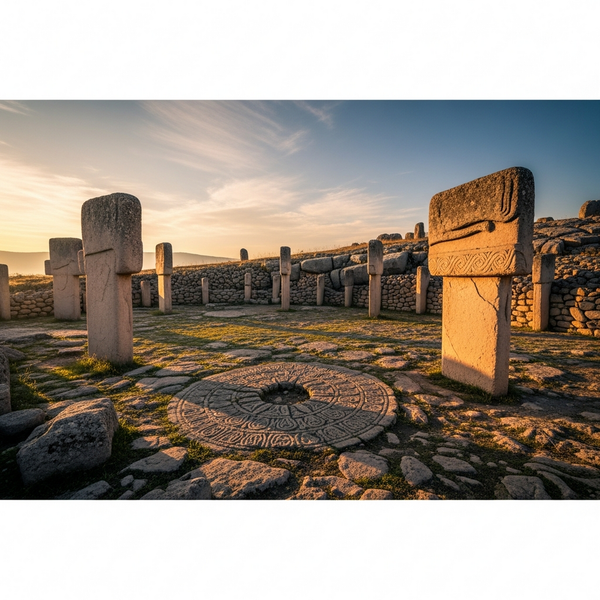
Göbeklitepe, located in southeastern Turkey, stands as one of the most astonishing archaeological discoveries of the 21st century. Dated to approximately 9600 BCE, this site predates Stonehenge by over 6,000 years and challenges our traditional timeline of human social development. The towering T-shaped pillars, arranged in circular enclosures, are adorned with intricate carvings of animals and abstract symbols, which suggest a sophisticated spiritual or ritualistic purpose. What makes Göbeklitepe particularly compelling is that it appears to have been deliberately built and visited by early humans relatively soon after the end of the last Ice Age, hinting at the emergence of complex social and religious practices far earlier than previously believed. The site’s undeniable age and exquisite craftsmanship raise fundamental questions: How did early humans achieve such architectural and artistic sophistication? What beliefs inspired these ancient people to construct such monumental structures? And most importantly, does Göbeklitepe imply the existence of a form of organized religion or spiritual consciousness among hunter-gatherer societies? These are questions that continue to captivate archaeologists and historians alike, fueling debates about the origins of religious belief and societal complexity. Researchers working on Göbeklitepe also observe that it lacks evidence of permanent habitation, which adds an intriguing layer of mystery—was it a ceremonial center, a spiritual sanctuary, or something entirely different? This enigma beckons us to reconsider the origins of civilization and the role of spiritual or ritual practices in shaping human history.

Deciphering the Mysterious Carvings and Symbolism
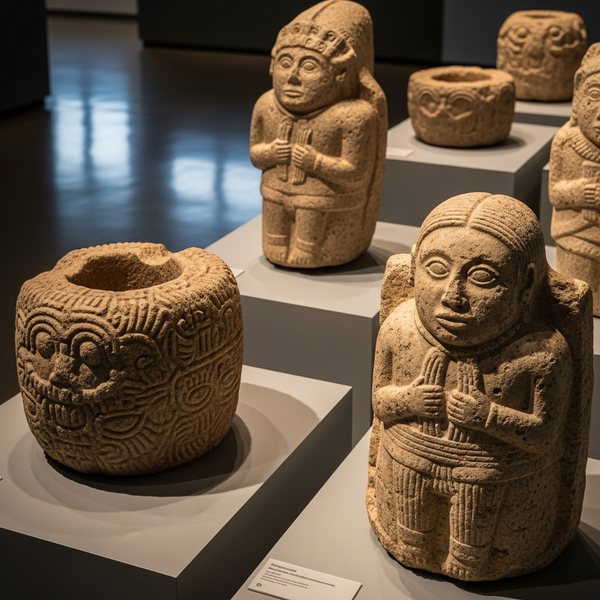
One of Göbeklitepe’s most captivating features is its carvings—animal figures, abstract symbols, and complex motifs that decorate the massive stone pillars. To the untrained eye, they might seem like mere artistic embellishments, but to specialists, these carvings potentially hold the key to understanding the beliefs and practices of the site's creators. Some scholars propose that these symbols represent early mythologies or shamanic visions, serving as a kind of celestial or spiritual map. The animal figures—lions, snakes, boars, and birds—may symbolize totems, spiritual guides, or mythic narratives central to the community’s worldview. Despite numerous excavations, the precise meaning behind these carvings remains elusive, leaving most interpretations open to speculation. The recurring motifs and their strategic placement suggest a complex system of symbolism maybe linked to fertility rites, cosmology, or ancestral spirits. The enigmatic symbols at Göbeklitepe challenge the assumption that early humans had limited abstract thinking; instead, they demonstrate a capacity for symbolic expression and possibly religious or mythological storytelling. This ongoing mystery continues to fascinate archaeologists, who are constantly seeking new ways to decode the language of these ancient carvings. Technologies like high-resolution imaging and 3D scanning are helping uncover subtle details that might unlock their secrets, fueling hope that someday we’ll decipher the cryptic messages woven into Göbeklitepe’s stones.
The Cultural and Religious Significance of Göbeklitepe
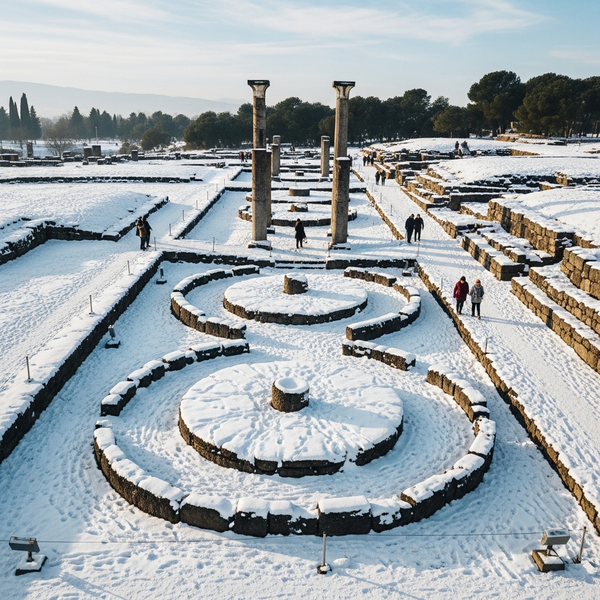
Göbeklitepe is more than just an archaeological marvel; it signifies a revolutionary shift in our understanding of early human spirituality and social organization. Its existence suggests that ancient peoples possessed a complex spiritual consciousness and engaged in communal rituals that required joining multiple generations. The deliberate placement of T-shaped pillars around central hearths and in circular arrangements implies coordinated efforts and shared religious practices. Some researchers speculate that Göbeklitepe may have served as an early temple or ceremonial center, possibly used for rites of passage, ancestor worship, or celestial observations. This interpretation aligns with the idea that early humans sought to find order and meaning in their environment through ritual and spiritual frameworks—something we often associate with much later civilizations, yet here, in the waning millennia of the Pleistocene, it appears to have been taking shape. The cultural traces embedded in Göbeklitepe challenge linear views of progress; rather than a gradual evolution from primitive to complex societies, it hints at a model of rapid spiritual development among hunter-gatherers. Such insights inspire reflections on the universality of spiritual inquiry and the innate human desire to connect with the divine or the cosmos. Visitors and scholars alike are left pondering whether Göbeklitepe could be the earliest known example of religious consciousness, possibly influencing subsequent human civilizations in Mesopotamia, Egypt, and beyond.