The Revelations of Gobeklitepe That Redefine Our Understanding of Human History
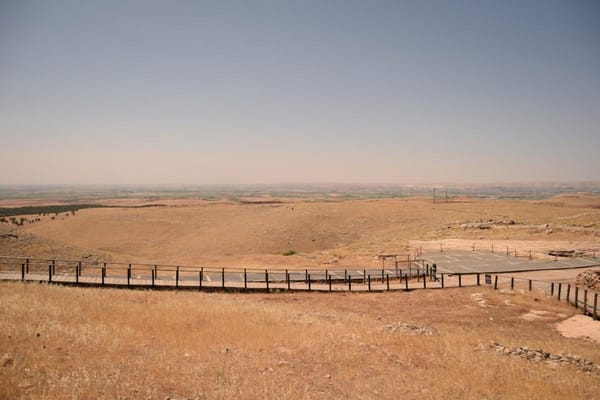
The archaeological site of Gobeklitepe in southeastern Turkey has captivated experts and visitors alike since its discovery, revealing a complex tapestry of early human life dating back approximately 12,000 years. This site, often considered one of the world's oldest religious complexes, challenges conventional understandings of prehistoric societies that were previously thought to be simple hunter-gatherer groups. Its monumental T-shaped pillars and carefully arranged circles suggest a sophisticated social and spiritual system, indicating that early humans may have engaged in complex rituals and collective belief systems long before the advent of agriculture. Such discoveries are not just archaeological curiosities; they force us to reconsider the evolutionary timeline and the cognitive capacities of our ancestors. The site’s construction emphasizes that early humans possessed a remarkable understanding of architecture and symbolism, which reshapes our assumptions about the origins of organized religion and societal cooperation. This revelation prompts a new appreciation for the ingenuity and spiritual pursuits of prehistoric cultures, emphasizing that the roots of human civilization extend much deeper and are far more intricate than previously believed.
Unveiling Gobeklitepe's Extraordinary Historical Significance
The Architectural Marvels and Their Cultural Implications
Gobeklitepe’s remarkable architecture showcases intricately carved stone pillars arranged in circular formations, each tapering towards the top with elaborate engravings that depict strange animals, abstract symbols, and humanoid figures. Unlike later civilizations that relied on more permanent settlements, Gobeklitepe’s builders appeared to prioritize communal ritual spaces that may have served as spiritual centers or ceremonial gathering places. The precision and effort involved in quarrying, carving, and erecting these stones demonstrate early humans' advanced craftsmanship and collaborative abilities. Architecturally, the site also features a series of platforms and enclosures, hinting at a complex understanding of spatial organization and possibly astronomical alignments. These features suggest that early societies invested significant resources and collective effort into constructing sacred spaces, reflecting their beliefs about the cosmos, divine forces, or ancestral spirits. Exploring the cultural implications of these structures offers profound insights into the development of symbolic thinking and religious expression in prehistoric times. It is clear that Gobeklitepe was not merely a functional site but a potent symbol of shared spirituality, fostering social cohesion and cultural identity among its ancient inhabitants.

The spiritual and ritual significance of Gobeklitepe becomes even more compelling when considering what these ancient carvings and arrangements might have represented. Many scholars believe that the site was a place where early humans expressed beliefs about fertility, cosmology, or the divine, as evidenced by the animal motifs and abstract symbols. Such iconography hints at an emerging form of religiosity—a system of beliefs that fostered social cohesion through shared spiritual narratives. These insights into early human spirituality suggest that religious thought may have emerged not with written language or settled communities but with the communal rituals performed in sacred spaces like Gobeklitepe. This challenges longstanding notions that spirituality developed later in response to societal complexities; instead, it implies that the roots of religious consciousness may be embedded in our prehistoric ancestors' collective experiences and symbolic expressions. Consequently, Gobeklitepe acts as an archaeological window into the minds of early humans, revealing how they conceptualized their world and sought meaning beyond the tangible. Recognizing this depth of spiritual development deepens our appreciation of human evolution as a journey not just of survival but of understanding and connection.