Göbeklitepe and the Dawn of Ancient Technologies
Unveiling Göbeklitepe and Its Remarkable Significance
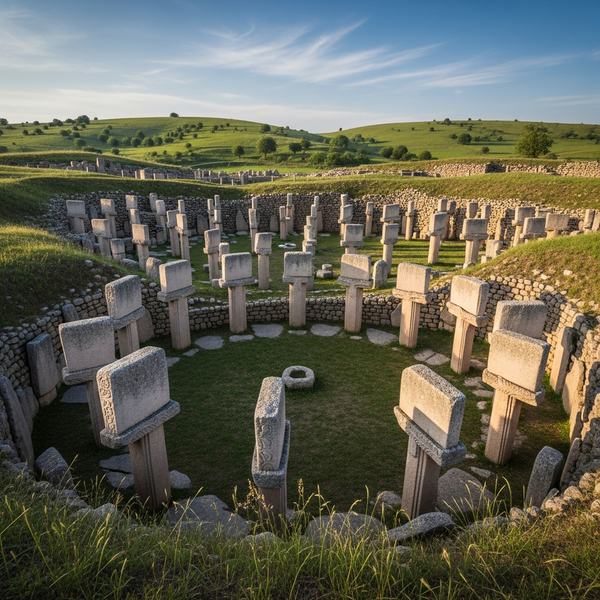
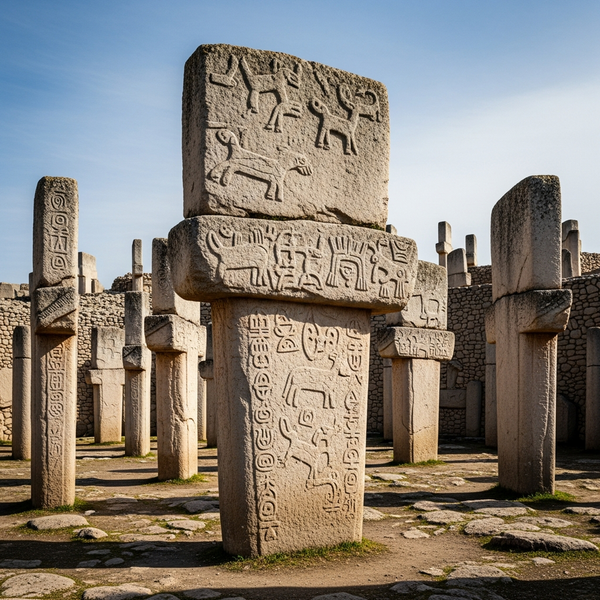
Nestled in southeastern Turkey, Göbeklitepe stands as an extraordinary testament to early human ingenuity and spiritual development dating back approximately 12,000 years. This archaeological site, often referred to as the world’s oldest temple, has fundamentally challenged conventional views on prehistoric societies, revealing that our ancestors possessed sophisticated knowledge and complex belief systems much earlier than previously believed. The discovery of Göbeklitepe has sparked a renewed interest among archaeologists, historians, and ancient technology enthusiasts alike, as it showcases a remarkable example of early monumental architecture made with primitive tools yet featuring advanced symbolic carvings and construction techniques. The site’s painstakingly erected stone pillars and awe-inspiring carved animals speak volumes about early humans' capacity for planning, creativity, and spiritual expression, hinting at a society that was more culturally advanced than many prior assumptions. Despite limited direct evidence of their tools and engineering, Göbeklitepe hints at an intricate knowledge of stone working and architectural arrangement, broadening our perspective on the technological capabilities of early civilizations.
Decoding the Technologies and Techniques of Ancient Builders
The construction of Göbeklitepe is an incredible feat considering the prehistoric context, and it invites us to delve into the technological prowess of its creators despite their limited resources. Researchers believe that early humans employed simple yet effective tools—primarily made of flint, bone, and antler—to carve, shape, and erect the massive stone pillars. The precision in their carvings demonstrates an advanced understanding of chisel-like techniques and the importance of symbolic artistry in their culture. Although they lacked metal tools, their ability to manipulate large stone blocks suggests a sophisticated knowledge of stone shaping, leveraging leverage, and possibly rudimentary pulleys or rollers. Moreover, the arrangement of the site's massive pillars into circles indicates a deep understanding of space, alignments, and structural stability, hinting at an early form of architectural technology. These methods reflect a society that valued not only spiritual expression but also the practical knowledge necessary to create enduring monumental structures without the aid of modern machinery. Such insights challenge the notion that early humans were limited technologically, instead revealing a nuanced mastery of natural materials and innovative thinking.
Beliefs and Cultural Significance Embedded in Monumental Structures
The symbolic carvings and spatial organization of Göbeklitepe suggest that it was more than just a place of worship; it was likely a focal point for early human society's spiritual and communal practices. The elaborate animal motifs—ranging from snakes and lions to birds—are believed to embody mythological or spiritual significance, perhaps related to hunt, fertility, or the cosmos. The deliberate orientation of the pillars aligns with celestial events, indicating an early understanding of astronomy and its integration into their belief systems. This confluence of spiritual symbolism and technological mastery underscores the profound cultural purpose of Göbeklitepe, serving as a hub for ritual activities that reinforced social cohesion and shared cosmologies. The development of such complex religious systems and community bonding through technological means reflects an advanced societal structure fostering collective identity and cultural continuity. It becomes clear that early human technology was deeply intertwined with their spiritual and social worlds, driving innovations that continue to fascinate and inspire scholars today.
Göbeklitepe's Legacy and Its Impact on Our Understanding of Human History
The ongoing study of Göbeklitepe continues to reshape our understanding of early human development. As one of the earliest known examples of monumental architecture, it demonstrates that prehistoric societies were capable of complex social organization, technological innovation, and spiritual expression well before the advent of agriculture and settled life. Its existence challenges the linear narrative that civilization only advanced with the rise of farming and metalwork, suggesting instead that spiritual and cultural structures may have driven technological progress as much as survival needs. The site’s significance extends beyond archaeology, inspiring modern perspectives on innovation and community. Visitors and researchers alike are captivated by its timeless mystery, and new discoveries—such as hidden chambers or additional enclosures—keep pushing the boundaries of our knowledge. The significance of Göbeklitepe lies not only in its age but in how it invites us to re-examine the roots of human ingenuity, faith, and societal complexity. This extraordinary discovery underscores that the story of humanity is far richer and more intricate than formerly assumed, and it continues to ignite debates and inspire innovations for future generations.