Unveiling the Mysteries of Gobeklitepe and Its Impact on Ancient Human Cognition
Discovering the Mysteries of Gobeklitepe and Its Role in Prehistoric Humanity
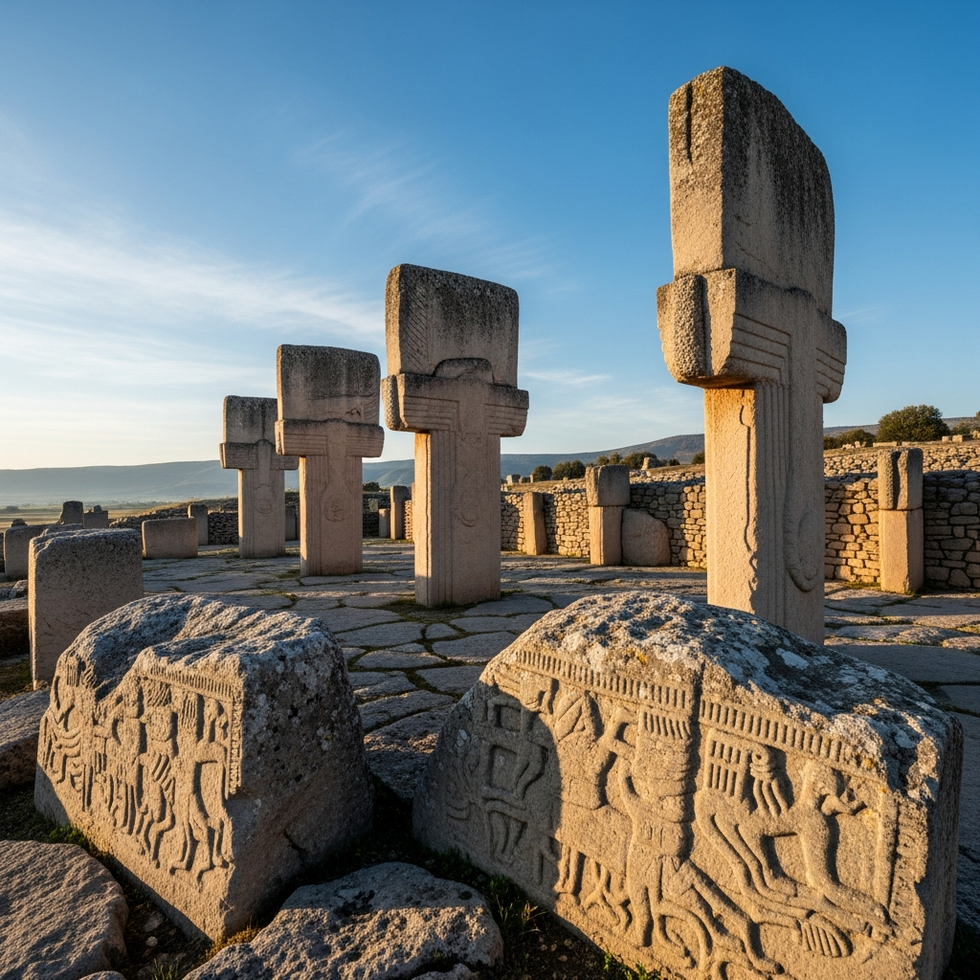
Gobeklitepe, often regarded as the world's oldest known religious site, has fascinated archaeologists and historians alike since its discovery in southeastern Turkey. Dating back to circa 9600 BCE, this archaeological marvel challenges traditional narratives about the origins of complex societal structures and spiritual beliefs. Recent excavations have uncovered interpretive clues suggesting that Gobeklitepe was more than just a ceremonial location; it might have been a hub for early human cognitive developments, symbolization, and communal ritual practices. These findings push us to reconsider the evolution of human consciousness and spiritual expression, showcasing how prehistoric societies might have shaped their understanding of the universe. The site’s megalithic pillars, decorated with intricate carvings of animals and abstract symbols, ignite debates about the cognitive and symbolic capacities of early humans. What significance did they attribute to these carvings? How did these rituals influence social cohesion and collective identity among early communities? These are questions that continue to guide researchers exploring this mysterious site, which seemingly predates even the earliest civilizations we are familiar with.

Recent Scientific Findings and Their Implications for Understanding Ancient Mindsets
In recent years, advances in archaeological technology have offered groundbreaking insights into Gobeklitepe's function and its significance in prehistoric culture. Techniques such as 3D scanning, isotope analysis, and detailed typological studies have provided evidence that the site was a center for complex ritual activities, possibly involving early forms of symbolic thinking and social organization. Researchers have also discovered that the carvings and inscriptions on the pillars may have served as early attempts at recording myths or spiritual narratives, reflecting a burgeoning form of prehistoric storytelling. These discoveries enrich our understanding of cognition in ancient societies, suggesting that the inhabitants of Gobeklitepe possessed an advanced level of abstract thought far earlier than previously assumed. The site's construction, involving massive stone pillars arranged in circular formations, indicates a highly organized communal effort, emphasizing the importance of collective identity and shared beliefs. Such insights not only reveal a window into the spiritual life of these early people but also shed light on how early humans may have developed proto-religious concepts that influenced subsequent civilizations.

The Cultural Significance and Future Directions of Gobeklitepe Research
Gobeklitepe's ongoing research emphasizes its profound cultural significance, illustrating that early humans engaged in complex spiritual and social behaviors long before the advent of written language and urban civilizations. Its unique architecture and symbolism may have served as a foundational blueprint for later religious and societal structures. As excavations continue, interdisciplinary approaches incorporating anthropology, archaeology, and cognitive science are poised to deepen our understanding of how this extraordinary site influenced human development. The insights gained could transform not only the academic narratives surrounding the origins of religion and social cohesion but also inspire contemporary reflections on human spirituality and community building. Moreover, the site is increasingly recognized as a UNESCO World Heritage site, underscoring its global importance. Future excavations and technological advancements hold the promise of uncovering even more nuanced evidence about the mental and emotional worlds of our ancient ancestors, making Gobeklitepe a vital key in unlocking the earliest chapters of human history expansion.