China just buried its golden masks and it is rewriting history
The Gold That Defies The Yellow River Narrative
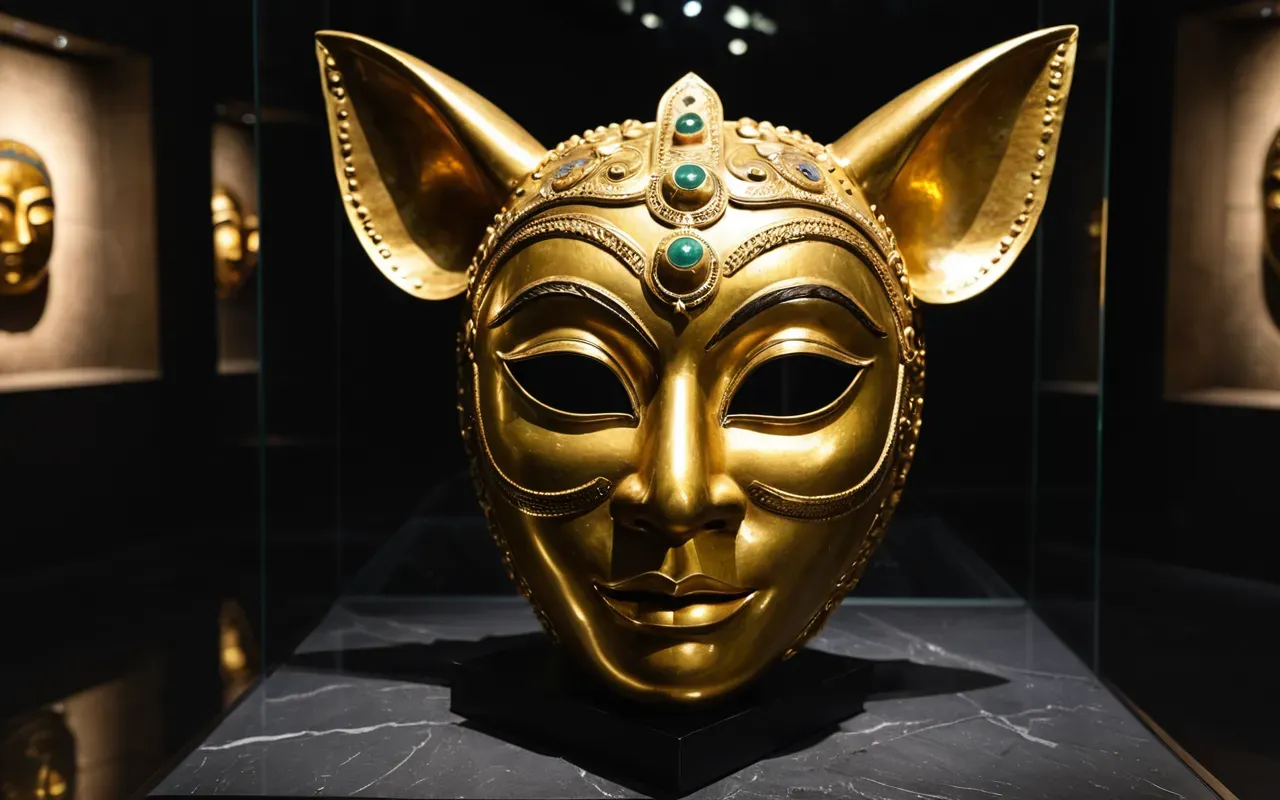
Look at the mask. Two hundred and eighty grams of pure gold, nothing else. The eyes are enormous. The ears flare out wide, like wings on a bird mid-flight. Now look at your history textbook.
Your book says ancient China was born in the Yellow River basin. It says the Shang Dynasty carved fine patterns into bronze vessels for wine and meat offerings. That's the standard story, the one we all learned.
But here in Sichuan, something different happened. People hammered thin gold leaf into human faces. They wrapped it around bronze heads with holes for ornaments. That is not Shang Dynasty behavior.
I was struck by how alien this feels next to Central Plains culture. The gold isn't decoration here. It's a symbol of sacred power, and it stands out like a sore thumb in an ocean of bronze and jade.
Eight Artifacts That Break The Standard Model
Let's walk through the eight items that make this site so controversial. We start with the large golden mask I just mentioned. Sharp nose line, and an intensity that borders on grotesque.
Then there are the bronze heads covered in gold leaf. The fit is perfect. You can see holes drilled into the ears for earrings or other attachments that vanished long ago.
Next is the famous mask with protruding eyes. The cylinders extend forward from the face as if trying to see into another dimension. It measures one point three meters wide.
Local legends speak of a king named Cancong who had these exact features. Was this a portrait of a deified ancestor? Or the eyes of a god watching his people from the clouds?
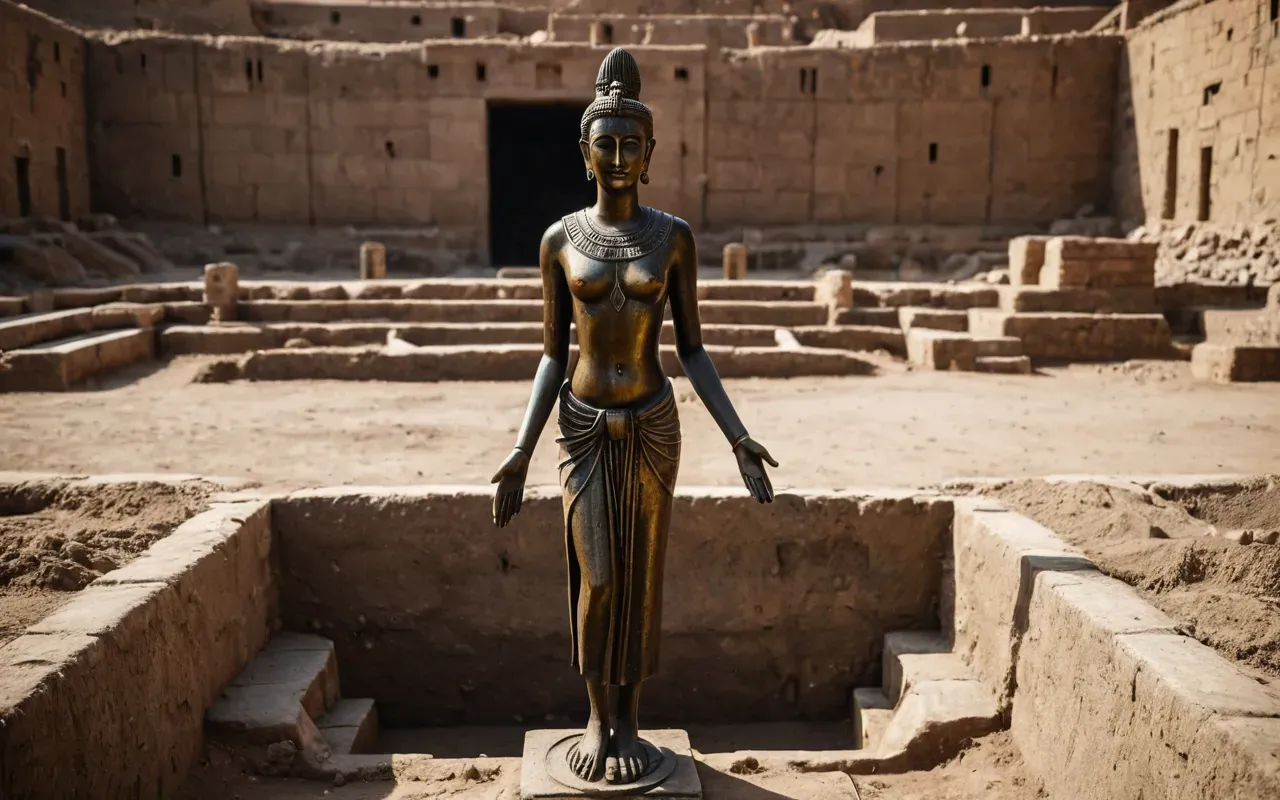
The scale is staggering. A standing statue stands two point six-two meters tall. It holds something in its hands, but we don't know what it was gripping when they buried him.
Then there's the sacred tree. It rises three point nine-five meters into the air. Branches twist upward like vines reaching for sunlight that no longer reaches this deep underground.
The Staff That Looks Like It Belongs In Egypt
Here's the part that stopped me in my tracks. They found a golden staff about one point four meters long. Thin gold foil wrapped around a wooden core.
The surface is carved with fish and birds pierced by arrows. There's also a human face wearing a crown in the center of the design. It looks like a royal scepter.
In the Yellow River basin, kings used jade and bronze vessels to show authority. They did not use sticks. But in West Asia, Egypt, and Mesopotamia, a staff is a clear symbol of royal power.
So why does an inland Chinese culture have a West Asian symbol of power? That disconnect is uncomfortable. It suggests connections, or parallel developments, that don't fit the neat single-origin story we're taught.
We also found vessels modeled after divine beasts. Not flat patterns on a bowl surface like Shang wares. These are fully three-dimensional sculptures of creatures that never existed in nature.
One artifact shows a human figure holding a long, slender dragon-like creature in both hands. The detail is intricate. It feels like modern fantasy art frozen in bronze three thousand years ago.
Finally, there's a mesh-like bronze vessel wrapping an oval jade artifact. Dragon heads decorate the four corners. This combination of materials and techniques has no parallel in other ancient civilizations.
Geography And The Independent Civilization Theory
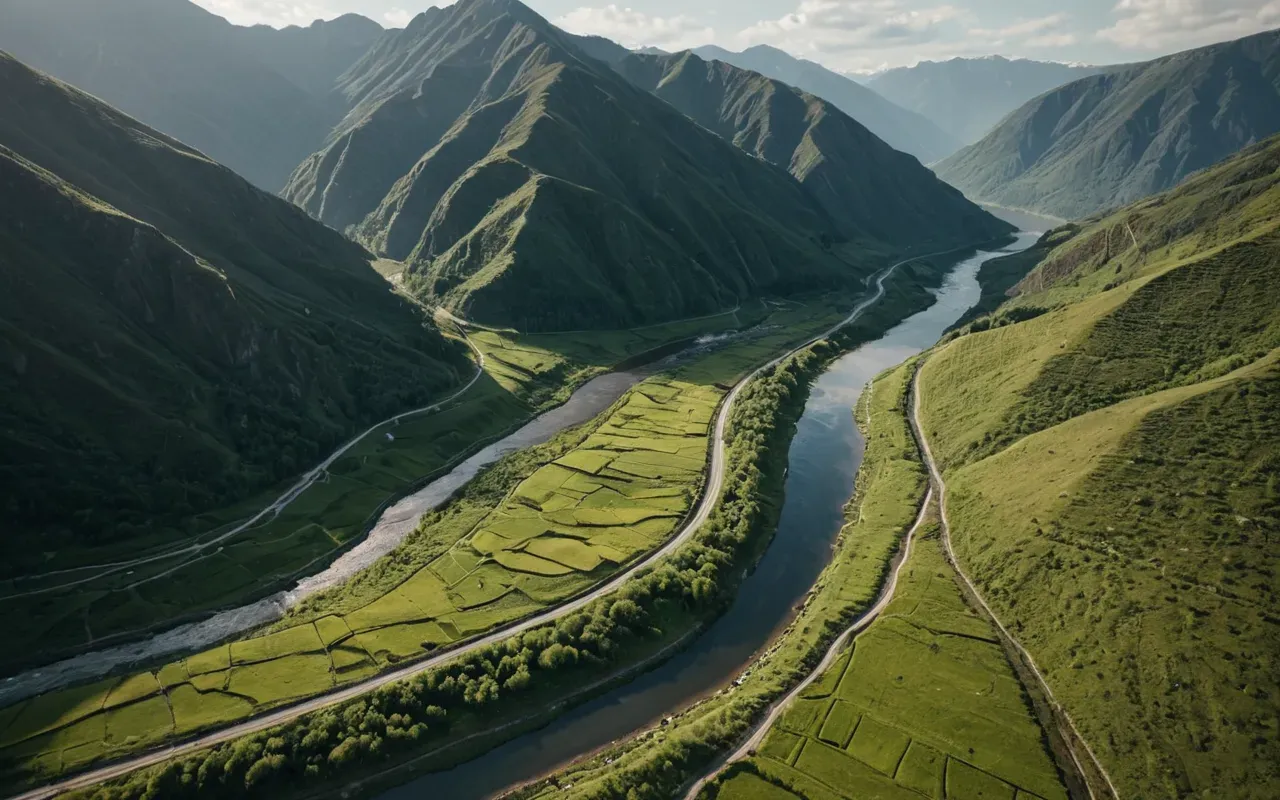
The Sichuan Basin is surrounded by high mountains. It sits far south of the Yellow River, in the upper reaches of the Yangtze. That geography created a natural barrier, and the barrier allowed unique development.
Wang Wei from the Sichuan Provincial Cultural Relics and Archaeology Research Institute says Sanxingdui likely developed independently. Not an imitation of the north. It had its own religious system.
This challenges the idea that Chinese civilization spread from one center outward. Instead, we see multiple centers rising in different valleys, each with its own aesthetics and technologies.
Think about what that implies. History becomes a mosaic rather than a single thread. Different groups solved similar problems with different tools and beliefs.
Ivory Tusks And The Mysterious Trade Networks
The sacrificial pits contained dozens of ivory tusks. Lined up in a chillingly orderly fashion at the bottom of the pit. That tells us something about the climate three thousand years ago.
The Sichuan Basin was warmer then. Elephants could actually live there. Today it's too cool for them. This environmental shift likely contributed to the collapse of this society.
They also found shell ornaments that could only be collected in the distant sea. How did they get these? They must have had a vast trade network connecting them to coastal regions.
Despite being surrounded by mountains, they were not isolated. They had access to resources from far away. That suggests a sophisticated level of organization and long-distance communication.
Why Did They Burn And Bury Their Own Treasures
The civilization disappeared around one thousand BC. The artifacts weren't just left behind. They were deliberately damaged and buried in pits.
Archaeologists debate the cause. A religious ritual to appease angry gods? Or an act of destruction during a migration or power shift?
There's no clear answer. The silence of the site speaks louder than any text could have. We're left with questions about what drove a prosperous society to destroy its own legacy.
If you're interested in how other ancient sites challenge our timelines, check out the 12,000 year gap in the ancient civilizations timeline that schools ignore. It offers a different perspective on how we view human history.
Sanxingdui is not just a pile of old metal. It's a mirror reflecting the complexity of human belief and the fragility of even the most powerful societies.
The golden masks stare back at us with eyes that seem to know more than we do. They remind us that the past is often stranger, and more varied, than our textbooks allow.