The camera crew walked away from Göbeklitepe but missed the detail that proves our history books are wrong about the first builders
The detail the lens ignored
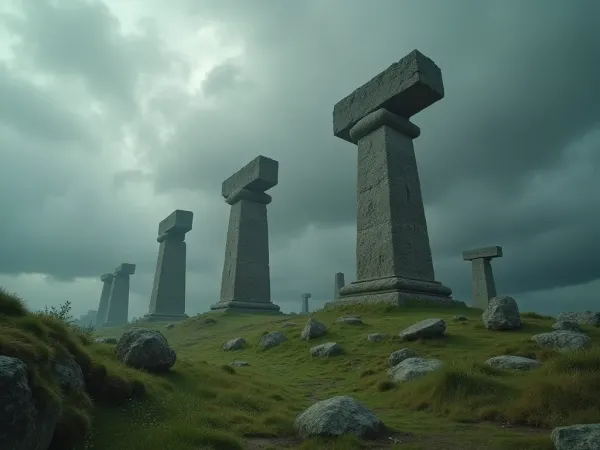
Richard Quest stands on the hill, and the camera pans across those T-shaped pillars. Honestly, it looks like a sci-fi set — except the sky is real and the stones are ancient. The narration hits the usual notes. Twelve thousand years old. A mystery. Who built this? The audience gasps. I watch the clip, and I feel that familiar itch. We keep telling the same story. We treat Göbeklitepe like a puzzle box that proves our ancestors were lucky to stumble into civilization. That's wrong. The site isn't a mystery of magic. It's a mystery of bias. And the camera crew missed the one detail that flips the script entirely.
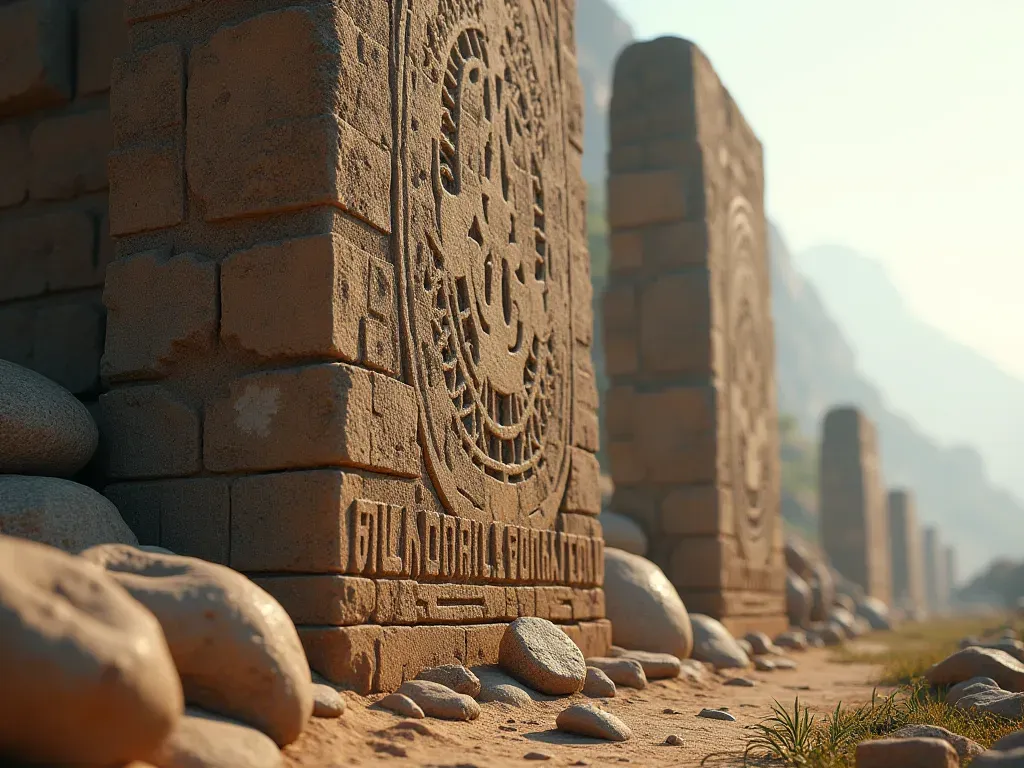
Look at the base of Pillar 43. Zoom in. You see those shallow depressions near the ground? Most videos skip them. They're not random pitting. They're tool marks. But here's the kicker. The marks show a sequence of pecking and grinding that matches techniques used for fine stone sculpture, not rough construction. These people weren't just hauling rocks. They were carving art with the same precision as later temple builders. And they did it without metal. This detail screams organization. It screams training. It screams that the builders had a system we refuse to credit hunter-gatherers with. If you're curious about how modern scanning tech finally stripped the caveman myth away forever, the evidence is buried in these textures.
Why the timeline lies to us
History textbooks love a straight line. You gather food. You get bored. You plant wheat. You build a hut. You invent the wheel. You build a temple. Simple, right? Göbeklitepe laughs at that sequence. The site dates to roughly 9500 BC. That's way before pottery. Way before metal. Way before farming took hold in the region. So how do you move multi-ton pillars without draft animals? How do you coordinate hundreds of workers without written orders? We assume the impossible. But the site forces a rethink. Religion or ritual might have come first. The temple didn't follow the city. The temple created the need for the city. This reverses the whole script on human progress.
I've spent hours reading the excavation reports. The numbers don't lie. The limestone pillars weigh up to 20 tons. They were quarried locally, yes, but the limestone here is hard. Breaking it requires patience and skill. Then comes the transport. No wheels. No sleds with runners, based on the soil evidence. Just human muscle and leverage. You need a social structure to pull that off. You need a leader who can say, 'We're moving this rock,' and fifty people who believe him. That's not a band of foragers wandering the steppe. That's a community with shared beliefs and specialized labor. To be fair, the old models called these people 'nomadic.' The stones prove they were sedentary, at least for seasons. The timeline breaks when you accept that complexity didn't need farming to exist.
The bias in the archaeological lens
What we can't see
Here's the thing. Archaeologists struggle with Göbeklitepe because it breaks their categories. Klaus Schmidt, the late lead excavator, knew this. He pointed out that the site had no domestic architecture nearby. No houses. No storage pits. Just a temple. For years, scholars dismissed that. They said, 'There must be houses we haven't found.' It was easier to assume the missing pieces existed than to accept that people built a mega-structure without living right next to it. That assumption says more about our modern obsession with zoning than it does about the past. We expect cities to have homes. Early humans might have seen sacred spaces as separate zones, visited by groups from miles around. The site was a magnet, not a neighborhood.
And that changes the 'who wins' dynamic completely. If Göbeklitepe was a regional gathering point, then the social network stretched across Anatolia. We're talking about trade routes and information exchange happening 12,000 years ago. The animal carvings prove it. Boars, foxes, cranes, vultures. Some of these species don't live right on the hill. The carvers knew them. They saw them elsewhere. This implies travel. It implies a web of connections. When I look at the reliefs, I don't see isolated tribes. I see a culture with a shared visual language. You can't carve a vulture with those specific wing angles unless there's a standard. Standards mean communication. Communication means a sophisticated society. If you want to understand how we can finally uncover the real Klaus Schmidt legacy past the myths, look at his notes on the iconography.
The burial that hides the truth
Intentional closure
Let's talk about the dirt. The site wasn't abandoned by accident. It was buried. Massive amounts of fill were piled over the enclosures. This took effort. Why bury a temple? Most ancient sites get ruined by time or war. Göbeklitepe was put to rest. This suggests a ritual closure. The community decided it was done. They sealed the space. That's a profound level of collective decision-making. It shows long-term planning and respect for the past. You don't just walk away. You finish the job. This behavior contradicts the idea of 'primitive' improvisation. It points to a culture that valued continuity and ritual order. The burial protects the site, yes, but it also signals that the builders understood legacy. They wanted this to end with a purpose.
So, what does this mean for the 'secrets' the news clips hype? The secret isn't aliens. The secret isn't lost technology. The secret is that human potential exploded way earlier than we admit. We have this comfort zone where we think complexity requires agriculture. Göbeklitepe shatters that. It shows that belief, art, and engineering can drive social evolution. The builders were smart. They were organized. They were capable. The media loves the 'mystery' angle because it's easy to digest. But the real shock is accepting that our ancestors were just as advanced as we are, they just used different tools. The stones hold the proof. We just need to stop looking for magic and start looking at the data. Honestly, the data has been there all along. We're the ones lagging behind.
Rewriting the hunter-gatherer myth
You've heard the story. Hunter-gatherers are simple. They follow the herds. They sleep in caves. They don't build. Göbeklitepe proves that's a stereotype born of convenience. The people here were foragers, likely. They hunted aurochs and deer. But they also moved 16-ton pillars. They carved intricate reliefs. They organized feasts on a massive scale. Residue analysis shows they consumed meat and possibly fermented beverages. Feasting requires surplus. Surplus requires coordination. You can't just 'gather' enough food to feed hundreds of workers for a season without planning. This implies a storage system or a highly efficient hunting strategy. Either way, it's complex. It's sophisticated. It's not the 'simple life.' It's a different kind of intelligence that we've undervalued for centuries.
I remember reading about the faunal remains. The bones tell a story of selective hunting. They didn't just kill whatever crossed their path. They targeted specific animals — almost certainly for ritual purposes. This isn't eating. It's symbolism. The boar shows up again and again. Strength. The fox. Cunning. The vulture. Death and transformation. These aren't random carvings. They're a full theological system. A belief structure, really. And that structure is what held the community together. It gave them a reason to build in the first place. This is the "glue" archaeologists are always hunting for. We usually look for trade goods or weapons to prove a society was complex. Göbeklitepe flips that on its head. Ideology drove everything. Belief built the first monuments. That's a staggering insight. It suggests the human need for meaning came before the human need for efficiency. We built for our gods, or our ancestors, before we ever built for ourselves.
The modern obsession with Göbeklitepe
Today, thousands come to the site. Visitors hike up the hill, sweaty and wide-eyed, to see the T-pillars. It's something of a pilgrimage. But honestly? The hype gets in the way. People arrive wanting lost civilizations. They want the stones to whisper secrets of Atlantis. I get it. The scale is genuinely mind-bending. Standing there, you feel impossibly small. But the true wonder is human. It's not about vanished worlds. It's about the ordinary people who lived here. They were us. They had families. They argued over stupid things. They celebrated births. They worried about the weather. The stones are just the physical proof that they mattered. When Richard Quest does his piece, he captures the awe beautifully. That's good. But the deeper story is resilience. These builders faced a shifting climate. They adapted. They created culture out of thin air. That's the inspiration we actually need. Not magic. Just human grit and creativity, amplified by shared belief.
And let's be real about the challenges. The preservation hurdles are enormous. Wind erosion. Salt crystallization. Millions of feet. The site is dreadfully fragile. Protecting it means balancing access with conservation. That feels like a modern problem, but it connects directly to the past. The original builders buried the whole thing to protect it. They understood it needed care. We're carrying on that tradition. Every time we cap visitor numbers or install barriers, we're honoring their intent. The legacy of Göbeklitepe isn't locked in the stone alone. It's in how we treat it. We're the custodians now. That's a heavy thing to carry. But it's also a privilege. We get to stand where they stood. We get to learn from them. And the lesson rings clear. Complexity doesn't need a neat textbook definition. It just needs people who believe in something bigger than themselves.
Why this changes more than people think
Here's the bottom line. Göbeklitepe forces us to rip up the intro to human history. We can't start with farming anymore. We have to start with connection. The site is proof that social cohesion and ritual came first. Agriculture might have been a response to the temple's demands — not the cause of it. Think about it. If the temple needed workers, maybe those workers started planting crops so they could stay longer. That completely flips the causality. It puts culture at the very center of evolution. And it changes how we view other ancient sites. Maybe Stonehenge isn't just a calendar. Maybe the pyramids aren't just tombs. Maybe they all belong to a deeper pattern. Humans build to express meaning. We always have. The materials change. The methods improve. But the drive stays constant. Göbeklitepe is the first clear signal of that drive in the archaeological record. It's the spark.
So when you watch those videos, look past the narration. Look at the stones. Look at the carvings. Look at the layout. You'll see a society that was ready. They weren't stumbling into the future. They were building it, deliberately. With hammers. With ropes. With faith. The camera crew missed the detail at the base of the pillar because they were too busy framing the "wow." But that detail is there. It proves the builders were masters of their craft. Engineers. Artists. Organizers. And they did it 12,000 years ago. That's not a mystery to be solved. It's a mirror to be faced. It shows us what we're capable of when we work together. The secret wasn't hidden in the stones. The secret was our own refusal to believe. Now we know better. The history books need an update. And the first page belongs to Göbeklitepe.
The builders of Göbeklitepe didn't need magic to move mountains. They had something stronger: a shared vision that turned impossible dreams into limestone reality.
I'll leave you with this. Every time you see a skyscraper or a bridge, think of Pillar 43. The technology is different. The ambition is identical. We haven't changed all that much. Same species. Same stubborn drive to mark our place in the world. Göbeklitepe reminds us of that continuity. It bridges the gap between then and now. It's not just a relic. It's a link. And once you see that link, you can't unsee it. The stones speak. They've been speaking for twelve millennia. We finally learned how to listen. The camera crew can pack up. The real story is out there. It's etched in the rock. And it's waiting for anyone willing to look closely enough.