Göbeklitepe Life
Göbeklitepe vs Stonehenge: Comparing Ancient Megaliths
Göbeklitepe is far older than Stonehenge. Its carved T-shaped pillars were raised by hunter-gatherers around 9600 BCE, while Stonehenge's first earthwork dates to about 3100 BCE and its great sarsens to roughly 2500 BCE. The two are not related monuments — they are the work of separate societies using stone for ritual, millennia apart.
On a single timeline, Göbeklitepe's main layers fall between roughly 9600 and 8000 BCE. Stonehenge's construction sequence only begins around 3100 BCE, when a circular ditch and bank were dug and 56 Aubrey Holes cut. That places the start of Stonehenge more than 6,000 years after the first pillars at Göbeklitepe went up.
The sarsen trilithons, the image most people have in mind, came even later. The Welsh bluestones arrived around 2400 BCE, and the great sarsens were raised between about 2500 and 2200 BCE. By that point Göbeklitepe had already been abandoned and buried for millennia, so no one who built Stonehenge could have seen the Anatolian enclosure standing.
The scale of the gap is easy to underestimate. Roughly 6,000 years separate Göbeklitepe and Stonehenge, comparable to the span between Stonehenge and the present. That gap means the two monuments belong to different worlds, not to two stages of one tradition.
Who Built Them: Hunter-Gatherers vs Neolithic Farmers
The people who raised Göbeklitepe were hunter-gatherers. They worked without metal tools, and they left behind no cities and no writing system. Their world was one of wild resources, seasonal movement and small communities, yet it produced carved limestone pillars weighing many tons.
The builders of Stonehenge lived in a very different economy. They were Neolithic farmers, settled in established villages, working with more developed toolkits and the rhythms of cultivated land. Farming had already reshaped how they ate, where they lived and how they organised labour.
Archaeologists once reasoned that monumental architecture required farming first: you need surplus food and a settled population before you can spare hands for giant stones. Göbeklitepe breaks that sequence. Its hunter-gatherer builders show that large-scale ritual construction came before farming in this region, not after it. The case for how old Göbeklitepe really is rests on the same evidence.
So the two monuments do not represent one long tradition passing through stages. They represent two different kinds of society, each choosing to move enormous stones. Stonehenge fits the farming model neatly; Göbeklitepe stands outside it.
Stone Scale Compared: Carved Pillars vs Sarsen Trilithons
Göbeklitepe's central pillars are limestone monoliths cut from local bedrock, standing up to 5.5 metres tall and weighing between 10 and 20 metric tons. The largest enclosure holds two elaborately carved pillars at its centre, their surfaces worked into foxes, boars, snakes and cranes in raised relief. The carving is the point: the stone was shaped for its imagery as much as for its height.
Stonehenge's sarsens are heavier on average, around 25 tons, with the Heel Stone near 35 tons. They came from West Woods roughly 25 kilometres (15 miles) north of the site, which is a serious haul but a short one by prehistoric standards. The sarsens are dressed blocks fitted into a post-and-lintel frame, not sculpted figures.
The bluestones tell a different story. Weighing 2 to 5 tons each, they were moved over 225 kilometres (140 miles) from the Preseli Hills in southwestern Wales. That is not a question of brute weight but of logistics across a whole landscape, and it is the achievement Stonehenge is usually credited with.
Two Kinds of Engineering Problem
Set the numbers side by side and neither site simply wins. Göbeklitepe asked for carving skill on single uprights; Stonehenge asked for transport and fitting on a larger scale. The people who raised Göbeklitepe's circles worked without farming or pottery, yet still handled stones that would not look out of place in a Neolithic monument.
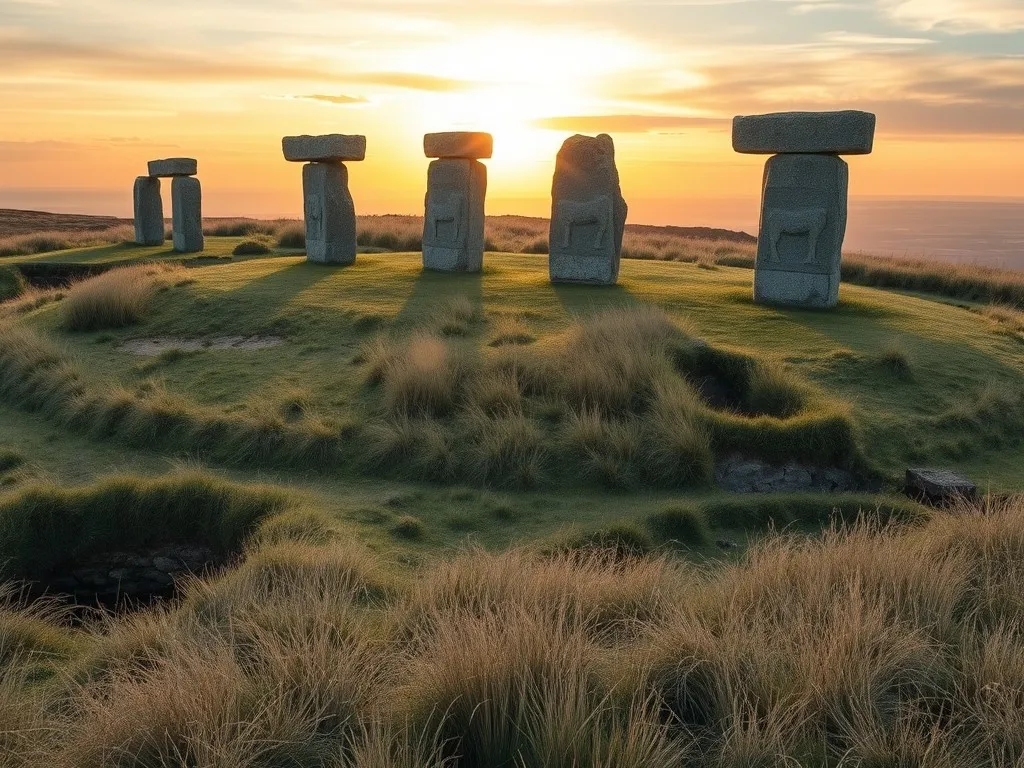
Göbeklitepe's T-shaped limestone monoliths carry elaborate carved imagery, while Stonehenge's sarsen trilithons are dressed post-and-lintel construction.
Layout and Architecture: Stone Circles With Different Logic
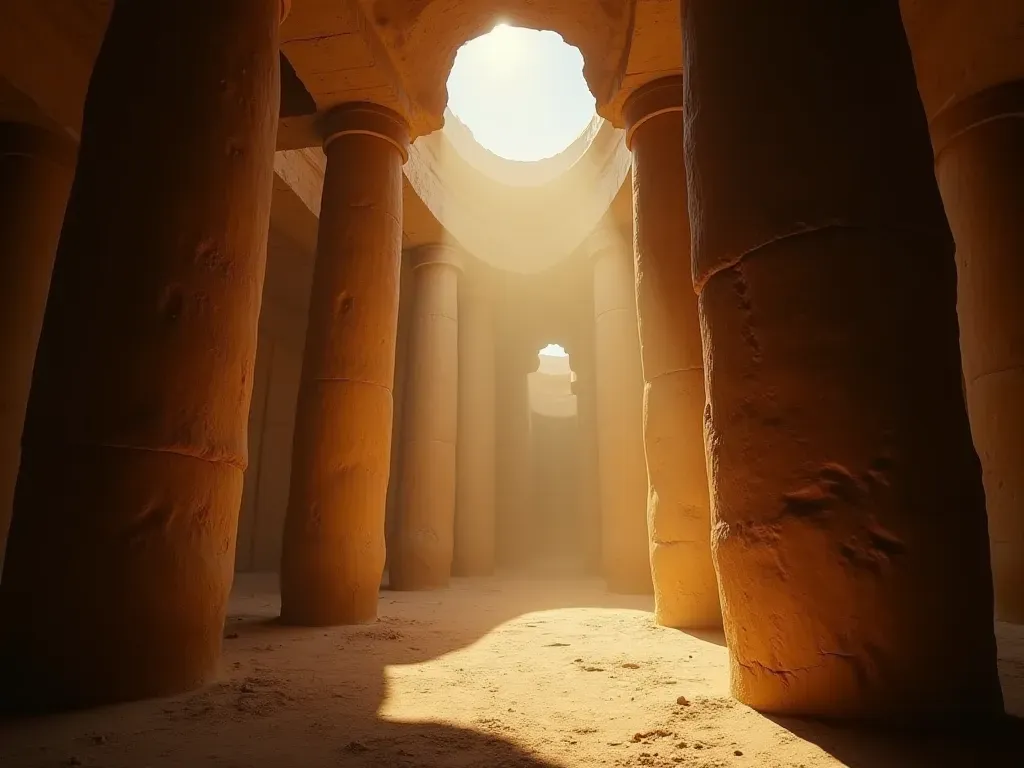
Göbeklitepe is not one circle but a hill covered in them. Klaus Schmidt's excavations revealed more than 20 circular stone enclosures, the largest measuring about 20 metres across, and every one is built around a pair of tall central pillars facing each other. The walls curve in to hold those pillars, so the plan reads as a series of rooms rather than a single monument.
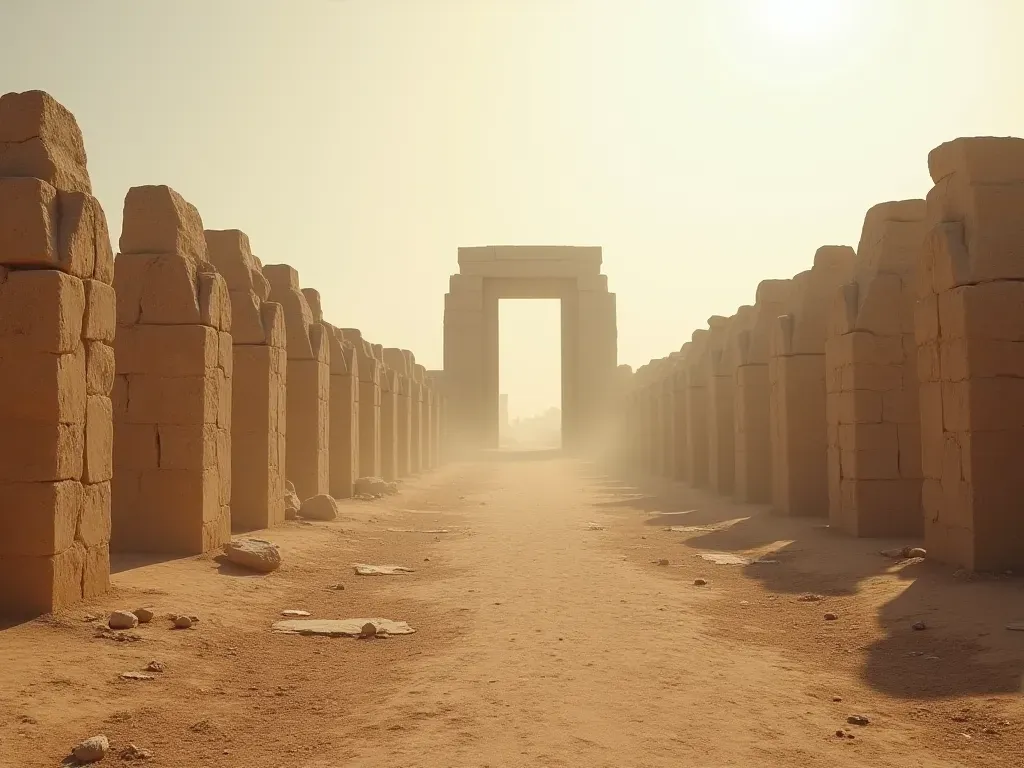
Stonehenge grew the other way round. It began around 3100 BCE as a circular ditch and bank earthwork pierced by 56 Aubrey Holes, and only later did the great sarsen trilithons arrive, set in a horseshoe inside the ring. The layout is concentric and open to the sky, with posts and lintels framing sightlines rather than sealing space.
The difference in logic is visible at a glance. Göbeklitepe's architecture is sculptural and enclosed: pillars carved with animals, walls pressing close, each enclosure a self-contained stage. Stonehenge is open, aligned and post-and-lintel in style, its stones arranged to mark directions and let people gather around them. One site builds inward, the other builds outward — and the carved symbols on its pillars belong to that enclosed, image-filled world.
Purpose and Abandonment: Ritual Complex vs Burial and Ceremony
The carvings, the inward-facing enclosures and the open sarsen circle each express a different idea of what a monument is for. The evidence at Göbeklitepe points to ritual use and deliberate burial rather than to a temple in the everyday sense: people came together, raised the enclosures, used them, and then deliberately covered the whole complex around 8000 BCE. That burial was an act, not neglect — the site was closed on purpose and left.
Stonehenge has no single purpose to pin down. Over centuries it accumulated meanings: a burial ground for cremations and inhumations, a ceremonial arena tied to solstice alignments, and a focus for gatherings that shifted as the surrounding population changed. Where Göbeklitepe was sealed and abandoned, Stonehenge was rebuilt, rearranged and reused, its function rewritten by each generation that worked on it.
Reading either site through the other's lens distorts both. Göbeklitepe is not a proto-Stonehenge, and Stonehenge is not a later version of the Anatolian enclosures. The comparison is about difference, not lineage — two separate answers to the question of how to mark a place as sacred, made by people who never knew of each other.
What the Comparison Actually Changes
What the comparison changes is Stonehenge's status: monumental stone architecture, carved pillars, enclosure walls and deliberate burial of the whole complex was already within the reach of communities who hunted and gathered rather than farmed, as the BBC's account of Göbeklitepe describes. Stonehenge can no longer be treated as the moment humanity learned to build big in stone. It is one of the later moments.
Nothing in the archaeology links the two traditions. The builders of Göbeklitepe and the builders of Stonehenge were separated by six millennia, by geography, and by entirely different economies and toolkits. No shared iconography, no diffusion of technique, no line of descent connects them. They are parallel achievements, two independent answers to the same human impulse, and treating one as the ancestor of the other invents a relationship the evidence does not support.
What the comparison changes is the frame around Stonehenge. Seen alone, it looks like an origin. Seen beside Göbeklitepe, it becomes a late chapter in a very long story of stone monument building, one that opens in Anatolia and continues across Europe for thousands of years. The 6,000-year gap does not make Stonehenge less impressive. It makes the story of megalithic building far older, wider and stranger than a single monument on Salisbury Plain can suggest.
Frequently Asked Questions
How much older is Göbeklitepe than Stonehenge exactly?
Göbeklitepe is more than 6,000 years older than Stonehenge. Göbeklitepe dates to around 9600 BCE, with its layers III and II placed between c. 9600 and 8000 BCE, while Stonehenge's construction began around 3100 BCE. That gap makes the two monuments products of vastly different worlds.
Did the builders of Stonehenge know about Göbeklitepe?
No, the builders of Stonehenge almost certainly had no knowledge of Göbeklitepe. More than 6,000 years separate the two sites, and Göbeklitepe was deliberately covered around 8000 BCE, long before Stonehenge's sequence began around 3100 BCE. The builders were also different peoples: hunter-gatherers versus Neolithic farmers.
Which site is more impressive to visit in person?
Impressiveness depends on what a visitor values, since Göbeklitepe offers carved T-shaped monoliths up to 5.5 metres tall in a hilltop setting, while Stonehenge offers sarsens averaging 25 tons within a vast ceremonial landscape. Göbeklitepe's pillars weigh 10 to 20 metric tons, and its largest enclosure spans 20 metres with two elaborately carved central pillars.
Why was Göbeklitepe buried while Stonehenge was left standing?
Göbeklitepe was deliberately covered around 8000 BCE, whereas Stonehenge was never intentionally buried in the same way and remained a standing monument through later periods. The burial preserved Göbeklitepe's enclosures and carvings, while Stonehenge's stones stayed exposed and subject to weathering and later rearrangement.
For the full overview, see ancient history of göbekli tepe.
Related in this series: gobeklitepe artifacts, gobeklitepe age dating.