Göbeklitepe Life
How Old Is Göbeklitepe? Dating the World's Oldest Monument
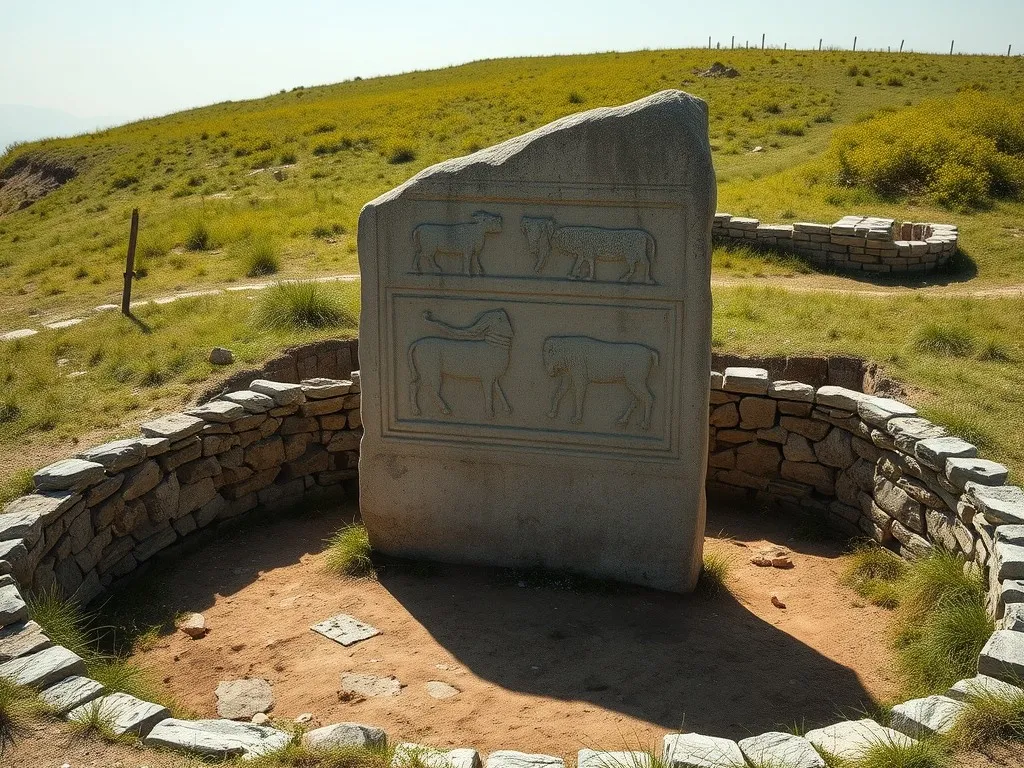
Göbeklitepe is many thousands of years old. Its earliest monumental enclosures date to about 9600 BCE, established by radiocarbon dating with accelerator mass spectrometry on organic samples tied to the site's building layers. That places the first construction in the Pre-Pottery Neolithic, before pottery and before farming dominated the region.
A single number hides a long life. The settlement was inhabited from around 9500 BCE to at least 8000 BCE, so the site was in use for more than a millennium. When someone asks how old Göbeklitepe is, they are really asking two questions: when the first enclosures went up, and how long people kept building and rebuilding there.
Scale is easier to grasp by comparison. Göbeklitepe predates Stonehenge by roughly 7,000 years and the Egyptian pyramids by more than 7,000. Those monuments are separated from the present by a few thousand years; Göbeklitepe sits more than twice as far back.
So the defensible headline is this: earliest monumental construction around 9600 BCE, occupation running to about 8000 BCE, all of it within the Pre-Pottery Neolithic. Any date you meet for the site should fit somewhere inside that span.
How Archaeologists Date a Stone Circle With No Written Records
Radiocarbon dating rests on a simple physical fact: living things take in carbon while they are alive and stop taking it in when they die, after which the radioactive carbon in their remains decays at a steady rate. Charcoal from a hearth, fragments of animal bone, and plant residue pressed into the fill all carry that clock. Measure how much of the radioactive carbon is left and you can calculate how long ago the organism died.
The technique that made Göbeklitepe datable is accelerator mass spectrometry, which counts carbon atoms directly in samples small enough to come from a single seed or a sliver of charcoal. Earlier methods needed chunks of material large enough that a sample might mix debris from different periods. With accelerator mass spectrometry, researchers could date tiny fragments and pin the earliest monumental construction to approximately 9,600 BCE, as reported by gobekli-tepe.com.
A date is only as good as its context. A charcoal fleck is useful only if its layer's relationship to the built structures is clear, such as material sealed beneath a wall or packed into a floor. Charcoal that drifted in later, or that sits in disturbed soil, can date an event that has nothing to do with the circle.
Raw radiocarbon results are also not calendar years. They are calibrated against known atmospheric records and published as ranges with a margin of error, which is why a careful report gives something like a span of decades rather than a single year. When you meet a Göbeklitepe date, look for the range and the sample context before you trust the number.
Why the Layers Matter More Than Any Single Lab Result
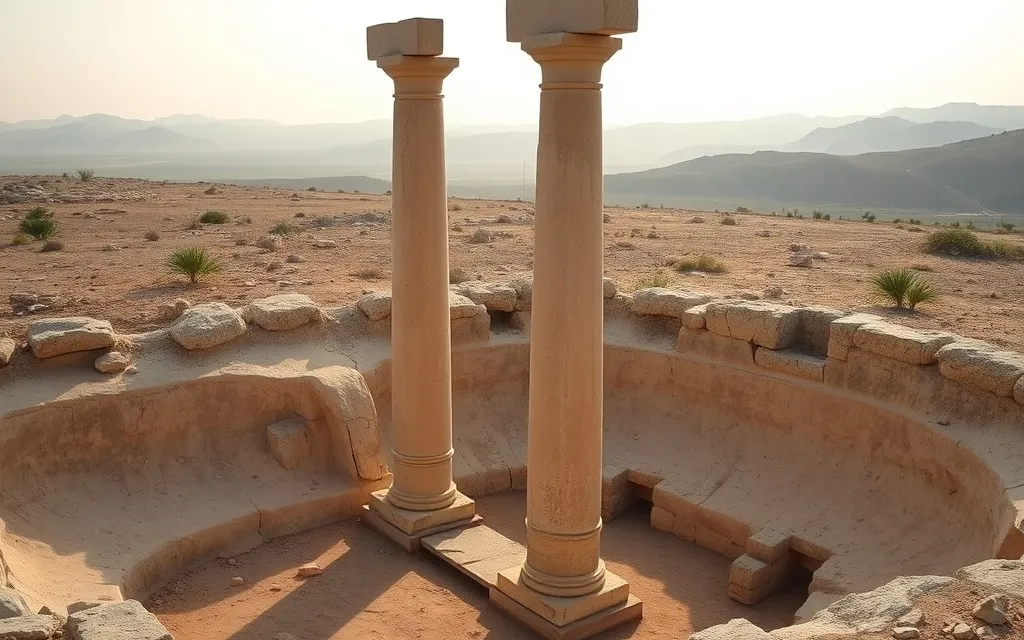
A single lab result describes one sample from one spot. The monument is a mound of accumulated construction, and that mound has its own order. The tell stands 15 m (50 ft) high and covers 8 ha (20 acres), built up over centuries through the digging of enclosures, the deliberate filling of finished ones, and the slow collapse of stone and sediment (Göbekli Tepe). Each of those events left a layer, and each layer sits above or below its neighbours in a fixed order that no laboratory measurement can rearrange.
So the sequence comes first. Excavators record which wall was cut into which deposit, which floor was laid over which rubble, and which enclosure was already filled when the next one was dug nearby. Only after that physical order is mapped do calendar dates get attached to it, using charcoal and other organic samples tied to specific layers. The stratigraphy tells you what is older than what; the radiocarbon tells you roughly when.
When a date and the sequence disagree, the sequence normally wins, and the sample is the thing that gets re-examined.
That is the practical consequence. A charcoal fragment can come from later disturbance, root action or old wood reused in a fire, and a result that contradicts a clear superposition is treated as suspect rather than revolutionary. It also explains why the published date for a single enclosure can sit apart from the site's headline age: the enclosure has its own place in the build-up, and its dates describe that place, not the mound as a whole.
Building Phases: Why You See Several Dates for One Site
The earliest monumental enclosures at Göbeklitepe belong to the late Pre-Pottery Neolithic A, roughly 9600 BCE. That is the figure behind the headline claim, and it applies to the oldest built phase, not to everything on the hill. Each later enclosure carries its own construction date, so a single site can legitimately produce a spread of results separated by centuries.
Building did not stop after the first circles. Construction and modification continued over many centuries, generating successive phases, each with its own masonry style, layout and radiocarbon range. When two published dates for Göbeklitepe disagree by a few hundred years, the usual explanation is that they describe different phases rather than a contradiction. Check which enclosure and which layer a date comes from before comparing it with another.
Abandonment is a separate question from foundation. The site was given up around 8000 BCE, roughly a millennium and a half after the first circles went up. A date for the end of occupation tells you nothing about when the oldest enclosure was built, and mixing the two produces the confused ranges that circulate online.
Quoting "12,000 years" is a rounded figure for that earliest phase, not a date for the whole site. It is defensible as shorthand for the oldest monuments, provided the reader understands it marks a beginning rather than a single moment of construction. Used any other way, it flattens the long sequence of building, use and decay that makes the site worth dating in the first place.
Why Some Lab Results Come Out Younger Than the Monument
Not every radiocarbon result from Göbeklitepe agrees with the architecture. Some samples have returned ages that look too young for the layers they came from, pulling a context into a later millennium than the carved stonework and the stratigraphy would suggest. That gap is not a scandal; it is a normal feature of dating a site built, rebuilt and backfilled over a long span.
Several processes can push a radiocarbon age younger than the monument it is meant to date. Charcoal can be contaminated by younger carbon working its way into the deposit, material from a later fill can be mistaken for the original floor, and recycled or redeposited organic matter can carry a misleading signature. A single anomalous sample tells you something went wrong, not that the enclosure is young.
Klaus Schmidt and his colleagues did not rely on Göbeklitepe alone. They tied the stone structures to nearby sites whose organic material had been carbon dated to roughly 9000 BC, and read the enclosures as broadly contemporary with them. That cross-site comparison gives the monument an age anchor independent of any one difficult sample from the hill itself.
A date range with honest error margins is stronger evidence than a suspiciously precise figure. When a reported age for Göbeklitepe sits awkwardly against the layer it came from, treat it as one measurement in a spread rather than a verdict. The monument is old by the weight of converging evidence, not by any single laboratory number.
How Much of the Site Is Even Dated Yet
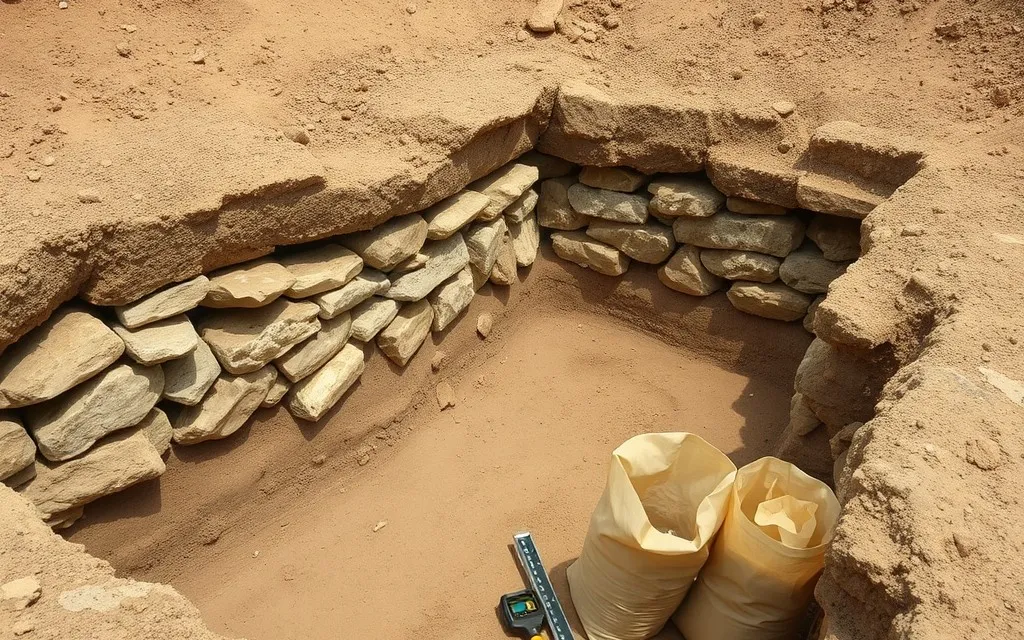
Göbeklitepe entered the archaeological record in 1963, when a surface survey by researchers from Istanbul and Chicago Universities recorded the site without digging it. Excavation only began in the 1990s, and work has continued from 1995 to the present. That means the chronology rests on a few decades of fieldwork at a site that may have been in use for centuries.
Most of the tell is still under soil. Published estimates put the excavated portion at around ten percent of the site, while other counts place it closer to five percent. Either way, the dated sample comes from a small window into a much larger complex, and the enclosures already uncovered are not necessarily representative of what remains buried.
Each new trench can produce charcoal, bone or sediment that sharpens the existing sequence or contradicts it. A sample from a deeper, older context can push an enclosure's construction earlier; a mixed deposit can pull a result later. The people who built these circles left no writing, so every date is an inference from material that happens to have survived.
Expect the headline figure to hold while the details keep shifting. The broad age of Göbeklitepe is secure because many independent measurements converge on it, but the dates attached to individual enclosures should be read as working values that later excavation can revise. Anyone asking who built Göbeklitepe is working from the same incomplete picture.
Reading Any Göbeklitepe Date You Meet
Start with a single question: what event does the number describe? A date for the first construction of an enclosure, a date for a later rebuild, and a date for the moment people stopped using it are three different claims, and only the first tells you how old the monument is. If a page, film or panel gives a year without saying which of these it means, treat it as unverified.
Prefer figures presented as calibrated ranges with the method named, such as radiocarbon on charcoal or bone, over bare years. A phrase like "about 9600 BCE" is a summary; a range with a laboratory method behind it is a claim you can weigh. Round numbers deserve the same caution in the other direction: "12,000 years old" is shorthand for the oldest construction phase, not a measurement of the whole site.
Keep the geography in mind, because it shapes what the dates mean: Göbeklitepe sits roughly fifteen kilometers northeast of Şanlıurfa, and dates from nearby sites in that landscape help archaeologists judge whether a result is plausible or an outlier. A figure that clashes with the regional picture is worth a second look.
Frequently Asked Questions
Is Göbeklitepe older than the Egyptian pyramids and Stonehenge?
Yes, Göbeklitepe is far older than both. It predates Stonehenge by roughly 7,000 years and the Egyptian pyramids by more than 7,000 years, with its earliest monumental construction dated to approximately 9,600 BCE. That places it among the earliest known monumental sites anywhere in the world.
Why do some sources say Göbeklitepe is 12,000 years old while others give a different figure?
The difference comes from rounding and from which date a source emphasizes. Radiocarbon work using accelerator mass spectrometry put the earliest monumental construction at approximately 9,600 BCE, while other accounts describe buildings dating back 12,000 years. These are not competing figures so much as different conventions: a 12,000-year age counted back from the present lands near 10,000 BCE, and the gap between that and 9,600 BCE reflects rounding of the ~11,600-year age rather than a separate event.
Could the dating be wrong, and what would change the accepted age?
The dating could be refined, but the broad picture is well supported by radiocarbon results from accelerator mass spectrometry. Only a small fraction of the site has been excavated, so new trenches and fresh samples from deeper or earlier layers are what would most likely shift the accepted age. Any revision would rest on new lab results, not speculation.
When did people stop using Göbeklitepe, and how do we know?
Göbeklitepe was abandoned around 8000 BCE, after being inhabited from roughly 9500 BCE during the Pre-Pottery Neolithic. Archaeologists know this from the stratified layers of the tell itself, which record construction, use and eventual disuse. The 15 m high mound preserves that sequence, and ongoing excavation continues to test it.
For the full overview, see timeline of göbekli tepe.
Related in this series: gobeklitepe artifacts, who built gobeklitepe.