NASA Scientists Argue We Might Never Know If An Ancient Civilization Existed Before Us
The Great Eraser of History
Try picturing a city. Skyscrapers punching through clouds. Millions of people just living their days. Now erase it. Not through war, not through disaster — just gone. No rubble. No cracked pillars. No faded murals. Nothing.
That's the bone-chilling setup of a new thought experiment from NASA. Scientists Gavin Schmidt and Adam Frank want to know: if an advanced civilization existed millions of years ago, could we even find proof? Their honest answer? Maybe not.
Why Time Is Our Greatest Enemy
Here's the thing about Earth. It's not a static museum. It's a churning machine that devours its own history. Plate tectonics slam continents together, then rip them apart. Erosion grinds mountains into sand over eons. Nothing stays put.
Think of it as a cosmic eraser at work. Most oceanic crust is younger than 170 million years. Anything older gets dragged back into the mantle, melted down, recycled. On land, surfaces get buried or scoured away even faster.
I find this both fascinating and deeply unsettling. Say we built a civilization today that survived ten million years. Would anyone in the distant future know we were ever here? Probably not. The odds are brutally slim.
The Problem With Fossils
You'd think bones would last. They don't, not on a geological timescale. Human fossils from just 300,000 years ago are already hard to come by. Push that to ten million years or more, and finding physical remains becomes nearly impossible.
And cities? They cover less than one percent of Earth's surface. Even if a fraction survived in rock, finding it would be like hunting for a needle in a planet-sized haystack. The signal gets swallowed by the noise of deep time.
Ghosts in the Sediment Layers
So if bones and buildings are out, what's left? Schmidt and Frank point to geochemical fingerprints — subtle chemical shifts in the rock record left behind by industrial activity.
Our era is already writing its signature. Carbon dioxide levels are climbing fast. Oceans are turning acidic. Plastics and synthetic chemicals are settling into deep-sea sediments as we speak.
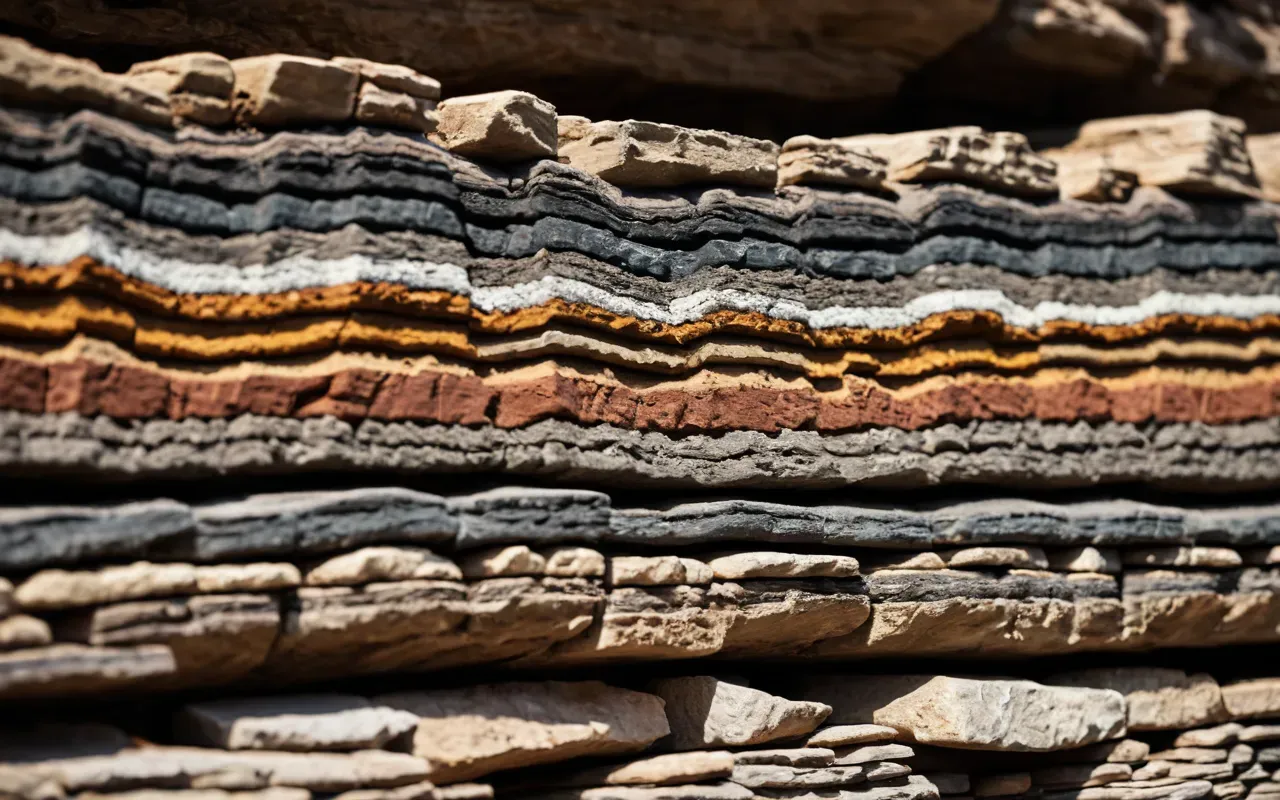
And here's the paradox that really gets me. A sustainable society that lasts a long time might leave almost nothing behind. But a short-lived industrial one burning fossil fuels? That leaves a distinct isotopic spike in the rock.
The Paleocene Eocene Thermal Maximum Clue
Scientists have actually looked for similar signals in the past. Take the Paleocene Eocene Thermal Maximum, fifty-six million years ago. A rapid global warming event, triggered by some mysterious carbon pulse we still don't fully understand.
Temperatures shot up five to seven degrees Celsius. Ocean acidity rose. Deep-sea species went extinct. Certain metal concentrations spiked. Sound familiar? These features eerily match what's happening today because of human activity.
Could an ancient industrial civilization have caused it? Most geologists say no. They chalk it up to volcanic activity or tectonic upheaval. The technological explanation remains speculative at best — and honestly, that's generous.
Why This Changes How We Search For Life
For astrobiologists, this hits uncomfortably close to home. If civilizations tend to collapse quickly, or shift to models that leave no trace, we may never spot them anywhere in the galaxy.
The Drake Equation tries to estimate how many communicating civilizations exist. One of its terms is how long they last. If advanced societies frequently self-destruct — or evolve past detectable industry — the odds of finding them plummet.
It forces a rethink. We're not just searching for ruins. We're hunting for chemical signatures that time itself might have already erased.
The Connection To Our Own History Books
This debate echoes questions about our own recorded past. We lean heavily on recent archaeological finds to piece together ancient societies. But what if much of that history is already gone, lost forever without a trace?
Look at how our understanding of early human life keeps shifting. If you want to see how specific sites challenge the old narratives, check out the north side of Göbeklitepe. It shattered every assumption we held about how early humans lived and organized themselves.
And the way the 12,000-year-old mystery finally dismantled the temple myth? That's a perfect example of how entrenched our biases are. We keep projecting modern concepts onto ancient structures.
The Skeptic's View On Ancient Aliens
I'm skeptical of claims that aliens built our pyramids or temples. The Silurian Hypothesis is different. It doesn't assert anything actually happened. It just asks a simpler, more unsettling question: could we even tell if it had?
Schmidt and Frank are careful here. They're not suggesting intelligent reptiles roamed the Silurian age. No nuclear physics waking them up either. They ground their speculation in solid, boring, reliable geology.
That caution matters. Raise the possibility of a prior industrial civilization, and you open the door to wild speculation. The authors insist we shouldn't invoke such causes without positive evidence. Fair enough.
What This Means For Mars And Venus
If we're hunting for life on other planets, this framework is essential. Deep drilling on Mars or Venus could reveal similar fingerprints if past civilizations existed there. We'd know what to look for.
We need to ask bolder questions. Are there other compounds that leave unique traces in sediment geochemistry over multi-million year timescales? The search is just getting started.
The Implication Nobody Is Talking About
Here's the part that really stuck with me. If geological evidence can be wiped away so easily, then our confidence in any historical narrative built on physical artifacts might be misplaced.
We assume that if something is big and important, it leaves a mark. But nature doesn't care about our sense of importance. It erodes whatever stands in its way, no exceptions.
That applies to our own culture too. If we vanished tomorrow, would future species find enough evidence to understand us? Or would we just be another thin, unremarkable layer in the rock?
Reframing Our Place In The Universe
The Silurian Hypothesis isn't about proving an ancient lost civilization existed. From subtle geological traces alone, that's almost impossible to determine.
Rather, it's about asking what signs civilizations leave behind. And what that reveals about our own fragility — and the footprint we're making on this planet right now.
As we explore sites like Göbeklitepe, where the history is often told wrong, this scientific reminder adds a layer of humility. We don't know everything. We never have.
The story we tell about ourselves is only as good as the evidence that survives. And survival in geology? It's a lottery.
Final Thoughts On The Silurian Question
Do I think we were preceded by an industrial civilization? No. The evidence simply isn't there. But the question itself has changed how I view our own footprint.
We are leaving a mark. Will it last? Maybe not long enough to matter in the grand sweep of Earth's history.
That's a sobering thought. But it's also a motivator — to document our existence in ways that might survive the relentless erosion of time.