The 2000-Year-Old Computer That Proves Ancient Greeks Were Way Smarter Than We Thought
A Lump of Rust That Changed Everything
It started as a total accident. In 1900, sponge divers near the Greek island of Antikythera stumbled upon a sunken Roman shipwreck. They pulled up statues, coins, and jewelry. But inside a small wooden box, they found something else. It looked like a lump of heavily corroded bronze. Just a block of rust. Nobody knew better at the time. It sat in a museum for decades. Ignored. Forgotten. Completely unappreciated.
Then Derek J. de Solla Price from Yale University decided to take a closer look. He used X-rays to peer inside the corroded fragments. What he saw stopped him cold. It wasn't just rust. It was a machine. A highly complex machine with interlocking bronze gears. And it was over 2,000 years old. This discovery forced historians to completely rethink the technological capabilities of the ancient world. We assumed ancient civilizations were primitive. This machine proved we were wrong.
The World's First Analog Computer
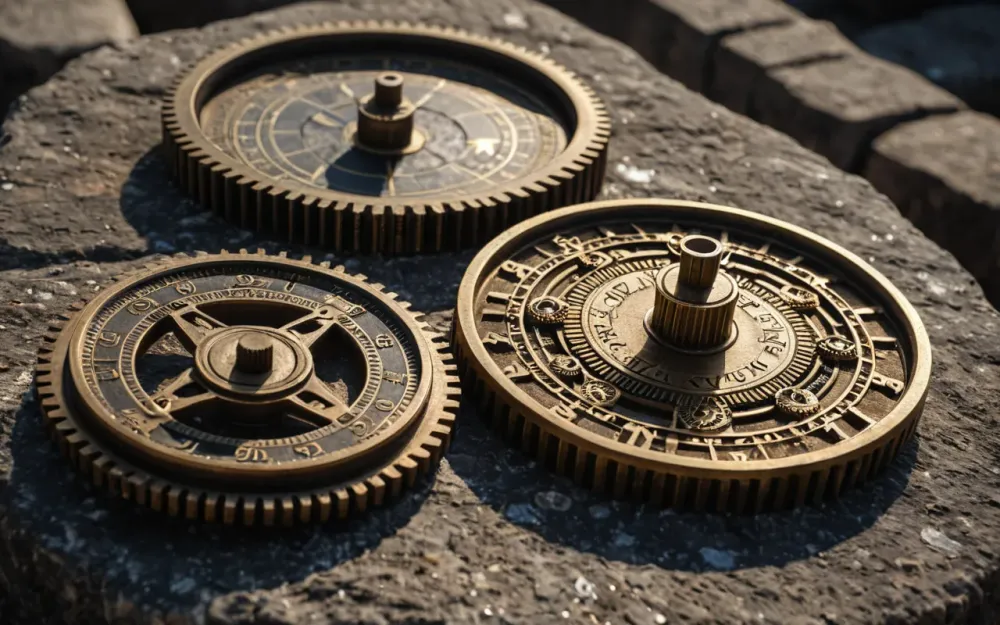
Here is the thing that really blows my mind. This device is essentially a computer. It is an analog computer built around 87 BC. You turn a hand crank, and it calculates. It can predict the positions of the Sun and Moon. It tracks planetary movements. It even calculates the phases of the Moon. And it doesn't just stop there. The mechanism could predict eclipses. It could track the seasons. It could even determine the dates of the ancient Olympic Games. That is not a simple calendar. That is a sophisticated calculation engine.
Think about the implications. No machine with comparable mechanical complexity appeared again for roughly 1,500 years. We lost this knowledge. The gears vanished from history. It wasn't until the Middle Ages that we saw similar technology again. This means ancient Greek engineers were centuries ahead of their time. They possessed a level of precision engineering that we tend to associate with the industrial revolution. This shatters the linear view of technological progress. It suggests that innovation isn't always a straight line forward. Sometimes it loops. Sometimes it gets lost.
Why The Gears Matter So Much
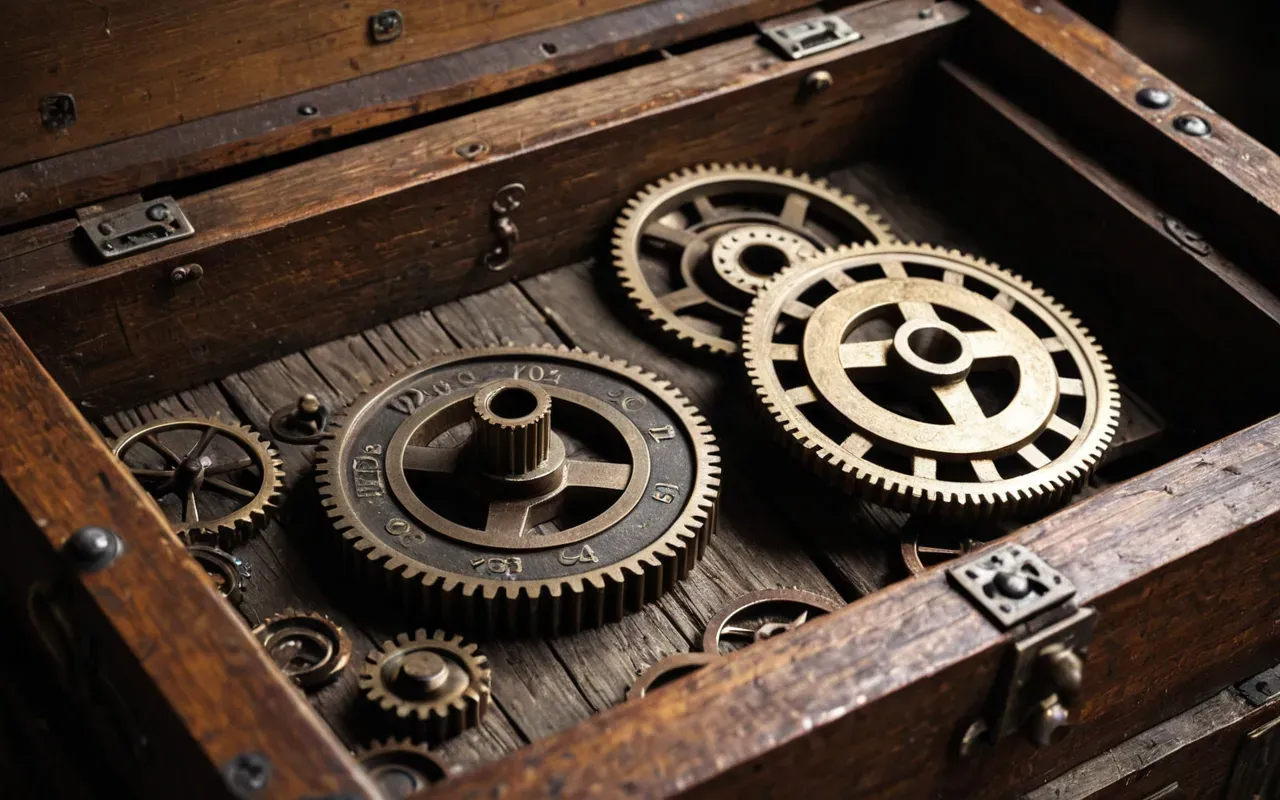
Modern X-ray and gamma ray imaging revealed the secrets hidden inside the rust. Researchers found at least 37 finely crafted bronze gears. These gears worked together with incredible precision. They were not crude. They were meticulously designed. Hidden inscriptions covered many of the dials. The writing featured Greek text and zodiac symbols. These acted as instructions for operating the machine. It was user-friendly. It was built to be used. This wasn't a one-off experiment. It was a finished product. A tool for understanding the cosmos.
I was struck by how much we still don't know. We don't know who commissioned it. We don't know where it was originally used. Some historians believe it might have been built by astronomers. Others suggest it served as an educational tool. It might have been used to demonstrate the mathematical knowledge of elite scholars. Regardless of its purpose, the engineering required was staggering. Many scholars believe the famous Greek astronomer Hipparchus might have helped design it. He is often called the founder of trigonometry. If he was involved, it explains the mathematical sophistication.
Rethinking Ancient Intelligence
Look, we tend to think of the past as simpler. We assume that because they didn't have electricity, they didn't have advanced ideas. The Antikythera Mechanism proves that assumption wrong. The ancient Greeks understood complex mechanics. They understood astronomy. They could build devices that performed calculations. This changes how we view early human innovation. It aligns with what we see at sites like Göbeklitepe. When you look at
The discovery forces us to ask hard questions. How many other machines like this exist? How many were lost to time? How much knowledge did ancient societies possess that we have forgotten? The mechanism could calculate more than 42 different astronomical and calendar events. That is a massive amount of data processing for a device made of bronze and wood. It shows that early humans were capable of profound intellectual achievements. They were not just surviving. They were exploring. They were calculating. They were trying to make sense of the universe.
The Lost Knowledge Gap
The fact that this technology disappeared for 1,500 years is really unsettling. Why did we lose it? Was it too complex to maintain? Did the knowledge die out with the craftsmen? Or was it simply too rare? Some historians believe only a few of these machines were ever made. If so, it was an elite tool. A luxury item for the intellectual class. This raises questions about how knowledge was preserved in the ancient world. It wasn't written down in books. It was encoded in gears. When the gears broke, the knowledge broke with them. That is a fragile way to store information.
I think this connects deeply to the broader narrative of early human history. Sites like Göbeklitepe show us that early societies had complex beliefs and structures. The Antikythera Mechanism shows us they had complex technology. These two things together paint a picture of a past that was far more sophisticated than we usually admit. We keep seeing evidence that early humans were innovators. They were not just passive victims of their environment. They were active engineers. They were trying to control and understand their world. This mechanism is a physical proof of that ambition.
What This Means For Modern History
So what do we do with this knowledge? We have to rewrite the textbooks. We have to stop viewing technological progress as a simple upward climb. It is messier. It is more complex. There were peaks of innovation that we completely forgot about. This mechanism is a reminder of those peaks. It proves that the ancient Greeks were capable of building sophisticated computing devices. It challenges the idea that the computer is a purely modern invention. The concept of computation is ancient. The hardware just changed.
For me, this is the most exciting part. It opens up new possibilities for what else might be out there. If they could build this, what else could they build? Are there other lost technologies hidden in shipwrecks? Are there other artifacts sitting in museums that we have misidentified? The Antikythera Mechanism encourages us to look closer. It encourages us to question our assumptions. It tells us that the past is stranger and more impressive than we think. We need to keep digging. We need to keep scanning. There is still so much we do not know.
The Enduring Mystery of the Mechanism
Even after all this research, many questions remain. The machine is still a puzzle. We have reconstructed much of it using modern imaging. But we still don't have the full picture. Some gears are missing. Some inscriptions are unreadable. The exact function of certain dials is still debated. This uncertainty is actually a good thing. It keeps the conversation alive. It drives new research. It inspires new technologies to help us study it. The mechanism is not just a historical artifact. It is an active research subject. It continues to teach us new things.
I believe this artifact will continue to reshape our understanding of history. It bridges the gap between the ancient and the modern. It shows that the desire to calculate, to predict, and to understand the cosmos is a fundamental human trait. It exists in the ancient Greeks just as much as it exists in us today. The Antikythera Mechanism is a testament to human ingenuity. It is a reminder that we are capable of great things. Even thousands of years ago, we were reaching for the stars. We were trying to map the heavens. And we built machines to help us do it. That is a powerful legacy.