The Amazon Was Never Wild And This New Discovery Proves It Completely
The Myth of the Pristine Wilderness Is Dead
For centuries we have been sold a lie. The narrative tells us that the Amazon rainforest is an untouched Eden, a wild frontier where nature reigns supreme and humans are mere visitors. I used to believe it too. We look at satellite images of endless green canopy and assume emptiness. But what if that view is completely wrong? What if the forest we see today is not natural but cultivated?
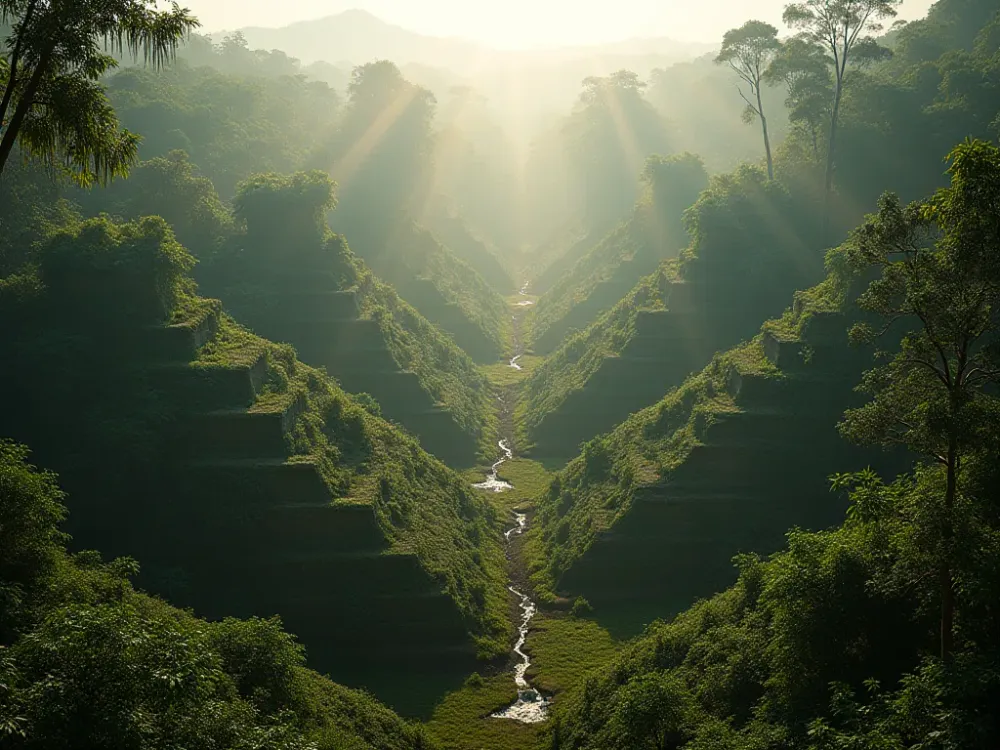
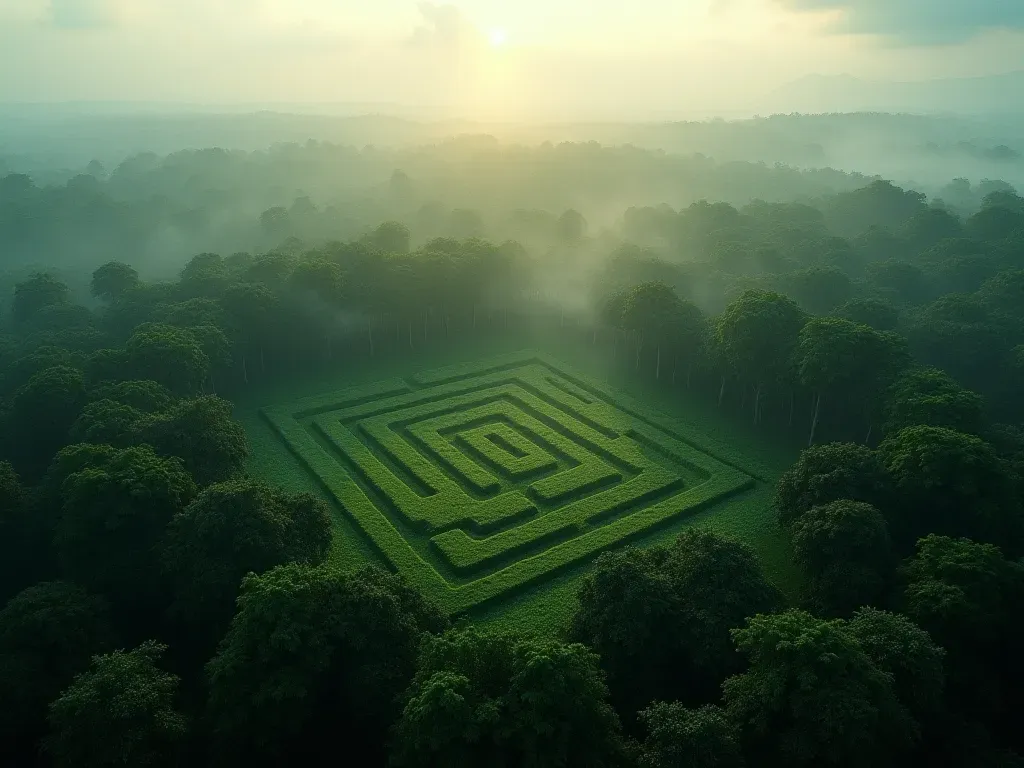
A new study published in _Nature_ has shattered this illusion. Researchers have uncovered nearly four hundred ancient geometric structures hidden beneath the foliage in Acre Brazil. These are not random mounds or natural formations. They are deliberate constructions squares rectangles and octagons connected by a vast network of roads. This discovery forces us to ask why we never saw them before.
Martti Pärssinen the lead author from the University of Helsinki put it bluntly. He said these earthworks totally change our understanding of the supposedly pristine Amazon. And he is right. The idea that this region was lightly populated before European contact has been a cornerstone of historical anthropology for too long. It turns out we have been looking through a blind spot.
Meet the Aquiry Civilization
The people behind these structures are known as the Aquiry. They existed between six hundred BC and AD eight hundred fifty. That is a long time to leave no trace in mainstream history books. Yet their footprint was massive. Scientists now estimate that up to three million people lived in this region at its peak. Think about that number for a moment.
Three million people is comparable to the total population of ancient Greece during its height. But unlike the Greeks who built stone cities that still stand today the Aquiry worked with earth and wood. Their architecture was designed to blend back into the forest once abandoned. This makes them incredibly difficult to spot without advanced technology like LiDAR.
Pärssinen drew a fascinating parallel to ancient Greece. He noted that just as Greek city-states shared gods traditions and the Olympics the Aquiry communities seem to have shared similar cultural practices across vast distances. The geometric shapes were not random but part of a standardized language of landscape design.
Why Geometry Matters in the Jungle
The shapes themselves are telling. Squares and octagons require planning labor and coordination. You do not wake up one day and decide to dig a perfect rectangle into the rainforest floor without a reason. These enclosures likely served as public ceremonial and political centers.
Imagine the scene. Hundreds of people gathering for ritual dancing music feasting and athletic competitions. Some structures even featured ball courts similar to those found in Mesoamerica. This was not just survival; this was society. It was culture. And it happened right under our noses.
Researchers estimate that constructing an average-sized enclosure would have required around three hundred workers. That is a significant mobilization of labor. It implies organized leadership resource management and social hierarchy. The Aquiry were not scattered bands of hunter-gatherers but a complex society with clear organizational structures.
The Roads That Connected Them All
Perhaps the most striking aspect of this discovery is the connectivity. Many of these earthworks are linked by ancient roads. These paths crisscrossed over six hundred thirty thousand square miles in Acre alone. That area is larger than the state of Georgia.
This infrastructure suggests trade communication and movement on a massive scale. Goods ideas and people flowed through this region for centuries. The roads allowed distant communities to interact maintain shared beliefs and coordinate large-scale projects.
Satellite mapping combined with ground surveys revealed that only thirty-six of the four hundred structures found had been previously discovered. That means we missed over ninety percent of them until now. How many other sites are still hidden beneath the canopy waiting to be uncovered?
What Happened to the Aquiry People?
The story does not end with their peak. The constructions appear to have been abandoned between eight hundred fifty and nine hundred fifty CE. This coincides with a period of rapid collapse seen in other pre-colonial civilizations around the world.
Scientists believe climate change disease or social upheaval may have contributed to their disappearance. Whatever the cause it was swift enough that the forest quickly reclaimed the land. Within generations the roads vanished and the earthworks were swallowed by vegetation.
This rapid disappearance is what allowed the myth of the pristine wilderness to take hold. Without visible ruins early explorers assumed the land was empty. They did not realize they were walking through a ghost city.
Why This Changes Everything We Know
This discovery challenges more than just local history. It forces a global rethink of how human societies developed complexity. We often associate urbanization with stone bricks and metal tools but the Aquiry prove that large-scale organization can exist without them.
It also highlights the fragility of indigenous knowledge. The descendants of these people still live in the region today yet their ancestors achievements were erased from official records for centuries. This is a reminder that history written by conquerors often misses crucial chapters.
Furthermore it has implications for conservation efforts. If the forest was managed by humans for millennia then current ecosystems may not be entirely 'natural'. Understanding this history could lead to better strategies for protecting biodiversity while respecting indigenous land rights.
The Technology Behind the Discovery
We owe this revelation to modern tech. LiDAR light detection and ranging allows scientists to see through dense vegetation by bouncing laser pulses off the ground. It creates detailed three-dimensional maps of terrain features invisible from above.
Without LiDAR we might still be flying over these sites blind. Traditional aerial photography cannot penetrate the canopy effectively. This technology has revolutionized archaeology in tropical regions worldwide.
The team surveyed over seventeen hundred square miles. That is an enormous area to cover thoroughly. The efficiency of LiDAR made this possible in a relatively short timeframe compared to manual excavation methods.

Combining satellite images with LiDAR data allowed researchers to extrapolate findings. They calculated that the entire region may contain between twenty-four thousand and thirty thousand constructions. The scale is staggering.
Rethinking Human Environmental Impact
This story flips the script on environmentalism. We often portray humans as invaders who destroy nature but here we see a society that coexisted with it for centuries. They modified the landscape without destroying its ecological integrity.
Perhaps there is a lesson for us today. We do not have to choose between development and preservation entirely. Smart design can integrate human needs with ecological health just as the Aquiry did.
Of course modern pressures are far greater than those faced by the Aquiry. But understanding their success offers hope that harmonious living is possible if we approach it with respect and intelligence.
Connecting to Broader Ancient Mysteries
This discovery resonates with other recent findings worldwide. From Göbeklitepe in Turkey to sunken cities off coastlines we keep uncovering evidence that human history is richer and older than textbooks suggest.
If you are curious about how early sites challenge conventional timelines check out discussions on how civilization actually began. The pattern seems to be that monumental efforts preceded agriculture not the other way around.
Similarly the idea that the Amazon was never wild gains traction with each new study. These narratives are shifting rapidly thanks to better tools and open minds.
Final Thoughts on a Rewritten Past
The Aquiry civilization is a sharp reminder that absence of evidence is not evidence of absence. Just because something is buried or overlooked doesn't mean it never happened. Our job, both as historians and as citizens, is to keep digging, keep looking, and refuse to settle for easy silence.
As we push deeper into the rainforest, let's do so with humility. We're only beginning to grasp how deeply nature and culture have always been intertwined. Honestly, we barely understood any of this until recently.
This story isn't just about the Aquiry. It's about us, and the choices we make in reading our shared past. Do we cling to old myths, or do we embrace a messier, more complex truth? The decision is ours to make.
I believe the latter is inevitable. Every new discovery chips away at ignorance and builds another bridge toward understanding. And honestly? That feels pretty amazing.
So next time you see a picture of the Amazon, remember: it's not just trees. It's layers of history, waiting to be read again.
Let's keep supporting science that chases the truth, no matter where it leads. The world is far bigger than we once thought.
Stay curious. Stay critical. Never stop questioning what you're told. That's how history moves forward.