The Surprising Truth About Göbeklitepe That Challenges Everything We Thought We Knew
Unmasking the Hidden Engineering of Göbeklitepe That Defies Historical Assumptions
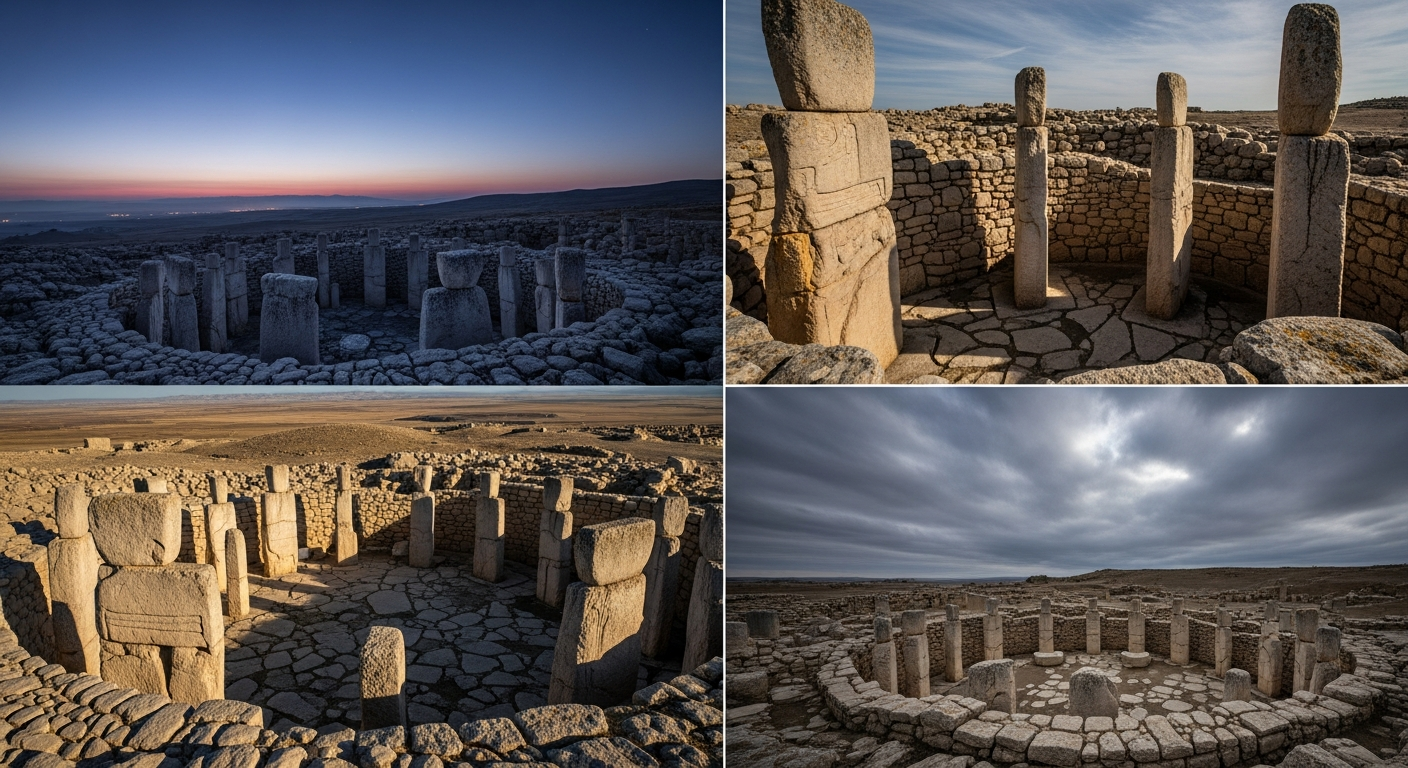
Most discussions about Göbeklitepe focus on its age, its symbolic carvings, and its monumental vibe. Yet, beneath its majestic T-shaped stones lies an astonishing detail often overlooked: the advanced engineering techniques that could rival those of later civilizations. Researchers have uncovered evidence suggesting that ancient builders employed methods that challenge the notion of primitive technology. For example, the precise carving and seamless fitting of stones, achieved without modern tools, indicate a sophisticated understanding of leverage, balance, and geology—skills that seem more aligned with later Neolithic advances than with hunter-gatherer techniques. This insight reshapes our view of early human ingenuity, hinting that the knowledge behind Göbeklitepe could have been passed down or developed through a complex, perhaps even global, exchange of ideas far earlier than previously thought. Delving into these engineering marvels not only rewrites a chapter of history but forces us to question the linear progression of technological evolution we often take for granted.

The Symbolic Universe Hidden in Göbeklitepe’s Carvings That Silently Rewrites Human Spiritual Origins
While many interpret Göbeklitepe’s carvings as mere animal motifs or abstract symbols, recent scholarship suggests they encode a complex spiritual language that predates organized religion. Deep analysis reveals that the animal figures, often stylized and interconnected, could represent a universal mythic code, reflecting early humans’ sophisticated attempts to comprehend the cosmos. Intriguingly, some symbols found at Göbeklitepe align with later spiritual motifs discovered worldwide, implying a shared, perhaps even global, symbolic system. This challenges the misconception that early hunter-gatherers lacked the symbolic capacity we associate with more advanced societies. Instead, Göbeklitepe’s carvings unveil a vibrant consciousness that saw the universe as interconnected and sacred. These insights push us to rethink the origins of spirituality, suggesting that the quest for meaning began much earlier than we assumed—and that the roots of complex symbolism are woven into the very stones of Göbeklitepe.
Why the Narrative of Göbeklitepe as a Simple Religious Site Is Fundamentally Flawed
The common narrative positions Göbeklitepe solely as an early religious sanctuary, but this view becomes problematic when examined through recent discoveries and contextual analysis. Far from a mere worship space, Göbeklitepe appears to have functioned as a symbolic hub that integrated social, technological, and spiritual dimensions of early human communities. Its layout suggests a communal gathering place designed for complex rituals that may have played a role in social cohesion or territorial identity. Moreover, artifacts and spatial arrangements hint at an early form of collective storytelling, possibly used to transmit essential knowledge or cultural myths across generations. By dismissing the site as only spiritual, we overlook its potential role as a catalyst for early societal organization. Challenging this misconception allows us to see Göbeklitepe as a nexus of innovation, blending ritual, technology, and social cohesion into a single, complex purpose—a genuine turning point in human history.
How Göbeklitepe’s Overlooked Technological Aspects Reshape Our View of Early Societies
A fascinating aspect that remains underappreciated is the technology embedded within Göbeklitepe’s structures, which suggests that early humans possessed advanced construction knowledge not typically associated with prehistoric societies. Evidence points to the possible use of levers, pulleys, or even early form of cranes, enabling the erection of massive stones and complex arrangements with remarkable precision. Some scholars argue that these techniques imply a shared technological heritage or innovation akin to concepts seen in later civilizations. This perspective destabilizes the linear narrative that technological progress only accelerates with time, revealing instead that early societies could have achieved significant engineering feats through collective ingenuity. Recognizing these hidden technological aspects not only inspires awe but also demands a re-evaluation of early human capability, shifting the debate from primitive to pioneering.
Frequently Asked Questions About Göbeklitepe That Reveal Deeper Mysteries
Göbeklitepe is considered the oldest known religious structure because its earliest layers date back around 12,000 years, predating other monumental sites. Its sophisticated carvings and layout suggest ritual use, positioning it as a pioneering spiritual center in human history.
While still debated, evidence indicates early humans used basic yet effective techniques like rolling on logs or levering with wood and stone tools. Some recent studies suggest more sophisticated methods like countersunk holes for ropes, hinting at complex engineering skills.
Göbeklitepe's carvings are distinguished by their complexity, scale, and symbolism. Unlike typical early art, they appear to encode mythic narratives and cosmological beliefs, implying a sophisticated symbolic system far ahead of its time and challenging the idea that early humans lacked abstract thinking.