Inside Göbeklitepe’s Hidden Wall Statue That Could Rewrite Our Spiritual Past
The Surprising Discovery That Could Change Everything
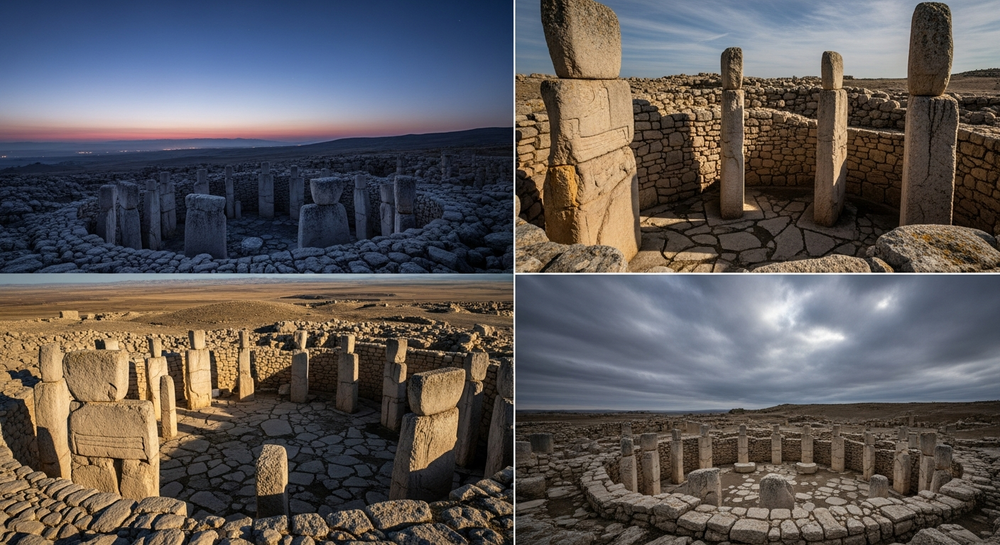
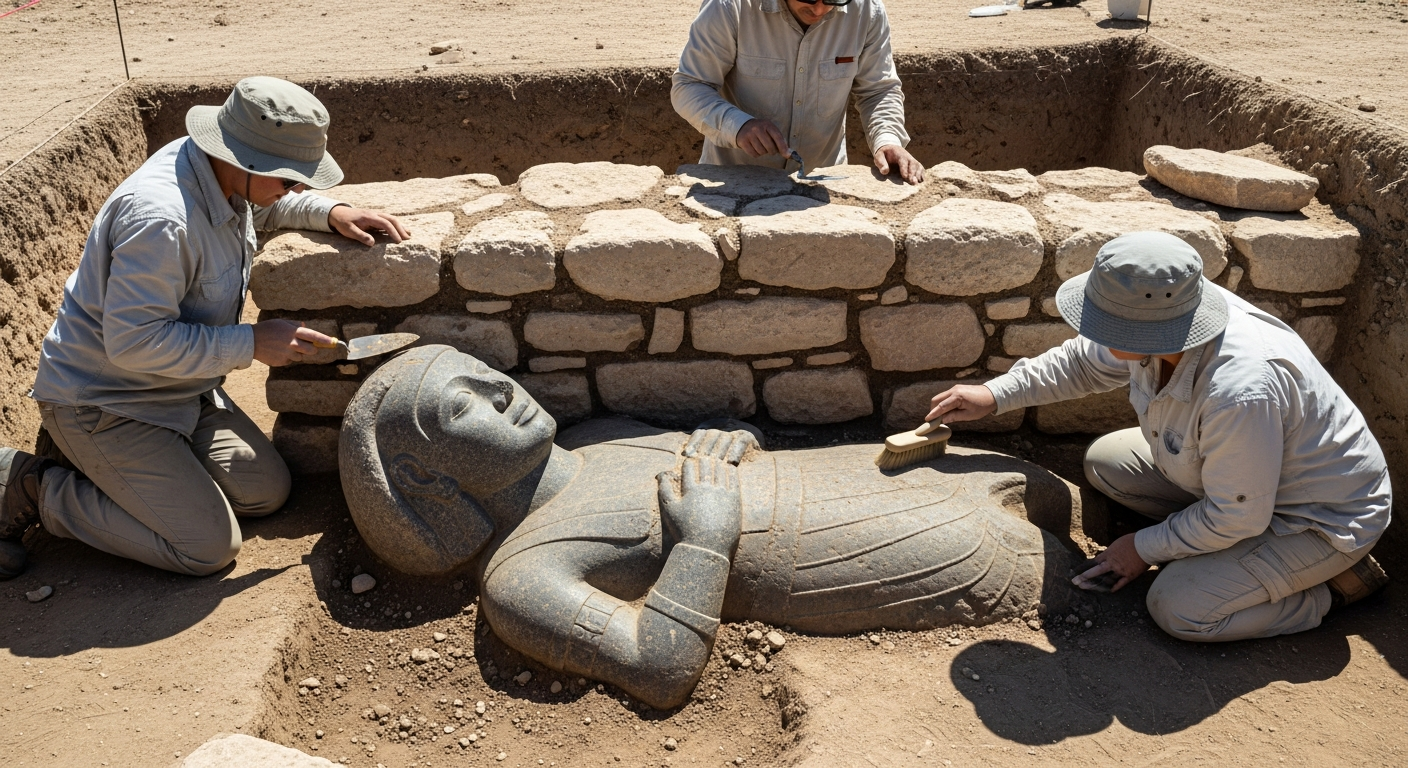
In the ongoing excavations at Göbeklitepe, one of the most significant and startling findings emerged unexpectedly. Amidst the ancient stones and ritual carvings, archaeologists unearthed a human figure carved into a wall, lying on its back with missing feet but a clearly visible head and torso. This discovery is not just visually striking but profoundly provocative: why would such a detailed human statue be embedded within a wall in a 12,000-year-old site? This question alone should spark a reevaluation of what we believed we knew about early human spirituality and technological sophistication. The placement hints at a purpose more complex than simple decoration; perhaps it was an offering, a symbol, or an early form of ritual technology that we are only beginning to understand, challenging our traditional narratives of primitive societies. Curiously, this find comes at a time when Göbeklitepe’s archaeological revelations continue to rewrite the story of human origins, with recent studies suggesting that early societies had more advanced spiritual and cultural practices than previously acknowledged. These insights are pushing us toward a new chapter of understanding—one where early humans may have harnessed symbolic technologies and spiritual expressions that precede written history, fundamentally shifting our grasp of civilization’s dawn. If you’re curious about how Göbeklitepe’s discoveries challenge your view of human spiritual evolution, this article offers an intriguing perspective.
Why Embedding a Human Statue in a Wall Matters
The fact that this human-like statue was placed inside a wall—and not displayed openly—raises questions about its purpose and significance. In the Neolithic context, statues are often associated with ritual and religious practices, but embedding such a figure suggests a different layer of meaning, possibly linked to ideas of protection, sacrifice, or even a proto-religious system that predates known organized worship. Moreover, the fragmentary state, especially the missing feet, adds an element of ambiguity: was the statue deliberately broken or did it deteriorate over time? The architectural context hints at complex ritual behavior—perhaps an act of offering or an early form of symbolic technology designed to communicate with spiritual forces or ancestral spirits. These findings challenge the long-held assumption that early societies relied solely on simple, animistic beliefs without sophisticated symbolism. Instead, Göbeklitepe’s artifacts reveal a culture that perhaps integrated technology, symbolism, and spiritual expression into a seamless system, creating a tapestry of early human beliefs that we’re just now beginning to unravel. The implications extend beyond archaeology; they question the very foundations of what constitutes technological and spiritual development. If you want to explore how this changes our understanding of ancient civilizations, check out this overview of ancient technologies at Göbeklitepe.
Re-examining Humanity’s Origins Through a New Lens
This find at Göbeklitepe pushes us to reconsider not just the technological capabilities of our ancient ancestors but also their spiritual and cultural sophistication. The prevailing view has long been that early societies relied on basic animism and rudimentary ritual practices until the advent of organized religion centuries later. Now, with such artifacts suggesting complex symbolism and ritual embedded into their very architecture, it appears that spiritual expression and technological innovation may have co-evolved much earlier than traditionally thought. This challenges the linear narrative of human progress, which often sees technological development as the primary driver of civilization. Instead, Göbeklitepe’s discoveries suggest that human beings may have been engaged in sophisticated symbolic practices—like embedding statues or constructing ritualized spaces—long before the rise of metallurgy, writing, or agriculture. This underlines a profound truth: our ancestors were far more advanced in their spiritual and symbolic worlds than our textbooks indicate. To get a broader perspective on how these insights could change our overall understanding of human history, you might want to explore this detailed account of Göbeklitepe’s role in civilization’s dawn.