
The Surprising Technological Genius Hidden in Göbeklitepe That Reshapes Human History
Unveiling the Overlooked Technological Feat of Göbeklitepe
Beneath the iconic circular stone pillars of Göbeklitepe lies a technological marvel that has long gone unnoticed by mainstream archaeology. While many focus on its religious or ritualistic functions, recent research uncovers that the site’s creators possessed an extraordinary understanding of stone-cutting, lifting, and alignment techniques that defy our expectations of pre-Neolithic engineering. Tools made from flint and bones, once thought simple, reveal evidence of sophisticated craftsmanship that could rival some ancient civilizations known for their technological prowess. This challenges the long-standing assumption that early humans had limited technological skills and suggests a complex tradition of technological innovation stretching far beyond what was previously believed. If we look deeper into these stone carvings and the precise alignments, it becomes clear that this was not merely a ritual site but a monument built with cutting-edge knowledge that might have relied on early engineering principles akin to modern practice in some ways. Recognizing these technological feats invites us to reconsider how early humans approached construction, perhaps using methods of geometry and planning that are surprisingly advanced for an era often dismissed as primitive.

The Hidden Engineering Secrets of the Carvings and Pillars
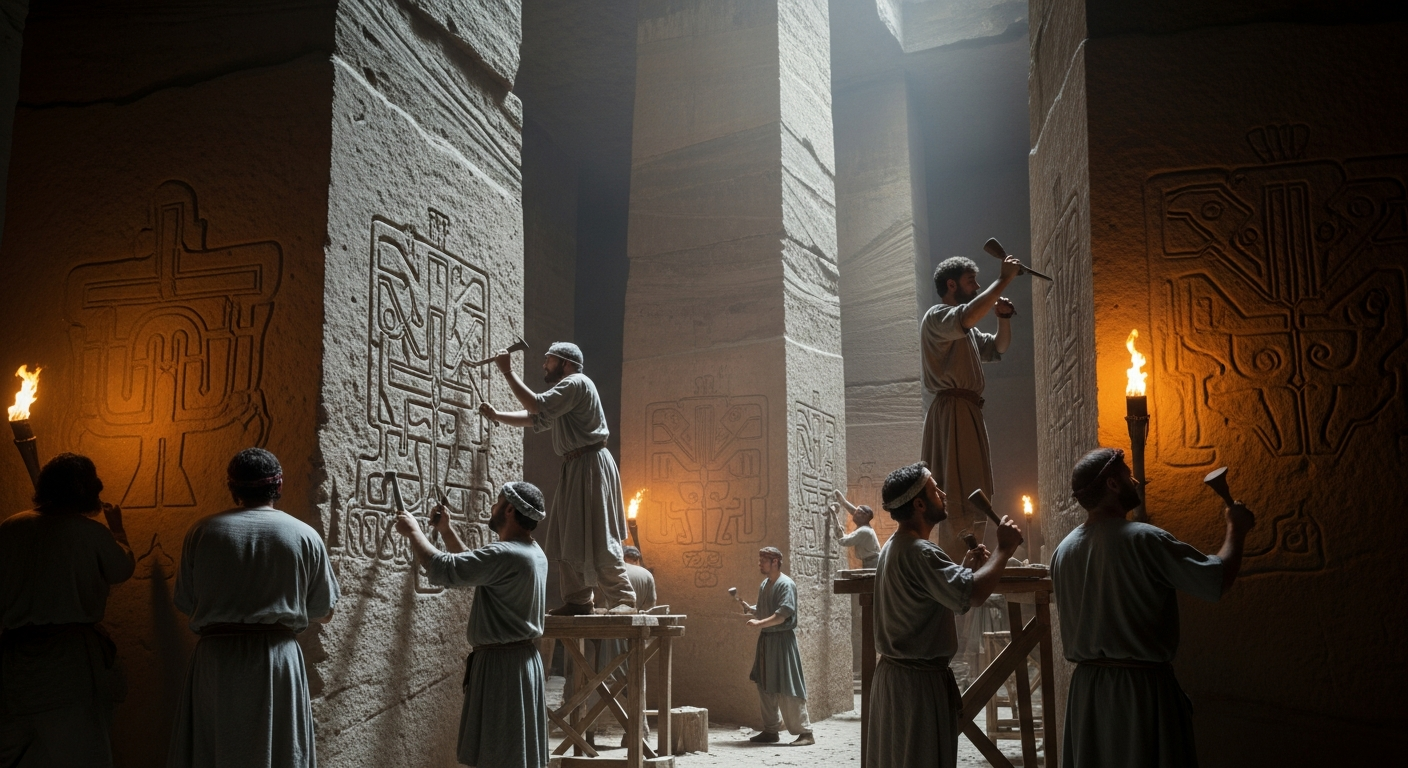
One of the most compelling clues pointing toward advanced ancient technology at Göbeklitepe lies in the intricate carvings decorating the pillars. These carvings, depicting animals and abstract symbols, are not merely decorative; many exhibit tools and manufacturing techniques. For example, repeated incisions and drilling marks suggest the builders employed specialized tools—possibly even early forms of drill technology—despite the absence of metal tools. The way the stones are positioned also indicates an understanding of leverage and load distribution, implying that early humans might have developed simple yet effective mechanical principles. Surprisingly, some of these techniques resemble rudimentary versions of modern machining, such as creating precise holes and notches. What's even more astonishing is that attempts to replicate these ancient methods, using only observed tools, have yielded similar results, reinforcing the hypothesis of a sophisticated technological knowledge base. This discovery forces us to redefine the narrative: ancient people weren’t just primitive gatherers but innovators capable of complex engineering tasks, long before the advent of metal tools or written language.
Rethinking Innovation in the Neolithic Era
The revelation of such advanced technological skills at Göbeklitepe prompts a fundamental reassessment of what early humans could achieve. Conventionally, the Neolithic period is viewed as a time of gradual development with limited technological breakthroughs. However, the precise stonework, complex carvings, and planning involved in Göbeklitepe suggest a level of innovation that challenges this perception. It’s likely that knowledge-sharing and skill transmission played a critical role, involving artisans who mastered techniques that allowed them to manipulate stone with remarkable accuracy. This may have required not just manual dexterity but conceptual understanding—a form of primitive engineering science. As researchers push the boundaries of what is possible, new theories propose that early societies might have developed proto-engineering practices, passing them through oral traditions or specialized craft guilds. Recognizing this shift helps explain how complex sites like Göbeklitepe could have emerged in a relatively short span and why the technological achievements of this era are often underestimated.
Why This Changes Everything About Human Origins
Uncovering these technological secrets extends beyond archaeological curiosity; it fundamentally alters our understanding of early human evolution. Previously, such advanced craftsmanship was attributed to later civilizations, largely because of a bias that prehistoric peoples lacked the ingenuity for complex technological tasks. Göbeklitepe’s engineering and craftsmanship suggest that early humans might have possessed a form of proto-science, a spark of innovation that enabled the creation of monumental architecture well before the development of agriculture, metallurgy, or written language. This repositions human ingenuity as a continuous thread rather than a sudden leap with the rise of civilizations. It implies that the roots of technology—craftsmanship, planning, and engineering—are deeply embedded in our prehistoric ancestors’ toolkit. Such insight invites us to imagine a world where early humans actively experimented with environmental manipulation, pushing the boundaries of what they could achieve with simple tools but complex ideas. There’s no doubt that Göbeklitepe is a testament to an unrecognized technological prowess that paves the way for a new chapter in human history.