Göbeklitepe Life
A Vessel Filled With Red Soil Holds the Oldest Story Ever Told in Stone
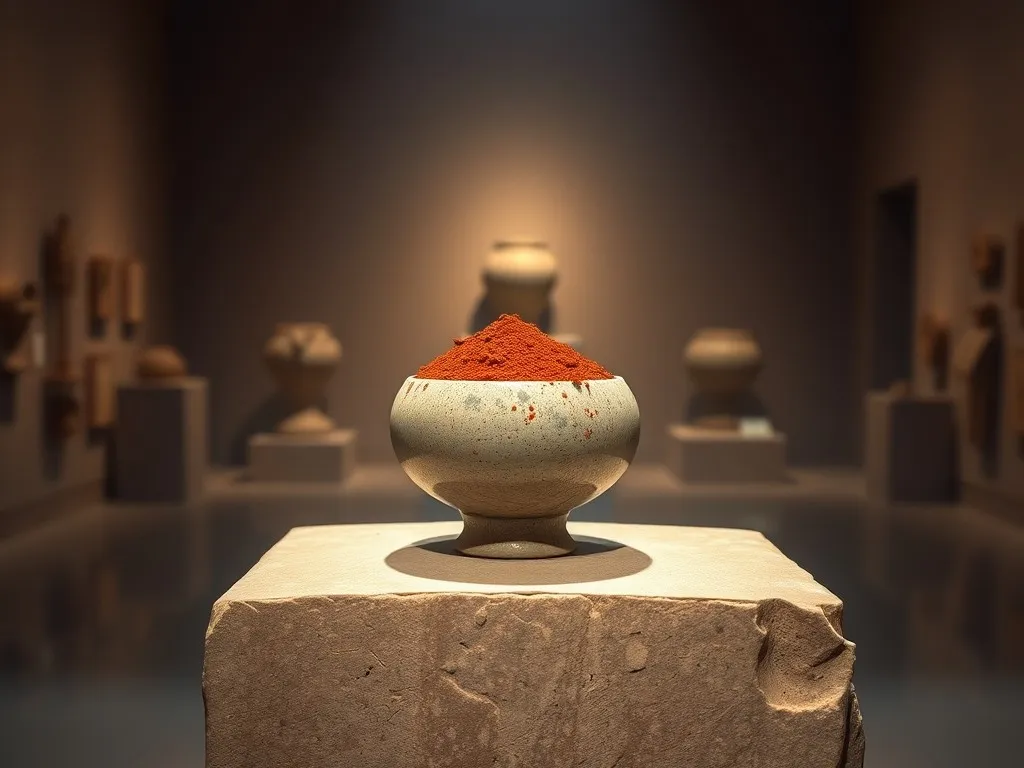
Three animals, one vessel, and a ring through each head. That is the detail worth pausing on. Inside a chamber packed with red soil at Karahantepe, archaeologists lifted out a large chlorite vessel and found a smaller container tucked within it, alongside a plate and several stone rods.
The smaller container held a fox, a wild boar and a vulture. Each figurine had its head threaded through a stone ring. Professor Necmi Karul, who coordinates the Taş Tepeler Project, said the arrangement was unusual enough to suggest the three animals belonged to a shared narrative.
That is a quiet sentence with a loud implication. If Karul is right, this is one of the earliest known examples of storytelling through sculpture at Karahantepe — roughly ten thousand years before anyone wrote a word down.
Why a Trio of Animals Beats a Single Masterpiece
Museums train us to admire the lone object. A leopard head here, a human figure there, each one spotlit and labelled. The Karahantepe vessel refuses that logic. Its meaning lives in the grouping, not in any single carving.
Remove the vulture and you have a fox and a boar. Remove the boar and you have a fox and a vulture. Whatever the scene was, it needed all three to work. That is composition. That is casting.
You can see the same instinct in the limestone sculpture of a human figure seated on the back of a leopard, found in its original position inside a built-in platform at Karahantepe. Two beings, one object, one relationship. The piece is treated as a rare example of prehistoric sculpture precisely because it combines figures rather than isolating them.
The Ankara Showcase Nobody Expected to Matter This Much
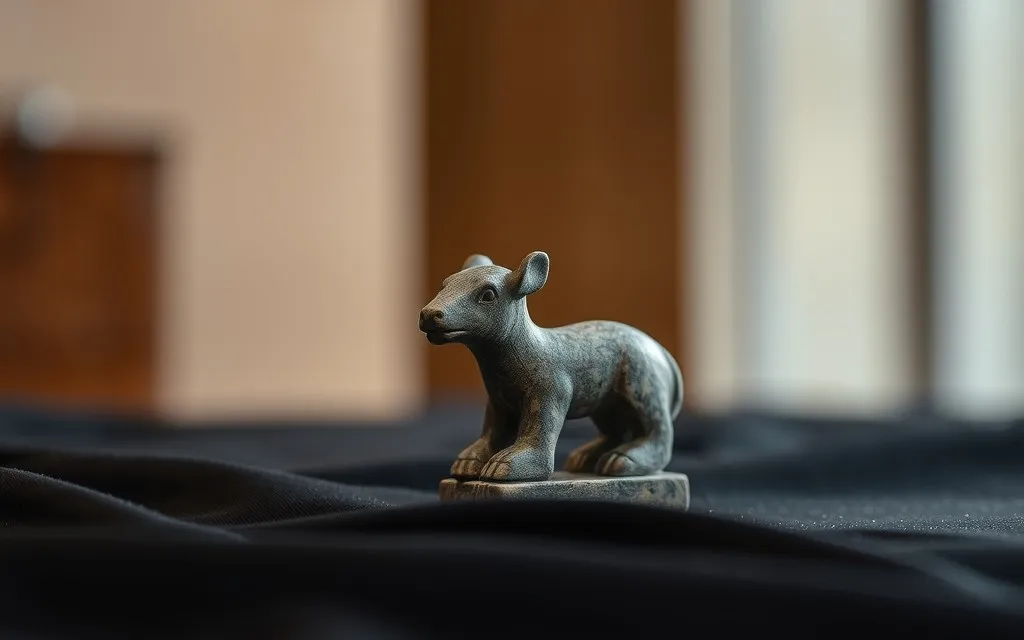
Thirty-four artifacts from four excavation sites in Şanlıurfa — Göbeklitepe, Karahantepe, Sefertepe and Sayburç — went on display at the National Library in Ankara. The exhibition ran from Nov. 17 to 23, 2026, staged around the International Museology Congress organised by the Directorate General of Cultural Assets and Museums.
All the pieces are registered in the Şanlıurfa Museum inventory and date to the Pre-Pottery Neolithic period, between 10,000 and 7,000 B.C. The collection included human and animal sculptures, figurines, stone vessels, plates and ornaments.
A week-long library exhibition sounds modest next to a blockbuster tour. But this is where the argument gets made in public. Karul briefed officials on how the objects were found and what they suggest about communities shifting toward settled life.
A Vulture That Breaks the Size Rule
One exhibit stands apart from everything found before it. A vulture head unearthed this year during excavations under the Legacy for the Future initiative is larger than earlier examples, which hints that Neolithic people were carving vulture sculptures at monumental scale.
Think about what that changes. A small figurine fits in a palm and travels easily. A large sculpture does not. It anchors a space, faces an audience, demands a wall or a pillar behind it. Scale is never accidental in ritual architecture.
The same lesson comes from the leopards. Visitors saw a large limestone leopard head dated to 9,800–8,200 B.C. sitting near miniature leopard figurines cut from green opal and labradorite. One animal, many sizes, several stones.
Another limestone leopard, dated 8,400–8,000 B.C., was on show too. If you want to understand how deeply this predator runs through the region's early imagery, our breakdown of Göbeklitepe artifacts and what the symbols meant is a useful companion.
What the Broken Torso at Göbeklitepe Actually Tells Us
Not every figure arrived intact. A human sculpture unearthed in a structure dating to the second phase of Göbeklitepe had been placed inside a built-in platform, leaning forward toward the interior of the building. Its torso, broken at waist level, was found on the same platform.
Leaning forward. Inside a platform. Facing the room. Those three details do more work than any reconstruction drawing. Whoever placed that figure was thinking about where a viewer would stand and what they would see.
This is the thread connecting Göbeklitepe, Karahantepe, Sefertepe and Sayburç. The Taş Tepeler sites keep producing objects that behave less like decoration and more like stagecraft. For a wider view of how these buildings were framed, our look at the T-shaped pillars and their layout fills in the architecture around the art.
The Skeptical Question Worth Asking
Here is where caution earns its place. A fox, a boar and a vulture in one pot could be a story. It could also be a deposit, a selection of powerful animals, or a ritual kit whose logic we have simply lost.
Karul framed it carefully, saying the arrangement suggested the animals may have been part of a shared narrative. May. That single word is doing a lot of heavy lifting, and it should.
But the hypothesis is testable, and that is what makes it interesting. If narrative grouping was a habit at Karahantepe, more composite arrangements should surface in the same structures. If the trio turns out to be unique across the site, the story theory weakens fast.
Either outcome is worth the wait. A confirmed tradition of Neolithic storytelling in stone would push the history of visual narrative back by millennia. A one-off would still be a remarkable object — just a stranger, lonelier one.
Source: dailysabah.com