The Missing Link In The Ancient Civilizations Timeline Is Hiding In Plain Sight
The Timeline We Were All Taught Is Broken
Open any standard history textbook. Same story every time. Humans roamed wild for millennia, surviving on what they could hunt and gather. Then, somewhere around , BCE, a switch flipped. We invented farming. We settled down. And finally, we built cities.
Clean, logical, and it makes perfect sense on the surface. It's also completely wrong. The evidence buried under a hill in southeastern Türkiye has shattered that linear narrative into pieces.
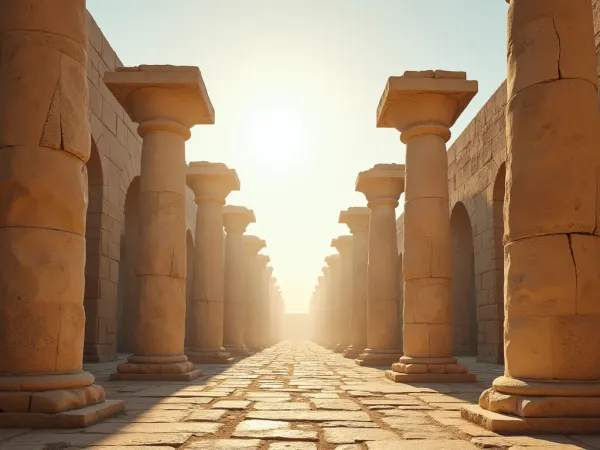
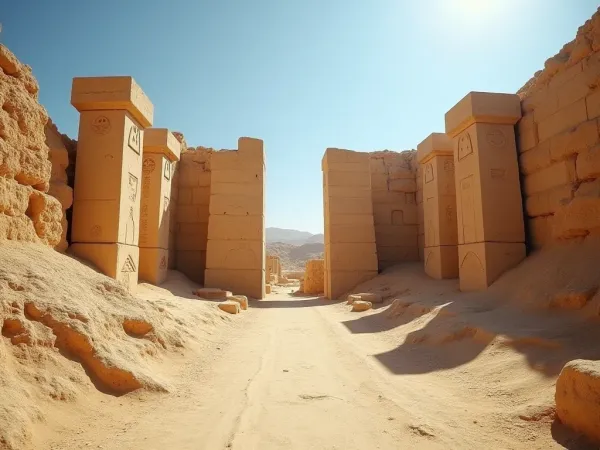
Göbeklitepe didn't start with a plow. It started with T-shaped pillars carved from limestone. These structures predate the invention of agriculture by thousands of years.
So if we weren't farming yet, who built these massive enclosures? And why did they spend their entire lives moving tons of stone instead of just catching fish or hunting gazelles?
The Myth Of The Lazy Hunter Gatherer
For decades, the prevailing academic view was that prehistoric humans were essentially lazy. The theory went that they wandered aimlessly until resources dried up.
Then the climate changed and forced them to stay in one spot. Desperation led to planting seeds as a backup plan. That "necessity is the mother of invention" story felt satisfying because it was simple.
But Göbeklitepe ruins that comfort. The people here weren't desperate refugees cornered by bad weather. They had the energy to quarry, transport, and erect pillars weighing up to ten tons.
They weren't struggling for survival. They had the surplus labor required to build monumental architecture. Which implies a level of social organization that dwarfs anything we previously attributed to nomadic groups.
Why This Changes Everything About Human Labor
To move a ten-ton stone without wheels or draft animals takes hundreds of people working in unison. You need ropes, levers, and precise coordination.
You also need someone to organize the labor. Someone has to decide who works and who eats during those critical days of construction.
That suggests a hierarchy existed long before the first grain was harvested. And the social glue holding these groups together wasn't hunger or scarcity.
It was belief. It was ritual. The drive to build these structures came from a spiritual or cultural need we're only just beginning to understand.
The Architecture That Defied The Era
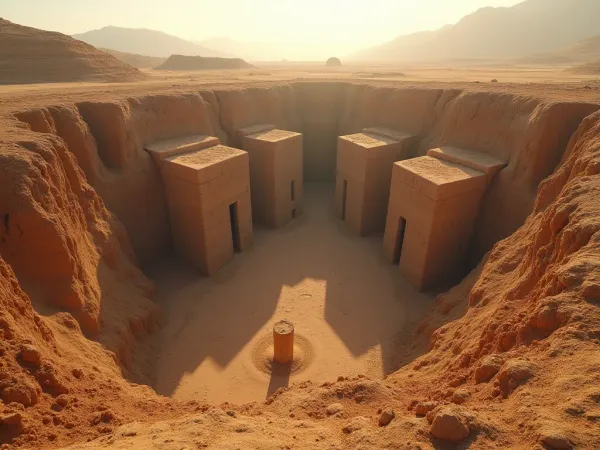
Walk into Enclosure A at Göbeklitepe. It's circular. Two massive T-shaped pillars stand in the center like anchors.
Around them, smaller pillars form a ring. The walls are thick limestone blocks fitted with such precision that it feels like modern engineering.
But the real shock is what covers these pillars. They aren't plain stone slabs. They're covered in bas-relief carvings.
Foxes crawl around the bases of the pillars. Scorpions curl their tails in defensive postures. Vultures and cranes perch on the upper sections.
This isn't decorative art in the modern sense. It's a visual language. These animals likely held specific symbolic meanings for the builders.
Decoding The Animal Symbolism
I've spent hours staring at the fox carvings. To me they look playful, but in this context they feel ominous.
The fox is a predator. It eats small animals and scavenges carrion. Placing it at the feet of these monumental pillars might represent a boundary between the human world and the wild.
The vultures perched high above suggest a connection to the sky or death. In many cultures, birds of prey are messengers between worlds.
This is the first time we see such complex symbolic expression in stone. It predates writing by thousands of years.
These people weren't just building shelters. They were constructing a narrative in three dimensions. The architecture itself was the story.
The Burial Rites That Reveal Social Structure
Beneath the floors of these enclosures, archaeologists found human remains. Not scattered bones from a mass grave.
These were carefully arranged burials. In some cases, skulls were removed from the bodies and plastered to look like they still had flesh.
Some of these skulls were even modified. A piece was broken off one skull and replaced with a carved clay bird beak.
This isn't simple disposal. This is ancestor worship on an industrial scale. The dead were being transformed into something else.
It implies a belief system where the boundary between life and death was permeable. The ancestors were still present in the community.
The Plastered Skulls And Their Meaning
I find the plastered skulls fascinating because they blur the line between human and statue.
By reshaping the dead to resemble their living counterparts or perhaps into bird-like figures, they were creating a permanent record of identity.
This practice shows that social memory was valued above all else. Even after death, you remained part of the group.
This level of emotional investment in the dead suggests a complex society with deep cultural roots. It wasn't just survival. It was legacy.
The Missing Link In The Agricultural Revolution
Here's the part that really breaks my brain. If we were building these temples before farming, then why did we start farming at all?
The standard narrative says agriculture allowed for population growth. More food means more people can live in one place.
But Göbeklitepe proves that population density and social complexity existed before agriculture. So the cause and effect are reversed.
It's possible that farming wasn't an invention but a response to the demands of these large ritual centers.
To feed hundreds or thousands of people gathered for rituals, you need a reliable food source. Hunting is unpredictable.
Agriculture may have been the solution to a logistical problem created by religion. We farmed because we needed to feed our priests and their followers.
Religion As The Driver Of Innovation
That idea is uncomfortable for secular minds. It suggests that spiritual belief was the primary engine of human progress.
Before we had science or technology, we had ritual. The drive to honor the dead and please unseen forces was powerful enough to reshape our entire way of life.
If this is true, then every major leap in human history was likely fueled by something we cannot fully measure or quantify.
It forces us to look at history not as a series of economic developments but as a story of belief and identity.
The Recent Discoveries That Keep Breaking The Mold
Göbeklitepe isn't just a site of the past. It's an active laboratory where new findings are constantly challenging old assumptions.
Recent excavations have uncovered a workshop area that suggests these people were experimenting with materials far beyond stone.
They found traces of early metalworking and sophisticated tool production. This implies a level of technological sophistication that was previously thought impossible for this era.
There's also the discovery of a large statue that stands out from the rest. It's life-size and carved with intricate detail.
This statue challenges the idea that these structures were purely abstract or symbolic. They had a very human face.
The Life Size Statue And Its Implications
I visited the site last year and stood in front of this statue. It felt personal.
The eyes are open. The posture is upright. It looks like a person who has been turned into stone.
This suggests that the builders weren't just worshipping abstract forces. They were honoring specific individuals or perhaps a collective ancestor.
It adds a layer of humanity to these ancient structures. They weren't just monuments to power. They were memorials.
How This Rewrites The Ancient Civilizations Timeline
If we accept the evidence from Göbeklitepe, the timeline of human civilization looks very different.
The order isn't Hunter-Gatherer, then Farmer, then City Builder. It's Ritualist, then Organizer, then Innovator.
Meaning and community came first. Technology showed up later — as a tool to hold that social structure together.
That's a real shift in how you see the whole thing. Progress, it turns out, wasn't driven by need. It was driven by desire.
We wanted to be more than just animals. We wanted to leave a mark. And that wanting is what built our world.
The Implications For Our Understanding Of History
Which changes how I look at other ancient sites. If Göbeklitepe is the missing link, others are probably still out there waiting.
So we should be hunting for signs of social complexity in places we once wrote off as simple survival camps.
It also pokes a hole in the idea that civilization moves in a straight line. More likely it was a string of experiments in how to organize people.
Some groups tried farming first. Others built ritual centers first. Göbeklitepe is the second path.
The Human Element Behind The Stones
When I visit Göbeklitepe, I don't just see stone. I see people.
I picture the men and women hauling those blocks up the hill. They had to be exhausted.
But they kept going. Why? Because it mattered to them. It was how they said who they were.
That's the human element most histories skip. We fixate on the structures and forget the hands that built them.
These weren't anonymous laborers. They were individuals with hopes, fears, and beliefs.
The Emotional Weight Of The Burials
The burials at Göbeklitepe get to me, honestly. They show a deep connection to the past.
Burying someone that deliberately is an act of love. It says: you matter, even after death.
That emotional depth adds a layer textbooks usually miss. It was never just about survival.
It was about connection. And that's why Göbeklitepe matters so much to how we understand ourselves.
Frequently Asked Questions About Göbeklitepe And History
Why is Göbeklitepe considered a missing link in history?
Göbeklitepe is considered a missing link because it shows complex social structures and monumental architecture existing before the invention of agriculture. This challenges the standard timeline where farming leads to settlement, which then leads to city-building.
How old is the Göbeklitepe site?
The main construction period of Göbeklitepe dates back approximately , years to around BCE. Some evidence suggests activity may have continued for several thousand years before the site was deliberately buried.
What evidence proves that hunter-gatherers built Göbeklitepe?
Archaeologists have found little to no evidence of grain storage or farming tools at the site. The diet is primarily based on wild game and plants. This indicates that the builders were not yet agriculturalists but rather nomadic groups with a high level of social organization.
Can you visit Göbeklitepe today?
Yes, Göbeklitepe is open to the public. It has a modern visitor center and museum where artifacts are displayed. The site itself is partially covered by a protective shelter to preserve it from weather damage.