Göbeklitepe Life
Göbeklitepe Discovery: Klaus Schmidt's Archaeological Breakthrough
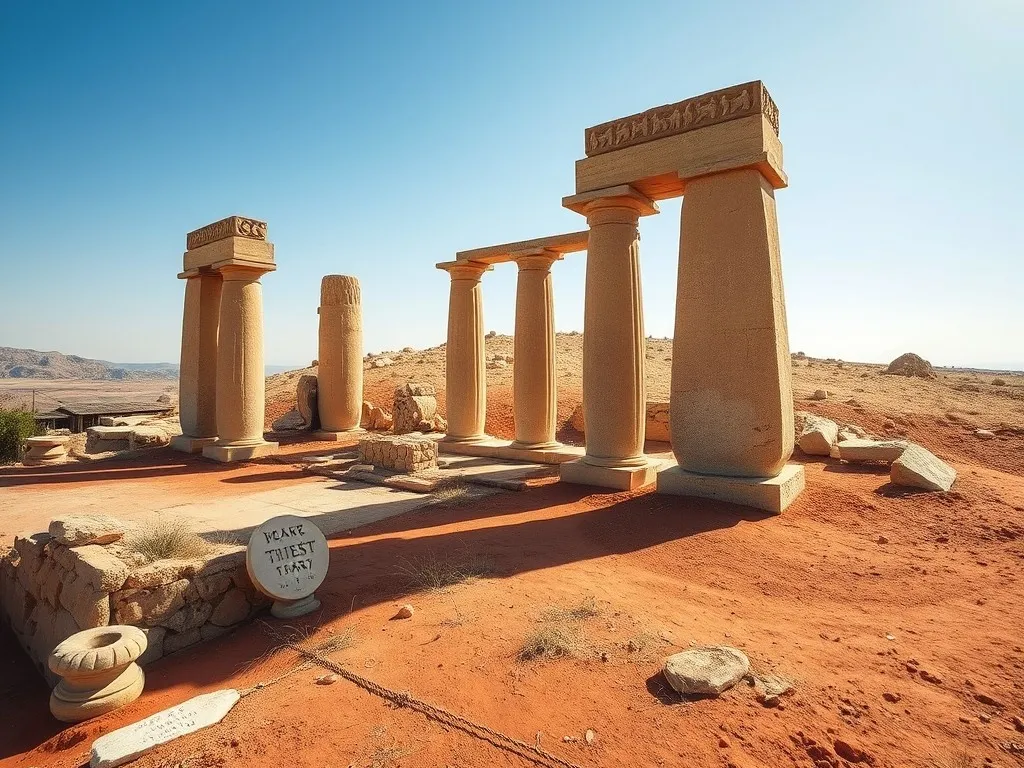
Göbeklitepe was first recorded in 1963, when a surface survey run by Istanbul and Chicago Universities logged it as a Neolithic settlement. It then sat largely dismissed until German archaeologist Klaus Schmidt recognised its significance in 1994 and began digging, eventually uncovering more than 20 circular stone enclosures with carved T-shaped pillars up to 5.5 metres tall. The site was never lost; it was simply misfiled.
The survey team worked on the surface, walking the land and noting what lay exposed, rather than excavating. What they saw looked like ordinary prehistoric occupation debris, so the entry described a settlement and nothing more. Nobody at the time read the scattered limestone fragments as pieces of monumental architecture, and the record reflected that assumption. That single classification shaped how the hill was treated for the next three decades.
The location helps explain why it was easy to pass over. The site sits 15 km northeast of Şanlıurfa city centre, on a limestone plateau that local people call Belly Hill, the literal meaning of the Turkish name Gobekli Tepe. The tell rises 15 m high and covers 8 ha (20 acres), according to the site's documented dimensions. Yet visibility on the surface did not equal recognisability as monumental architecture: a hill that size could be seen by anyone travelling that plateau long before an archaeologist put a trowel into it, without being read for what lay beneath.
Why a 12,000-Year-Old Site Went Ignored for Three Decades
The survey team that reached the hill in 1963 recorded what a surface walk could show: scatters of flint tools and chips of broken limestone. Nothing stood proud of the ground that looked like a wall, a floor or a doorway. Without visible architecture, there was no obvious reason to open a trench, and the entry stayed in the survey records as a find of modest interest.
The working assumption was that the flints belonged to a small, relatively late settlement, the kind of minor occupation that dots the Şanlıurfa plateau. That reading fit the flint typology of the day and asked nothing difficult of anyone. It also meant the mound was filed away as ordinary rather than puzzling.
A deeper obstacle was intellectual. In the mid-twentieth century, most archaeologists held that hunter-gatherers lacked the organisation and surplus labour to quarry, move and raise large stone pillars. Monumental building was treated as a marker of farming villages and the social hierarchy that came with them. A site older than farming that contained big carved stones did not fit the framework, so the framework quietly pushed the possibility aside. The hill remained a line on paper while excavations went to mounds with clearer architecture and easier chronologies, and questions about why the site was eventually buried had not yet been asked.
Klaus Schmidt's 1994 Return and the First Enclosures
Klaus Schmidt saw the hill in 1994 and read it differently from the surveyors who had walked away from it. He recognised the site's significance that year and opened excavations in 1995, a campaign that has continued ever since. What he suspected from the surface flint and the exposed pillar tops, the trenches soon confirmed.
The digging revealed more than 20 circular stone enclosures, built one after another across the limestone plateau. The largest measured about 20 m across, a room-sized ring of upright walls enclosing space that had been deliberately filled in. Each enclosure had its own character, but the pattern was consistent: walls of rough stone, benches between them, and pillars set into the inner face.
At the centre of the biggest enclosure stood two elaborately carved pillars 5.5 m tall, facing each other like a pair of sentinels. Their surfaces carry foxes, snakes, boars and birds worked in relief, animals that appear to have carried meaning now lost. The arrangement of paired central pillars repeats from enclosure to enclosure, which suggests a shared ritual grammar rather than an isolated experiment.
The excavation reports record that some of the carved pillars weighed up to 10 tons, a figure that forced archaeologists to rethink what early builders could achieve before farming.
Those weights matter because they cannot be waved away as lucky finds. Quarrying a ten-ton block, moving it, and raising it upright demands planning, labour and knowledge of stone. Readers comparing these numbers with later monuments can find the wider context in Göbeklitepe and Stonehenge compared.
The Dating That Turned a Local Dig Into a Global Story
The radiocarbon evidence places the site at roughly 9,600 BC, right at the moment when hunter-gatherer bands in Upper Mesopotamia were beginning to settle into farming communities. The monuments themselves were raised around 9500 BCE and abandoned around 8000 BCE, a span of some fifteen centuries of building and use. That sequence, established through excavation and dating rather than guesswork, is what gave the site its weight.
The resulting age is startling. The structures are 11,000 years old or more, which makes them humanity's oldest known monumental buildings. Before Göbeklitepe, the standard assumption held that monumental architecture followed agriculture — that only settled, surplus-producing societies could organise the labour for it. A hilltop of carved enclosures older than farming settlements upended that order. Readers wanting the technical detail of the dating work can turn to how the monument was dated.
The signature element of these buildings is the T-shaped stone pillar, some standing as high as 5.5 metres. The shape reads as a stylised human figure, and the pillars are arranged in circles, paired at the centre and set into the surrounding walls.
That combination — an extreme date attached to unmistakably monumental stonework — is what carried the site out of regional archaeology and into global headlines. A local dig with unusual finds became a worldwide reference point for the origins of monumental building.
From Excavation to UNESCO World Heritage Status
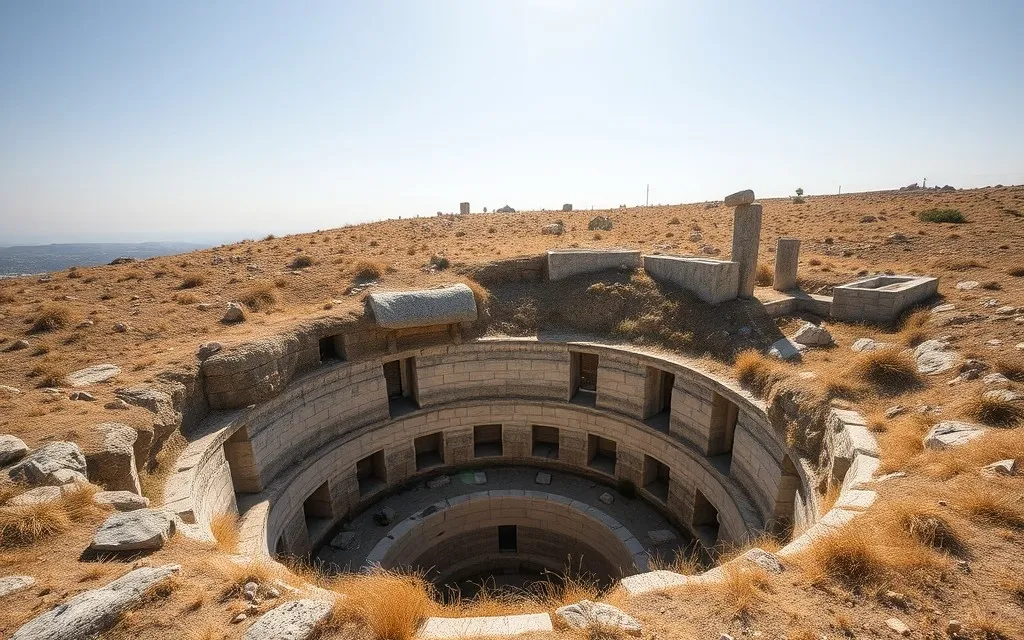
Digging at Göbeklitepe did not stop with Schmidt's first trenches. Excavation has continued at the site since 1995, season after season, and the work has revealed monumental buildings dated back 12,000 years. Each campaign added enclosures and carved pillars to the record, turning what began as a small research project into one of the longest-running excavations in the region.
The site's standing changed decisively in 2018, when Göbekli Tepe was inscribed as a UNESCO World Heritage Site at the 42nd session, under criteria (i), (ii) and (iv) and with reference number 1572. Those criteria cover the monuments as creative masterpieces, as evidence of interchange between cultures, and as outstanding examples of a type of structure. The listing made the hill an internationally recognised property, not merely a Turkish excavation permit.
Inscription also shifted the official emphasis. Conservation now has to proceed alongside digging, with protection of the standing pillars and the surrounding landscape treated as part of the site's value rather than an afterthought. For visitors and researchers alike, that means the story of Göbeklitepe is no longer only about what is being pulled from the ground, but about what is being kept in it.
What the Discovery Story Gets Wrong in Popular Retellings
A persistent version of the story has a farmer spotting the site while ploughing in the 1990s. That is wrong. Göbeklitepe was discovered in 1963 during an archaeological survey, when researchers from Istanbul and Chicago recorded the hill and noted broken limestone slabs. The site sat in the records for three decades before anyone excavated.
Nor did Klaus Schmidt discover the site. When he returned in 1994, he was following up on that earlier survey and on the observations of his predecessors. What he brought was a new reading: he recognised that the slabs were not a Byzantine cemetery, as some had assumed, but the tops of monumental pillars. The 1994 season marks the start of sustained research, not the moment the hill was first noticed.
Retellings also tend to float the site somewhere vague, an unnamed mountain range or a remote peak. The coordinates place it plainly at 37°13′25″N 38°55′18″E, on the Şanlıurfa plateau in southeastern Turkey, roughly 15 kilometres northeast of Şanlıurfa city. Anyone repeating the discovery story should keep those three corrections in hand: recorded in 1963, interpreted by Schmidt, and firmly located.
Frequently Asked Questions
Who first noticed Göbeklitepe before Klaus Schmidt?
Göbeklitepe was first recorded in 1963 during a surface survey carried out by teams from Istanbul and Chicago Universities. That survey identified the site but did not lead to sustained digging, so the mound remained largely untouched for decades. Klaus Schmidt only recognised its significance when he returned in 1994.
How long did it take between the 1963 survey and the first real excavation?
Roughly three decades passed between the 1963 surface survey and the start of excavations. Schmidt recognised the site's importance in 1994 and began digging there the following year, with excavation listed as running from 1995 onward. The long gap is central to the story of how a 12,000-year-old site went ignored.
What did the first excavators find in the opening season?
The early work exposed monumental architecture rather than ordinary settlement debris. Excavations revealed circular stone enclosures with T-shaped pillars, the tallest reaching 5.5 metres, and carved pillars weighing up to 10 tons. Schmidt eventually identified more than 20 such enclosures, the largest about 20 metres across, dated to around 9,600 BC.
Is excavation at Göbeklitepe still ongoing today?
Yes, excavation at Göbeklitepe continues, with work recorded as running from 1995 to the present. Research has expanded well beyond the first enclosures, and the site has been a UNESCO World Heritage Site since 2018. Digging and conservation remain active, so interpretations of the site are still developing.
For the full overview, see archaeology of göbekli tepe.
Related in this series: gobeklitepe artifacts, gobeklitepe age dating.