Göbeklitepe Life
When Was Göbeklitepe Built? Dating the World's Oldest Temple
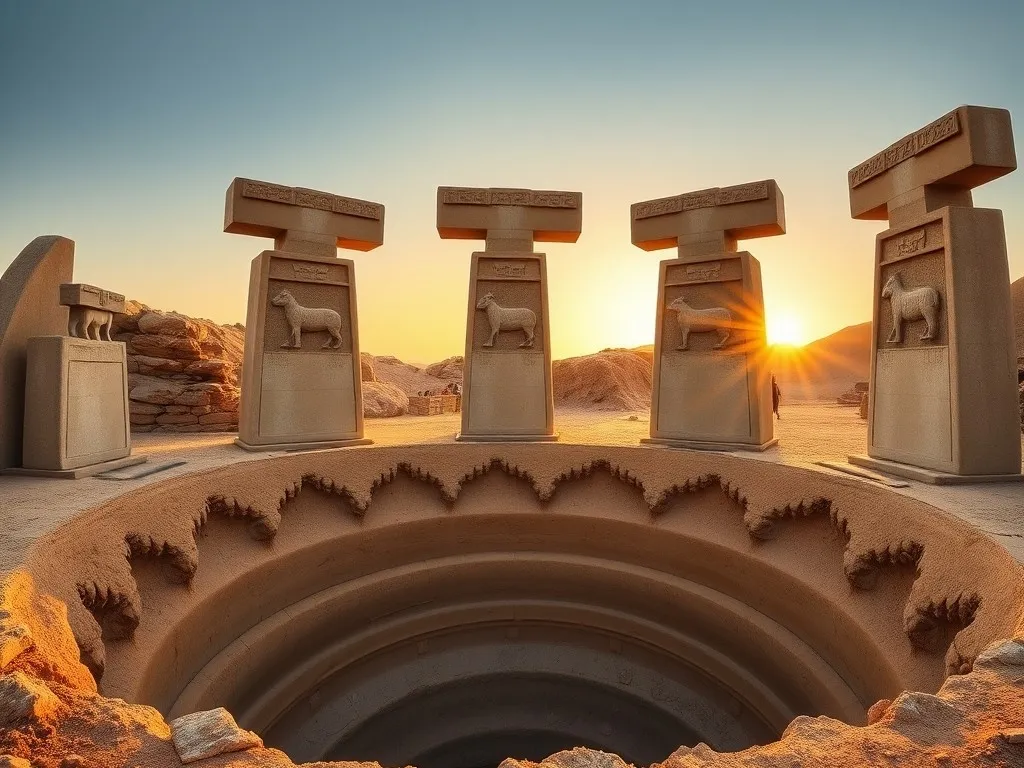
Göbeklitepe was built and used between roughly 9500 BCE and 8000 BCE, during the Pre-Pottery Neolithic — more than 11,000 years ago. Its oldest enclosures went up around 9500 BCE, roughly 6,000 years before Stonehenge, raised by hunter-gatherers working with stone tools. In calendar terms, 9500 BCE is about 11,450 years before present, the yardstick archaeologists use for sites this old. That single window is the answer to reach for when someone asks when Göbeklitepe was built.
The site was not a short-lived camp. It was occupied for well over a thousand years, and the 8000 BCE end date marks its abandonment rather than a tidy completion. Put plainly, people were quarrying limestone, carving pillars and raising enclosures on this hilltop for well over a thousand years.
The whole span sits inside the Pre-Pottery Neolithic, which means two things in practice: no pottery was in use, and farming had not yet taken hold locally. The people who built Göbeklitepe were still hunter-gatherers, which is exactly why the date matters so much.
Published brackets shift slightly around this core. UNESCO's World Heritage listing gives a date of about 9600–8200 BC, a wider frame than the working range drawn from published radiocarbon results from the excavation. Treat 9500–8000 BCE as the working range and the UNESCO bracket as its outer margin; both describe the same construction episode, not competing ones.
Why the dates you see quoted never quite match
A reader who lines up three reputable pages on Göbeklitepe can come away thinking the sources disagree. They usually do not. One writes 9500 BCE, another 9600 BC, a third says the site is around 11,500 years old, and all three are pointing at the same early phase of construction. The difference is rounding and convention, not a dispute about the archaeology.
The phrase "12,000 years old" is the most misleading of the common figures, because it is measured backward from the present rather than fixed to a calendar date. A BCE figure stays put; an age in years drifts forward by one every January. When a page says the temple is a round number of years old, ask what year that count started from.
Radiocarbon dating also resists tidy answers. A laboratory result is a probability range, not a single year, and excavators publish those brackets because that is what the evidence supports. Quoting the midpoint of a range as if it were a precise date is a habit of popular summaries, not of the excavation reports.
Finally, a site does not have one age. The first enclosure, the last enclosure and the moment the place was abandoned are three separate events spread across centuries. Much of the confusion around Göbeklitepe's legendary status fades once you ask which of those events a given number is describing.
How much older than Stonehenge and the pyramids
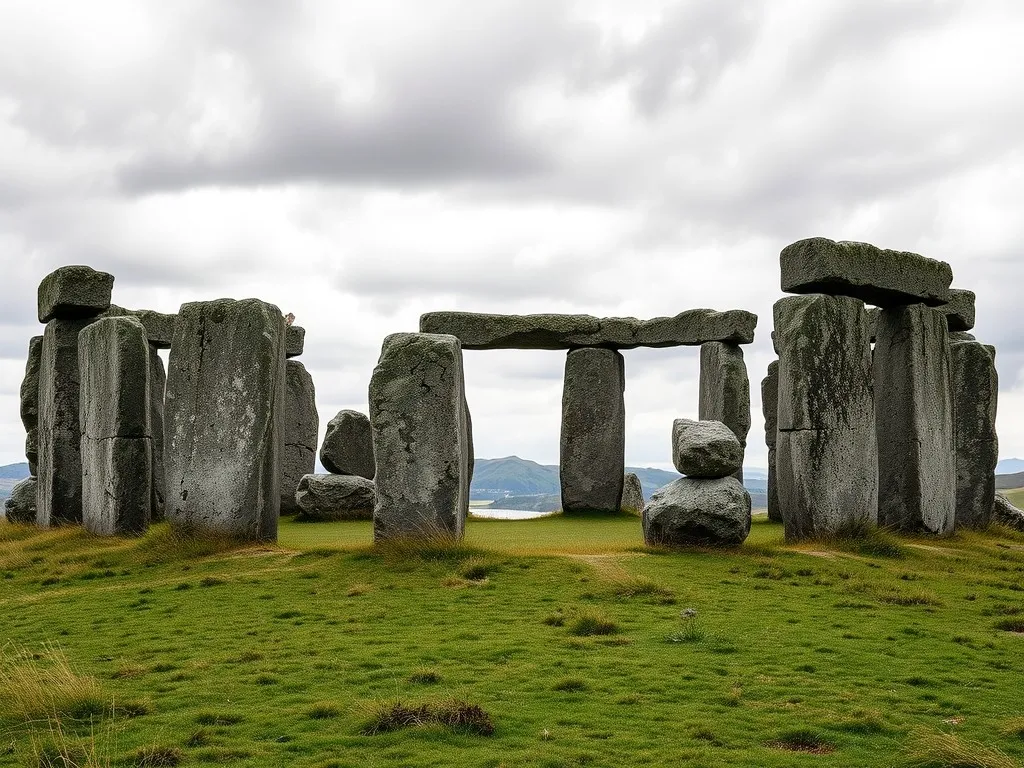
Göbeklitepe was raised by prehistoric people roughly 6,000 years before Stonehenge, according to the BBC's reporting on the site. Set the two side by side and the contrast is not just one of time: the people who carved its pillars had no metal tools, no wheel, no writing, and no villages of the kind that would later surround Salisbury Plain.
The same reporting describes the structures as 11,000 years old or more, which makes them humanity's oldest known monumental buildings. The Egyptian pyramids, by comparison, are younger than Stonehenge, so they sit even further down the timeline from the Anatolian hilltop. Whatever exact figure a given source prints, the order of events does not move.
What matters more than the precise year is the sequence. Monumental stonework appears here before farming villages, before metal, before any of the markers historians once used to define civilisation. That inversion is why the site is treated as a turning point rather than an oddity, and why the work to keep it standing is taken so seriously.
The scale is the point: carved stone arrives in the record before the things we assumed had to come first.
Built in stages: the enclosures were not all raised at once
Göbeklitepe was not raised in one campaign. Excavators have recorded more than 20 circular stone enclosures on the hill, the largest roughly 20 m across, each with two elaborately carved T-shaped pillars at its centre. Some of those central pillars stand 5.5 m tall, and individual pillars weighed up to 10 tons.
The raw material sat close at hand. The hill's limestone lies in horizontal beds between 0.6 m and 1.5 m thick, so builders could prise out slabs of roughly pillar height without quarrying deep. That geology shaped what was possible, and it also explains why the work could be repeated enclosure after enclosure.
Enclosures were added, rebuilt and deliberately filled in over centuries. A community would raise a circle, use it, then bury it and start another nearby, sometimes reworking pillars that already carried carvings. The carved stone vessels found on the hill belong to the same long occupation rather than to a single moment of construction.
So "when was Göbeklitepe built" has two honest answers: an early one for the first circles and a late one for the last. Any single date describes one phase, not the whole site, which is why a construction window of roughly 9500 to 8000 BCE fits the evidence better than a year.
How archaeologists dated it: stratigraphy plus radiocarbon
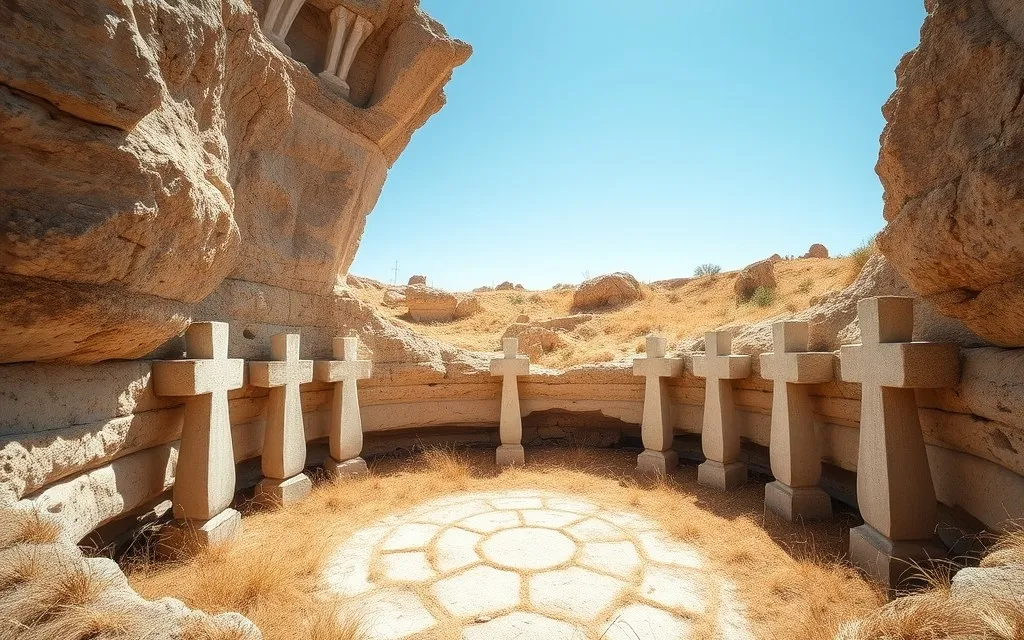
The mound at Göbekli Tepe is not natural ground but a tell about 15 m (50 ft) high covering 8 ha (20 acres), a heap that grew as people built enclosures and then buried them again (the tell at Göbekli Tepe). Each episode of construction and backfill left a distinguishable layer. That simple physical fact is the backbone of the dating: before a single sample reaches a laboratory, excavators can already read which enclosure sits above or below which.
Stratigraphy gives the order; radiocarbon gives the clock. Organic material recovered from the fills — charcoal, animal bone, plant remains — was dated in the lab, and the results place the main occupation in a bracket of roughly 9500 to 8000 BCE. Because the samples come from layers whose position is already known, the laboratory dates can be checked against the sequence rather than trusted blindly. A result that contradicts the stratigraphy is a reason to re-examine both.
The chronology has been revised more than once, and that is a sign of health rather than confusion. Göbekli Tepe was first recorded in a 1963 archaeological survey, and digging has continued from 1995 onward (excavations since 1995), so every season adds samples and sharpens the bracket. When a claim cites a single precise year, ask what sample it rests on and which layer it came from.
What the date does and does not prove
The secure conclusion is narrower than the headlines and stronger for it. Hunter-gatherers carved T-shaped pillars from local limestone, moved them into place and raised them in circular enclosures before farming and pottery had taken hold in the region. Klaus Schmidt's reading of the evidence was exactly this: people who lived by gathering and hunting came together roughly 11,500 years ago to carve the pillars with stone tools. That sequence, monumentality before agriculture, is what the dated layers actually support.
What the dates do not prove is everything the site is often asked to carry. Nothing in the excavated, dated deposits shows writing, metalworking, cultivated crops or help from some outside civilisation; the builders worked stone with stone, and that constraint is precisely what makes the early date remarkable rather than suspicious. Claims of a lost advanced culture rest on absence of evidence, not on finds. Later recognition as a UNESCO World Heritage Site in 2018, inscribed under criteria (i), (ii) and (iv) (Göbekli Tepe's World Heritage listing), reflects the site's significance; it is not a new dating result and adds no years to the bracket.
So the date proves that monumental architecture preceded farming here. It does not prove who the builders were, what they believed, or that they possessed technologies the layers have never produced.
Frequently Asked Questions
Is Göbeklitepe older than the pyramids of Giza?
Yes, Göbeklitepe is far older than the pyramids of Giza. Its construction began around 9500 BCE, and the site was inhabited until at least 8000 BCE, while the pyramids were raised millennia later; the BBC notes the site predates Stonehenge by roughly 6,000 years.
How do archaeologists know the pillars were carved with stone tools?
The pillars show carving consistent with stone tools, as Klaus Schmidt argued when he proposed that hunter-gatherers shaped the T-shaped pillars this way around 11,500 years ago. No metal was in use in the region at that time, so the elaborate reliefs on pillars weighing up to 10 tons had to be worked with stone implements.
Was Göbeklitepe still in use when farming reached the region?
Göbeklitepe was occupied during the Pre-Pottery Neolithic, from around 9500 BCE to at least 8000 BCE, and was abandoned around 8000 BCE. Farming was spreading through the region during this span, so the site's later phases overlap with early farming communities, though the builders themselves are understood as hunter-gatherers.
Why do some sources say Göbeklitepe is 12,000 years old and others 11,000?
The difference comes from rounding and from which phase of the site a source is describing. Construction began around 9500 BCE, roughly 11,500 years ago, so popular accounts round this to about 11,000 or 12,000 years; UNESCO gives a slightly narrower range of about 9600 to 8200 BC for the site's use.
For the full overview, see Göbeklitepe history.