Göbeklitepe Life
Göbeklitepe Myths: Distinguishing Fact from Ancient Legend
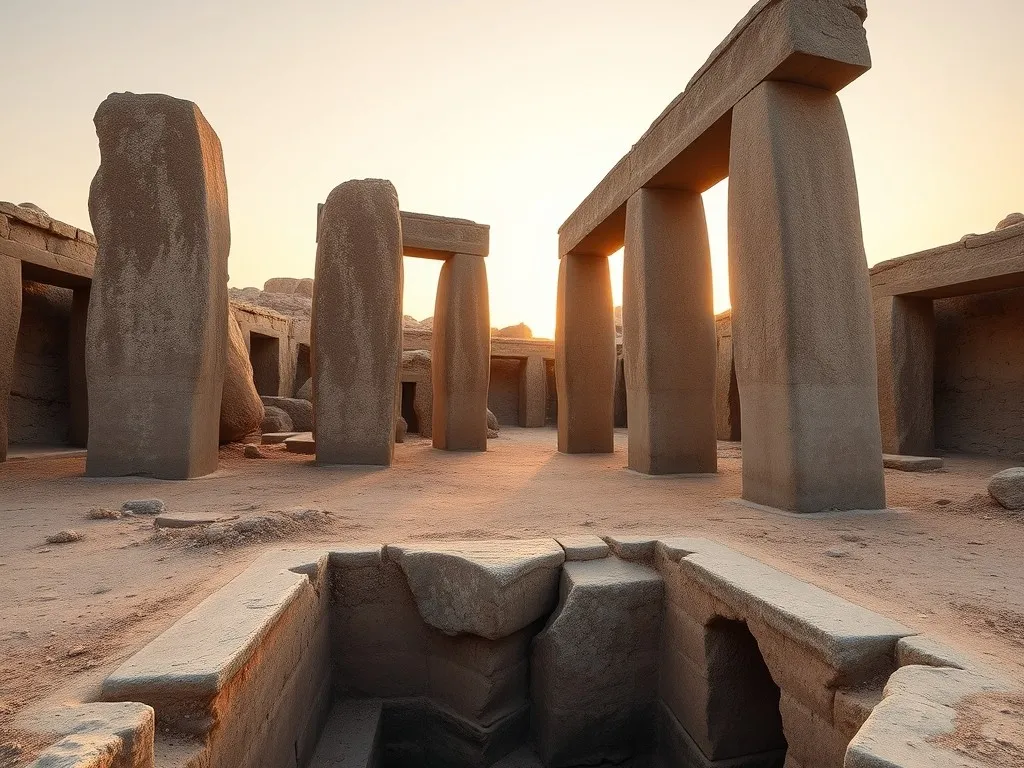
Göbeklitepe has no surviving written myths of its own, because its builders left no texts. The famous legends attached to the site — Eden, Noah's Ark, the Watchers, the comet message read into the Vulture Stone — are later religious traditions or modern interpretations mapped onto the stones. The genuine ancient material is a record of carved animals and abstract symbols whose meaning remains unproven, and any honest legend has to start there.
Nothing resembling writing has been recovered from the site. That single absence shapes everything: every story told about Göbeklitepe is an interpretation layered onto images, not a translation of anything the builders said. When you meet a claim about what the site's people believed, ask first whether it rests on a text or on a modern reading of a picture.
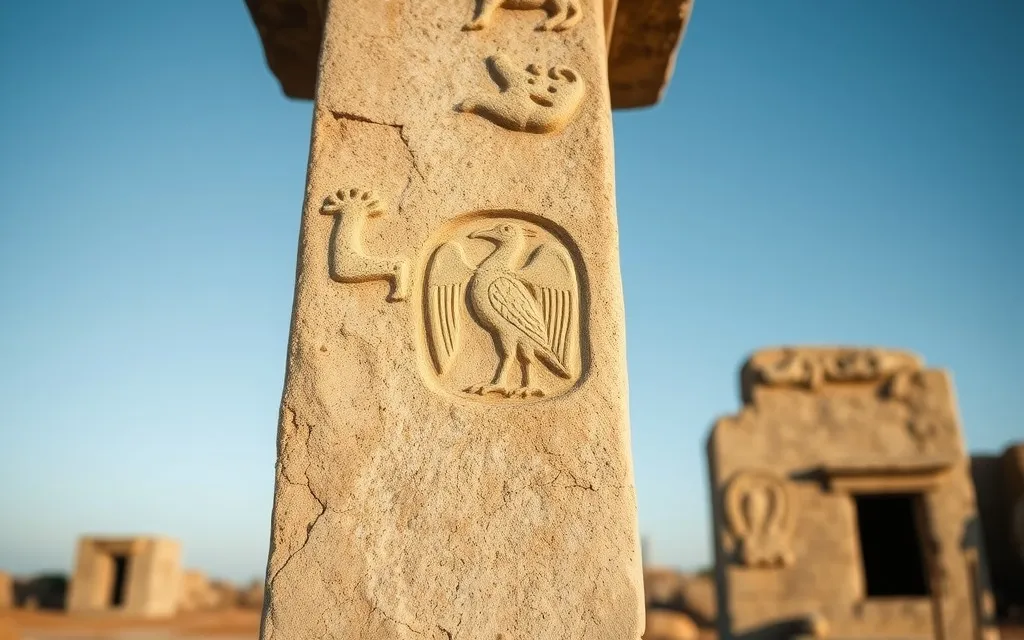
The images themselves are substantial. Many pillars carry animal reliefs, including species not native to the area. That mix points toward borrowed or imagined imagery rather than a straightforward report of local wildlife, which is one reason the carvings resist simple decoding.
Alongside the animals sit abstract symbols and stylised figures, forming a visual language whose meaning is still debated. The site was built around 9500 BCE and abandoned around 8000 BCE, a span that ended long before any named people or recorded storyteller could be attached to it. No legend can honestly be traced to a known community or a specific teller.
The Garden of Eden and Noah's Ark: Later Traditions Mapped onto the Site
The Garden of Eden and the Flood are stories from written traditions compiled long after Göbekli Tepe was buried. Their own texts name no hill in southeastern Turkey, and nothing in the Genesis narratives points to a particular archaeological mound. The link is made by modern writers working backwards from the site to the story, not by the story pointing forwards to the site.
The temptation is easy to understand. The Şanliurfa region is fertile, watered and framed by low hills, the kind of landscape that suits a description of a paradise or a drowned world. Yet a landscape that fits a story is not proof that the story happened there. The same reasoning would place Eden in dozens of green valleys across the Near East.
Göbekli Tepe lies roughly 12 miles northeast of Şanliurfa, and that proximity does real work in these claims, lending the argument local colour and a comforting concreteness, though distance on a map is not a chain of evidence.
The honest way to hold these ideas is as cultural reception: the record of how later people imagined the site and folded it into stories they already treasured. That reception is worth studying, and it sits alongside the work of protecting the site for future visitors. It is not archaeology, and it tells us about the storytellers rather than the builders.
The Vulture Stone and the Comet: How One Interpretation Became a Legend
One pillar at Göbeklitepe, decorated with a vulture and other animals, is often described in popular accounts as a sacred object used to communicate with the gods. That framing is an interpretation layered onto the carvings, not something the excavators announced. The pillar is real; the function assigned to it is inferred.
A separate modern reading treats the same animal carvings as a record of a comet or cosmic event, possibly marking a date and a catastrophe. It is a hypothesis, argued from the arrangement of the figures, and it remains one among several readings rather than a consensus. Archaeologists have not adopted it as settled, and the debate over what the animals mean continues. The same caution applies to other early carved objects, such as a vessel that carries a narrative in stone, where interpretation outruns certainty.
Popular retellings tend to drop the word "may." A cautious paper says the carvings may depict a comet; a documentary script says they do. That single deletion turns a proposal into a fact, and the fact then travels faster than the paper ever did.
Ask whether a claim comes from an excavation report, a peer-reviewed paper, or a documentary script; the three carry very different weight.
Watchers, Vedic Links and Other Modern Speculations
The comet reading is not the only grand narrative on the shelf. Book-length treatments have tied the site to the Garden of Eden, to the 'Watchers' of Enochic tradition, and to Vedic or wider Indo-European symbolism, often presenting the connection as a recovered memory of a lost civilisation. These books sell because they are written with conviction and because the ruins are strange enough to carry almost any story placed on them.
Look at how the links are built. A carved figure is said to resemble a deity from a text composed thousands of years later and thousands of kilometres away; a pillar shape is matched to a symbol in another tradition; a resemblance is then treated as contact. That is visual similarity, not evidence of dated contact between cultures. Before accepting a link, ask for the route: who carried the idea, when, and along which trade or migration path? Without that chain, resemblance is coincidence waiting to be dressed as proof. The same caution applies to claims about what the builders practised and sacrificed, where the stones say less than the books do.
What gives these speculations their grip is a genuine anomaly. Hunter-gatherers raised monumental stonework before farming, and that fact unsettles the neat sequence most people learned at school. If the textbook order is wrong here, the reasoning goes, perhaps everything else is open too.
Speculation is not automatically wrong. Some of it may survive testing. But it should carry its label, and readers should insist on the label before repeating it as history.
What Archaeology Does and Does Not Claim About Belief
Start with the archaeological consensus, reflected in the UNESCO listing: the megalithic structures were erected by hunter-gatherers in the Pre-Pottery Neolithic, between roughly 9,600 and 8,200 BCE. That single sentence already rules out farmers, cities and written religion as the context for the carvings. It tells you who built the enclosures and when, and nothing about what they believed.
The site itself is far larger than the excavated picture suggests. The tell is 15 m high and covers 8 ha, and geophysical survey has shown the mound contains at least 20 large enclosures. Most of those remain untouched, so any claim about Göbeklitepe belief rests on a small sample of a much bigger site.
That gap is the honest reason interpretations stay provisional. Around 10% of the site has been excavated, which means the absence of a temple, a tomb or an idol in the opened areas proves very little about the rest. Archaeologists can describe what they have dug; they cannot yet describe what they have not.
The charred plant remains are more informative than they look. 90% of the charcoal recovered came from pistachio or almond trees, a pattern that points to deliberate fuel selection and to gatherings on a scale that needed feeding. It supports feasting and repeated communal work. It does not name a deity, a cult or a doctrine, and no excavation report does either.
So the evidence-based claim is modest and firm: people came together here, built heavy stone enclosures, and burned chosen wood in quantity. Belief is inferred from that behaviour, not read off it. Anyone who tells you otherwise is adding a story the trenches have not produced.
A Three-Question Test for Any Göbeklitepe Legend You Meet
Any legend you meet, whether from a tour guide, a video, or a headline, will survive or fail three simple questions. Ask them in order and the answer usually arrives before the third.
First, what is the physical evidence? Point to the thing itself: a carved pillar, a radiocarbon date, a sealed floor, a bone deposit. If the claim rests only on resemblance, a shape that looks like a constellation or a figure that resembles a god from elsewhere, you are looking at an interpretation, not a find.
Second, who is speaking? An excavator working the trenches, an author whose argument passed peer review, and a documentary narrator are three different levels of authority. Check whether the speaker has published the claim in a form other specialists could examine, or only said it on camera.
Third, does the claim need Göbeklitepe to be unique? The site matters because it shows monumental building by people who were not yet farmers. That stands on the pillars and the dates alone, so be wary of any story that collapses if the site turns out to be one of several similar centres.
Try the comet reading of the Vulture Stone. It cites a real carving, so it passes the first question in part; its authors are published researchers, so it passes the second; but it requires the site to encode one specific celestial event, which the evidence does not establish, so it fails the third. Treat it as a serious hypothesis, not an established fact.
Frequently Asked Questions
Did the people of Göbeklitepe leave any written myths or stories?
No, the builders left no written myths or stories at all. Writing did not exist in the region at the time the site was built around 9500 BCE, so everything known about their world comes from carved animals, architecture and excavated material rather than texts. Any narrative attached to the site today was composed thousands of years later or by modern authors.
Is the Vulture Stone really a record of a comet strike?
No, the comet-strike reading of the Vulture Stone is an interpretation, not an established fact. The carving shows animals including a vulture, and researchers who proposed the comet link argued it encoded a celestial event, but other archaeologists read the imagery as symbolic rather than documentary. Treat the comet story as one hypothesis that became popular, not as excavated evidence.
Why do so many legends attach to Göbeklitepe rather than to other Neolithic sites?
Göbeklitepe attracts legends because its monumental pillars were raised by hunter-gatherers around 9500 BCE, long before farming, cities or writing, which invites speculation about lost knowledge. Its striking animal carvings and its sheer age make it easy to fold into Eden, flood and comet narratives. The site was also abandoned around 8000 BCE, leaving a silence that stories rush to fill.
Does the UNESCO listing say anything about the beliefs of the builders?
No, the UNESCO inscription of 2018 concerns the archaeological value of the site, not the religion of its builders. It was listed under criteria covering creative genius, cultural interchange and architectural type, which describe the megalithic structures and their significance. Nothing in the listing confirms any claim about what the builders believed or worshipped.
For the full overview, see legendary history of göbekli tepe.
Related in this series: gobeklitepe artifacts, gobeklitepe discovery story.