Egypt was just a practice run for something far older and stranger
The Nile Valley Was Not The Beginning
We've been fed a comfortable story. It starts with the Nile flooding its banks every year. People settle there. They build walls. They write hieroglyphs on papyrus.
It's a clean narrative. Fits neatly into textbooks and museum labels. But it misses the real point entirely.
Look at the dates carefully. The great pyramids are old to us, sure — but they're young compared to what came before them in Anatolia.
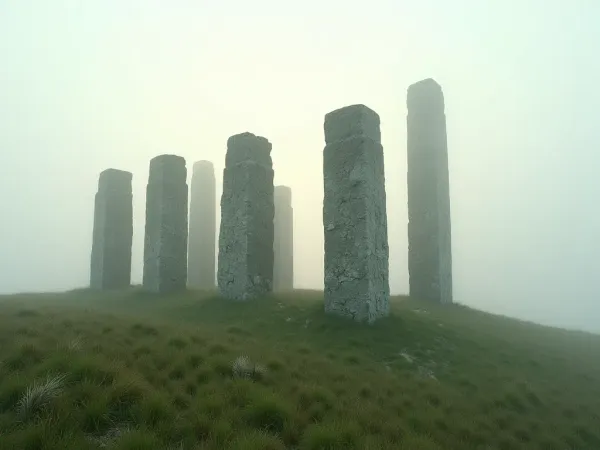
The T-shaped pillars of Göbeklitepe were raised roughly twelve thousand years ago. That's thousands of years before the first pyramid stone was even cut from a quarry.
This isn't a minor difference. It changes the entire hierarchy of human achievement.
If you think Egypt is where complex society began, you're looking at the tail end of a process that started much further north.
The idea that civilization sprouted in the fertile crescent of Mesopotamia and Egypt is a modern invention. It reflects our bias toward known states.
What The Stone Circles Actually Tell Us
Imagine standing in a circle of massive limestone pillars. Each one stands ten feet high and weighs several tons.
Now imagine these were built by people who did not yet have metal tools. No bronze axes. No iron chisels.
They used stone hammers and antler picks. They moved the rock by hand and rope.
The precision is what stops my breath every time I read the reports. The joints fit together with a tolerance that modern masons would struggle to match.
This was not random stacking. This was a coordinated effort involving hundreds of people working in sync.
Who directed them? There's no evidence of a king sitting on a throne. No royal tomb nearby.
The power seems to have come from the act of building itself. The project created the hierarchy.
Why Egypt Looks Like A Copy Now
When we visit the Giza Plateau today, we see icons of human achievement. The Sphinx. The Great Pyramid.
But look at the layout of some earlier Egyptian tombs. The T-shaped plans echo the pillar shapes found in Anatolia.
It is not a coincidence that the earliest royal symbols in Egypt show up after this northern site was already buried.
Think about the writing systems. Hieroglyphs are famous for their complexity and artistic detail.
But the symbols carved into the Göbeklitepe pillars predate them by millennia. They are not just pictures. They appear to be a form of communication.
If you accept that these symbols carried meaning, then the concept of written record did not start with scribes in Memphis.
It started with hunters who wanted to remember something important about the sky or the hunt.
The Missing Middle Layer Of History
Schools teach us that humans were simple until they invented farming. Then cities appeared.
That sequence is backwards for this site. The monumental construction happened before the spread of agriculture in that region.
So who built it? Hunters. People who did not yet live in permanent villages.
This breaks the model we use to understand social complexity. We thought food surplus created leaders and architects.
Here, the reverse seems true. The desire to build a shared sacred space may have driven the shift toward settled life.
If you're still thinking about how the 12,000 year gap in our timeline that schools refuse to teach affects your view of progress, this is the core issue.
The Real Reason This Changes Everything
It's not just that the buildings are old. It's what they say about human nature.
We assume that cooperation at scale requires a ruler. A strongman with an army to enforce labor.
But the evidence at Göbeklitepe suggests a different motivation. Shared belief.
People came together because they wanted to be part of something larger than themselves.
That's a radical idea for the Stone Age. It implies that spiritual unity was the engine of civilization, not military control.
If this is true, then Egypt with its pharaohs and armies was just the next stage. A professionalization of what began as a communal ritual.
The pyramids were not the first expression of power. They were a refinement of it.
What We Still Do Not Know
To be fair, we're still in the early days of understanding this site.
Only a small fraction has been excavated. The rest remains buried under the hill.
New tools like ground-penetrating radar are revealing structures that we did not know existed.
Every new find challenges the previous assumption. The story is not finished.
If you want to see how Göbeklitepe was not just a temple and the new evidence proves it, look at the domestic areas now being mapped.
These are not just sacred spaces. They were living communities with kitchens and storage pits.
This humanizes the builders. They were not just mystics moving rocks. They were people eating meals and raising children.
The Implication Nobody Is Talking About
Here's the thing that keeps me up at night. If these people could do this twelve thousand years ago without metal or wheels...
...we are severely underestimating the baseline of human ability.
We measure progress by technology. But they measured it by coordination and belief.
That distinction matters for how we view modern problems. We think we need more machines to solve big challenges.
Maybe what we lack is the shared purpose that allowed a scattered group of hunters to move tons of stone.
Egypt gave us the pharaohs. Göbeklitepe gives us a reminder that we are capable of more than just surviving.
The next time you see a pyramid in a documentary, remember the circle of T-shaped pillars that came before it.
The real story is not about who ruled. It is about why we built.