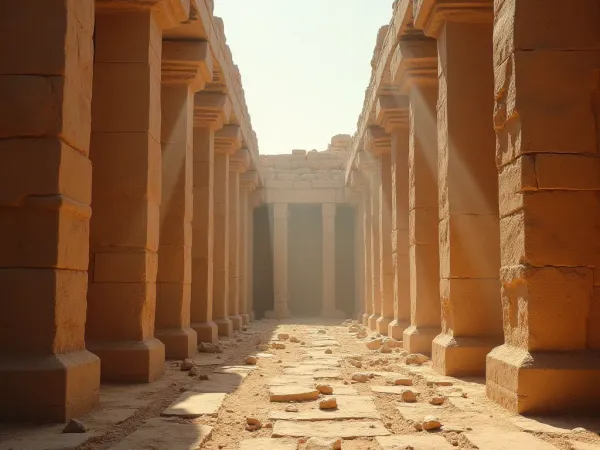
Göbeklitepe's Hidden Calendar Could Rewrite Humanity’s Perception of Time
The Startling Revelation Beneath the Stones of Göbeklitepe
When archaeologists first uncovered the enigmatic stone pillars of Göbeklitepe, few could have imagined that these ancient monoliths might hold the key to an astonishing cognitive leap in human history. Recent research suggests that etched onto these massive structures are not merely religious or social symbols but possibly the world’s earliest calendar system. This challenges the long-held belief that sophisticated timekeeping was a product of civilizations much later than the Pleistocene epoch. Instead, it appears that early humans might have possessed an intimate understanding of celestial cycles, seasons, and days, long before the advent of written language or traditional calendars. The carvings include V-shaped symbols whose analysis indicates they could represent individual days, pointing to a 365-day year that mirrors our own current solar calendar. If accurate, this implies that a form of astronomical observation—possibly motivated by climate shifts or survival needs—had developed at a time when society was thought to be primarily focused on hunting and gathering. Such a revelation invites us to reconsider the cognitive and cultural capabilities of these early people and how their perceptions of time might have influenced societal progress. In linking this discovery with the broader landscape of prehistoric advancements, it becomes clear that Göbeklitepe’s significance extends far beyond its role as a religious sanctuary, revealing a civilization with an extraordinary grasp of the cosmos. For more insights into the technological marvels of ancient cultures, explore the ancient technologies embedded in Göbeklitepe.

The possibility that Göbeklitepe hosts the earliest known calendar profoundly shifts the narrative of human intellectual evolution. Historically, scholars believed that such sophisticated timekeeping systems only emerged with the development of agriculture and settled societies. However, the new evidence suggests that even nomadic hunter-gatherers might have possessed an intricate understanding of astronomy. This insight questions the linear progression often assumed in human civilization’s history, implying that cognitive milestones—like tracking lunar cycles or noting solstice patterns—may have been achieved in tandem with, or even before, societal complexity. Moreover, integrating this perspective into the broader context of archaeological discoveries, such as the missing links between animal symbolism and cosmology, highlights a complex spiritual awareness long believed to be confined to later civilizations. With this in mind, Göbeklitepe could be considered a spiritual and technological anomaly, rewriting the history of how early humans interacted with the cosmos. Such revelations deepen our appreciation for prehistoric ingenuity that predates both writing and the wheel, potentially influencing our understanding of how modern science and spirituality are rooted in ancient observations. For further exploration of ancient spiritual expressions, browse Göbeklitepe's spiritual legacy.
Implications for Our Understanding of Early Human Intelligence