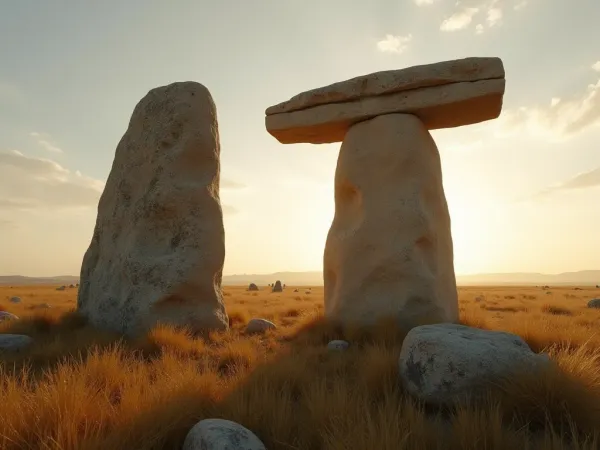
The Ancient Relief near Göbeklitepe That Challenges Our Understanding of Humanity's Spiritual Origins
Unveiling the Surprising Narrative from 11,000 Years Ago That Challenges Conventional History
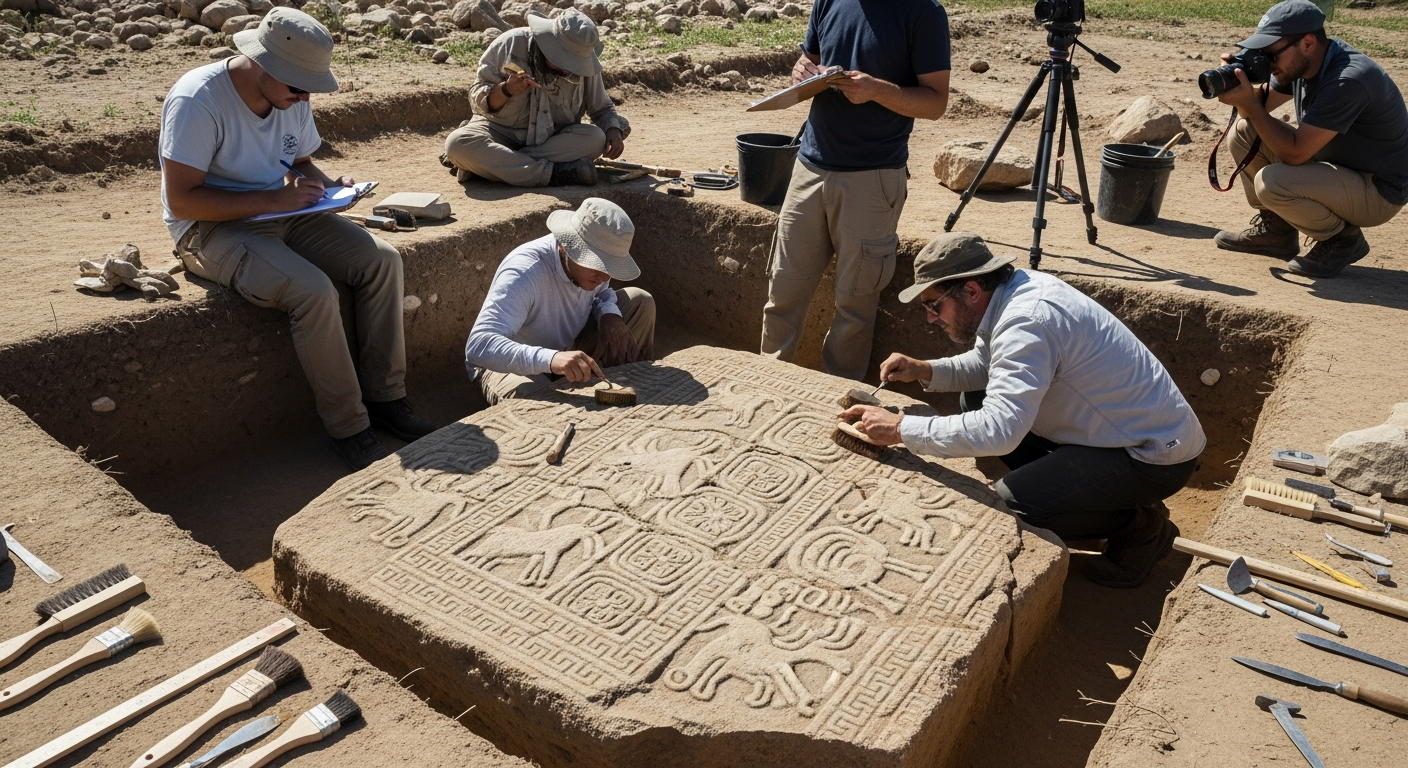
Imagine walking through a dusty archaeological site and stumbling upon a large, weathered wall relief depicting scenes of humans amid dangerous animals—an image so vivid that it blurs the line between myth and history. This is precisely what recent discoveries near Göbeklitepe have offered to both archaeologists and historians. The relief, dating back approximately 11,000 years, shows fragmented yet compelling evidence of early storytelling—an ancient narrative that predates what many assume to be the dawn of symbolic thought. Its extraordinary detail, emphasizing the ferocity of leopards and bulls, prompts an unsettling question: could these early depictions represent the very roots of human spiritual consciousness? Recognized as one of the earliest known narrative works, this relief defies the idea that prehistoric humans solely relied on abstract symbols and simple carvings. Instead, it suggests a sophisticated communication of stories, fears, and perhaps even religious beliefs deeply embedded in communal consciousness. The scene’s complexity hints at a worldview where humans actively interpreted their environment through storytelling—an act that might have laid the groundwork for the spiritual systems that would later permeate civilizations. This discovery invites us to reconsider the cognitive capacity of our ancestors, suggesting they possessed a nuanced understanding of their world and their place within it, challenging long-held assumptions that spiritual expression only emerged with more advanced societies.
Why This Relief Changes More Than We Think About Our Spiritual Past
Stepping beyond the immediate archaeological significance, this relief pushes us to question the timeline of human spirituality. For decades, mainstream narratives have placed the rise of complex religious beliefs and mythologies into the Neolithic or even later periods. Yet, findings like this suggest that the conceptual leap towards symbolic thought and spirituality happened much earlier than previously believed—possibly during the transitional phase when humans shifted from nomadic hunter-gatherers to settled communities. Such an early visual story, depicting confrontations with predators and symbolic European-style figures, implies that early humans were not merely surviving but actively engaging with their environment through storytelling that carried spiritual or ritualistic meaning. This raises another critical point: the survival of these scenes indicates that they held profound importance for the community—possibly as protective tales, mythic narratives, or spiritual lessons. This could fundamentally alter our understanding of how early humans thought, communicated, and formed the basis of belief systems that echo through today’s religions and mythologies. Moreover, recognizing that narrative art predates our world's organized religions suggests that the roots of spiritual consciousness might be deeply embedded in our earliest cognitive moments, an idea that has profound implications for exploring human evolution.

The Battle Between Skepticism and Revelation in Interpreting Ancient Art
While these discoveries raise exciting possibilities, they also ignite debate within the archaeological community. Skeptics argue that claims of narrative scenes from such an early period are speculative at best, cautioning against projecting modern interpretations onto primitive carvings. Yet, dismissing these findings risks overlooking vital clues about human cognition. The depiction of aggressive animals and human figures in scenes that resemble stories or rituals skews the simplistic view of early art as purely utilitarian or decorative. Instead, these reliefs could be the earliest form of cultural storytelling—perhaps even spiritual prehistory—that helped communities cope with fear, explain natural phenomena, or reinforce social cohesion. The controversy highlights a broader tension: do we interpret these relics as literal historical records, or do they symbolize a profound leap in human consciousness? Reconciling skepticism with emerging evidence demands a nuanced understanding of what symbols meant in a prehistoric context. Whether or not one fully accepts the narrative interpretation, the underlying implication is that human consciousness, spirituality, and complex storytelling might have started thriving far earlier than traditionally thought—an insight that could revolutionize how we view human history.