The photogrammetry revolution just stripped the caveman myth away forever
The Face of Ancestry
Ditching the Makeup Chair
We have spent decades watching television versions of our ancestors. They usually feature heavy prosthetics, exaggerated brows, and a deliberately primitive posture. The BBC recently flipped that script entirely. Their new five-part series relies on photogrammetry instead of silicone masks. This shift changes everything about how we visualize deep history.
I watched the early episodes and felt a strange disconnect. The faces on screen looked familiar. They moved like us. They breathed like us. The production team at Lux Aeterna deliberately avoided the monster aesthetic. They wanted biological continuity instead of theatrical distance. It forces you to stare into a mirror rather than look at a costume.
The logistics alone were staggering. Transporting heavy makeup artists to remote dig sites is a nightmare. It costs a fortune and slows down shooting schedules. The studio needed a scalable alternative that could survive harsh weather and tight deadlines. Digital avatars provided that solution. They also allowed for precise scientific adjustments that physical makeup simply cannot match.
Scanning the Past
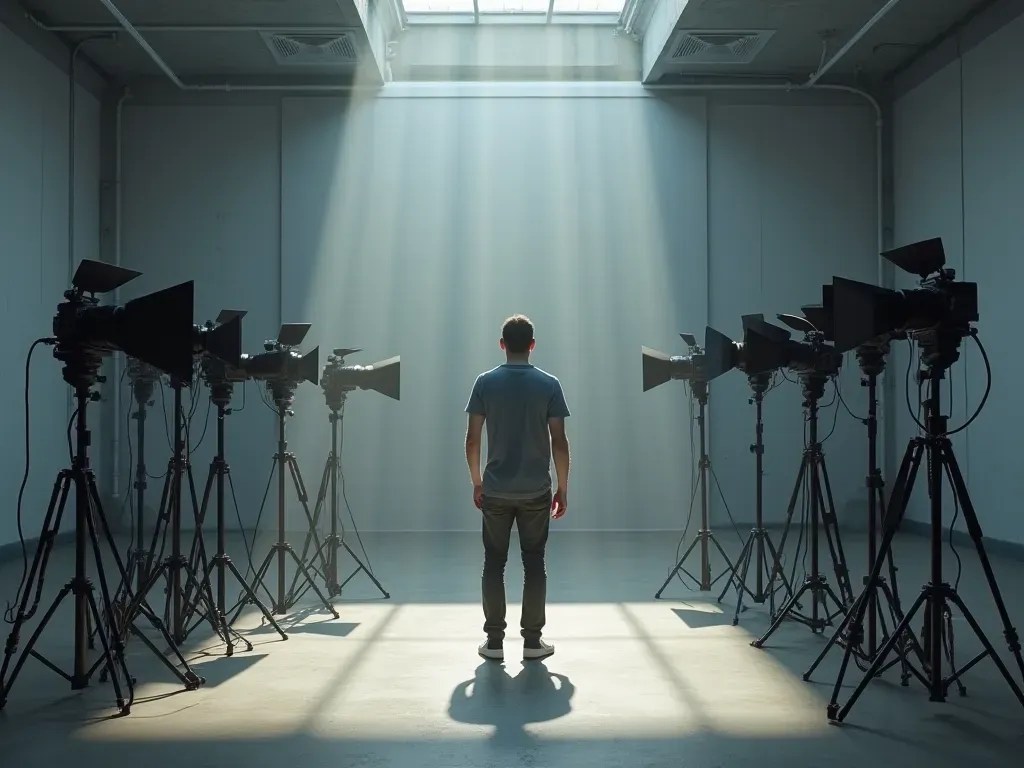
The pipeline started long before a camera rolled. Casting directors searched for performers whose bone structure matched archaeological records. These actors underwent full-body scans in controlled studio environments. The raw data captured every pore, joint, and muscle contour. It was just the beginning of a meticulous refinement process.
Lux Aeterna partnered with photogrammetry specialists to handle the heavy lifting. They fed the scans into modeling software and cross-referenced everything with fossil data. BBC scientists reviewed every ridge and contour. Bone lengths were adjusted. Facial proportions were shifted millimeter by millimeter. The goal was strict anthropological accuracy.
Millimeter Accuracy
This approach strips away Hollywood shortcuts. You cannot hide behind exaggerated features when every detail faces peer review. The compositing team had to defend their choices against actual paleontologists. It creates a feedback loop that keeps the visuals grounded. Speculation gets filtered out before it reaches the screen.
The result feels unsettlingly real. These digital humans occupy the same physical space as modern narrators. They share screen time without breaking the documentary illusion. The visual language stays consistent throughout five hour-long episodes. It proves that high-end effects can serve education instead of spectacle.
What Happens When We Look Like Them
The Cognitive Shift
Seeing our ancestors face us changes the narrative. We stop treating them as distant curiosities. We start recognizing shared intelligence. This matters heavily when discussing sites that predate traditional agricultural timelines. Places with complex stone architecture suddenly make more sense. The builders were not primitive. They were deliberate.
Archaeologists have long debated when complex social structures emerged. The visual realism in this series supports earlier dates. If these individuals possessed modern facial mobility and expressive range, their communication was likely sophisticated. Language probably developed alongside symbolic thinking. That timeline pushes further back than textbooks admit.
I keep thinking about massive ceremonial sites that appeared before farming. The stone circles and carved pillars require coordinated labor. They require planning. They require shared belief systems. Viewing the creators through accurate digital avatars makes the engineering feats less mysterious. The cognitive capacity was already there. The tools just evolved later.
Rewriting the Timeline
Traditional narratives place civilization milestones in a rigid sequence. Farming arrives first. Cities follow. Writing comes last. This series challenges that linear progression. The maps and timelines show overlapping migrations and parallel developments. Human groups adapted differently to local environments. There was no single path to complexity.
The visualizations track shifting coastlines and changing climates with precision. Sea levels rose and fell across millennia. Land bridges appeared and vanished. These environmental shifts forced population movements that we rarely consider. The documentary treats geography as an active character. It shapes survival strategies and cultural exchange.
You can trace these routes on screen without losing clarity. The designers avoided cluttered graphics. They used clean overlays and steady camera movements. Complex data becomes digestible. That accessibility matters when explaining deep time to general audiences. Understanding requires visual patience, not flashy distractions.
Beyond the Screen
Maps That Move
The animated sequences do heavy lifting for the narrative. They show population dispersal across continents without relying on voiceover exposition. Viewers watch groups split, adapt, and eventually disappear. The extinction of rival hominin species plays out quietly. It is scientifically respectful and visually compelling.
I appreciate how the team handled sensitive historical data. They did not dramatize conflicts or invent tribal rivalries. The movements reflect resource availability and climate stability. That restraint keeps the documentary grounded. It avoids modern political projections while maintaining dramatic tension through pacing alone.
The compositing director noted the difficulty of balancing accuracy with engagement. You cannot simplify too much or you lose scientific credibility. You cannot overcomplicate or you lose the audience. The solution was iterative testing. They adjusted color palettes and transition speeds until the flow felt natural.
A New Standard for Storytelling
This production method sets a benchmark for future historical series. Other studios will likely adopt similar scanning workflows. The cost barrier drops when you remove physical makeup departments. Digital assets can be reused across multiple projects. That efficiency encourages broader historical storytelling.
I expect archaeological documentaries to shift toward this model. Viewers are becoming more skeptical of theatrical reconstructions. They demand evidence-based visuals. The photogrammetry approach satisfies that demand. It also opens doors for interactive educational platforms. Museums could project these avatars directly into exhibition halls.
The collaboration between scientists and artists proves vital here. Neither group holds all the answers. Researchers provide the skeletal framework. Creatives build the flesh and movement. The dialogue between disciplines prevents both dry lecturing and reckless speculation. That balance is hard to maintain but absolutely necessary.
The whole point was to bring our ancestors to life in a way that was visually compelling, but also respectful of the science. We were creating understanding, not just shots.
Connecting the Dots
Looking at these accurate reconstructions changes how we read material culture. Artifacts stop feeling like isolated curiosities. They become extensions of recognizable human behavior. If you want to understand how early communities organized themselves, examining why traditional timelines fall short becomes essential. The evidence points to earlier complexity.
The shift away from prosthetics removes a psychological barrier. We no longer view ancient builders as fundamentally different creatures. We see ourselves reflected in their labor. That recognition matters when discussing monumental construction projects. The engineering knowledge was already present. The execution just required different social coordination.
I find this approach quietly revolutionary. It does not announce itself with loud claims. It simply presents better data. The visuals speak through precision. The pacing allows viewers to absorb complex transitions. That restraint builds trust between the filmmakers and the audience. Trust drives long term engagement.
The Ripple Effect
Other productions will inevitably follow this template. The technical pipeline is now proven. Studios can replicate the scanning and modeling workflow without reinventing the wheel. That accessibility expands the range of historical subjects we can cover. Niche topics suddenly become financially viable for television networks.
You will likely see more series focusing on specific archaeological periods. The photogrammetry method handles diverse environments efficiently. Desert sites, coastal settlements, and forest clearings all benefit from digital integration. Physical location shooting becomes a supplement rather than a requirement. That flexibility changes funding models.
The audience response has been overwhelmingly positive. Viewers appreciate the commitment to factual representation. Social media discussions focus on scientific details rather than costume critiques. That shift in conversation indicates growing media literacy. People want substance over spectacle. The industry is finally listening.
Final Thoughts
This series proves that technology should serve history, not dominate it. The avatars disappear into the narrative. They support the storytelling without drawing attention to themselves. That discipline is rare in modern visual effects work. It requires patience and rigorous oversight. The end product rewards both qualities.
I believe we are entering a new era of educational broadcasting. The gap between academic research and public consumption continues to narrow. Accurate visuals bridge that divide effectively. They make complex anthropology accessible without dumbing it down. That accessibility builds a more informed global audience.
The next time you watch a historical documentary, pay attention to the faces on screen. Notice how they move. Notice how they interact with their environment. The details matter. They shape our understanding of who we are. We are not separate from our past. We are its direct continuation.
If you want to explore how earlier settlements actually functioned, reading the evidence behind ancient construction methods provides valuable context. The same principles of coordinated labor and shared belief apply across continents and millennia. The human story is far more unified than we assume.
The photogrammetry revolution is just beginning. Future projects will likely integrate motion capture and real-time rendering. Those advancements will deepen immersion without sacrificing accuracy. We will keep refining the models. We will keep testing the science. The conversation about our origins will only get richer.
I expect museums to adopt these digital assets for interactive exhibits. Visitors will stand beside reconstructed ancestors and compare proportions directly. That physical proximity creates emotional resonance. It turns abstract dates into lived experiences. Education becomes memorable when it engages multiple senses.
The documentary format has always struggled with deep time. Five hours cannot cover hundreds of thousands of years. Compression requires careful selection. The filmmakers chose clarity over exhaustiveness. That decision respects the viewer intelligence. It leaves room for personal curiosity to drive further research.
We should embrace this visual honesty. It strips away decades of theatrical baggage. It returns agency to the archaeological record. The bones speak. The scans listen. The result is a portrait of humanity that feels earned rather than manufactured. That authenticity is worth protecting.
For those tracking how cultural narratives evolve, examining the debate surrounding early temple sites reveals similar patterns of reinterpretation. New data constantly forces old frameworks to adapt. That adaptability is the hallmark of serious historical inquiry.
The screen will keep changing. The technology will keep improving. The underlying question remains the same. Who were they, and how does that reflect us? The answers get clearer with every scan. The distance between past and present shrinks. We are finally looking in the right direction.