The ancient stones at Göbeklitepe hide a secret that completely flips how we measure human progress
The Foundation That Defies Every History Book
We have spent centuries assuming that agriculture birthed civilization. Farmers needed to settle down, store surplus crops, and eventually build permanent structures. That tidy narrative feels logical until you stand in front of a twelve thousand year old stone circle carved by people who never planted a single seed. The ground beneath those massive limestone pillars holds a completely different story.
I keep seeing modern documentaries treat this site like a curious anomaly. Scholars wave their hands and suggest hunter gatherers just got lucky with a few extra tools. That explanation falls apart the moment you examine the sheer scale of coordinated labor required to quarry, transport, and erect multi ton T shaped monoliths. Someone had to organize hundreds of people without written contracts or wage systems.
The real shock lies in the chronological sequence buried in the stratigraphy. Enclosure A sits at the bottom, dating back to roughly nine thousand five hundred BCE. By that time, domesticated wheat and barley had not yet taken root across the Anatolian plateau. People were gathering wild grains and hunting aurochs, yet they somehow mobilized enough communal energy to carve intricate animal reliefs into solid rock. Survival clearly took a backseat to something else.
Why Ritual Came Before the Harvest
Look at the animal carvings etched into the pillar surfaces. Foxes, cranes, boars, and vultures appear in highly stylized forms that demand specialized knowledge of local fauna. These were not random doodles made by bored foragers. They represent a shared symbolic language that unified disparate groups across vast distances. We keep overlooking how belief systems actually function as social glue.
Communal feasting likely drove the initial construction effort. Archaeologists have found massive quantities of animal bones and grinding stones near the earliest enclosures. People traveled specifically to gather, process food, and participate in shared ceremonies. The temple itself probably attracted the crowd, not the other way around. This flips the standard economic model on its head completely.
I was struck by how easily we dismiss non material motivations in early human development. We assume calories dictate every historical shift. Yet the builders of this sanctuary prioritized spiritual expression over immediate caloric efficiency. They invested months of labor into monuments that produced zero agricultural yield. That choice reveals a profound cultural shift happening long before plows appeared.
The Missing Piece In Our Timeline
Standard textbooks place the Neolithic revolution firmly around eight thousand BCE. Göbeklitepe pushes that boundary back by nearly two millennia. The gap between wild food gathering and settled farming was not a sudden jump but a long transitional phase dominated by ritual centers. People learned to cooperate on massive projects before they ever domesticated a single crop variety.
This chronological reversal changes how we interpret every subsequent archaeological layer. If monumental architecture precedes surplus storage, then social hierarchy likely emerged from religious authority rather than economic control. Chiefs probably gained influence by mediating between humans and unseen forces. Wealth accumulation came later, not earlier. That distinction matters more than most researchers admit.
We need to stop treating early monuments as primitive attempts at later technologies. These builders possessed sophisticated engineering intuition and deep geological awareness. They understood load distribution and stone durability without formal mathematics. If you want to understand why we were wrong about civilization starting with farms, this site provides the definitive counterargument. The sequence simply does not match our old assumptions.
What The Stones Actually Tell Us About Early Society
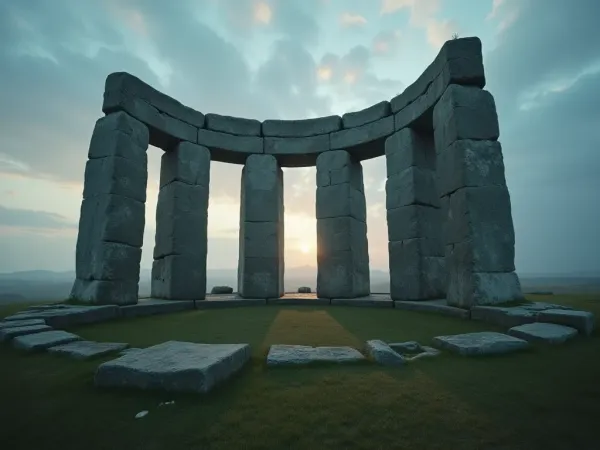
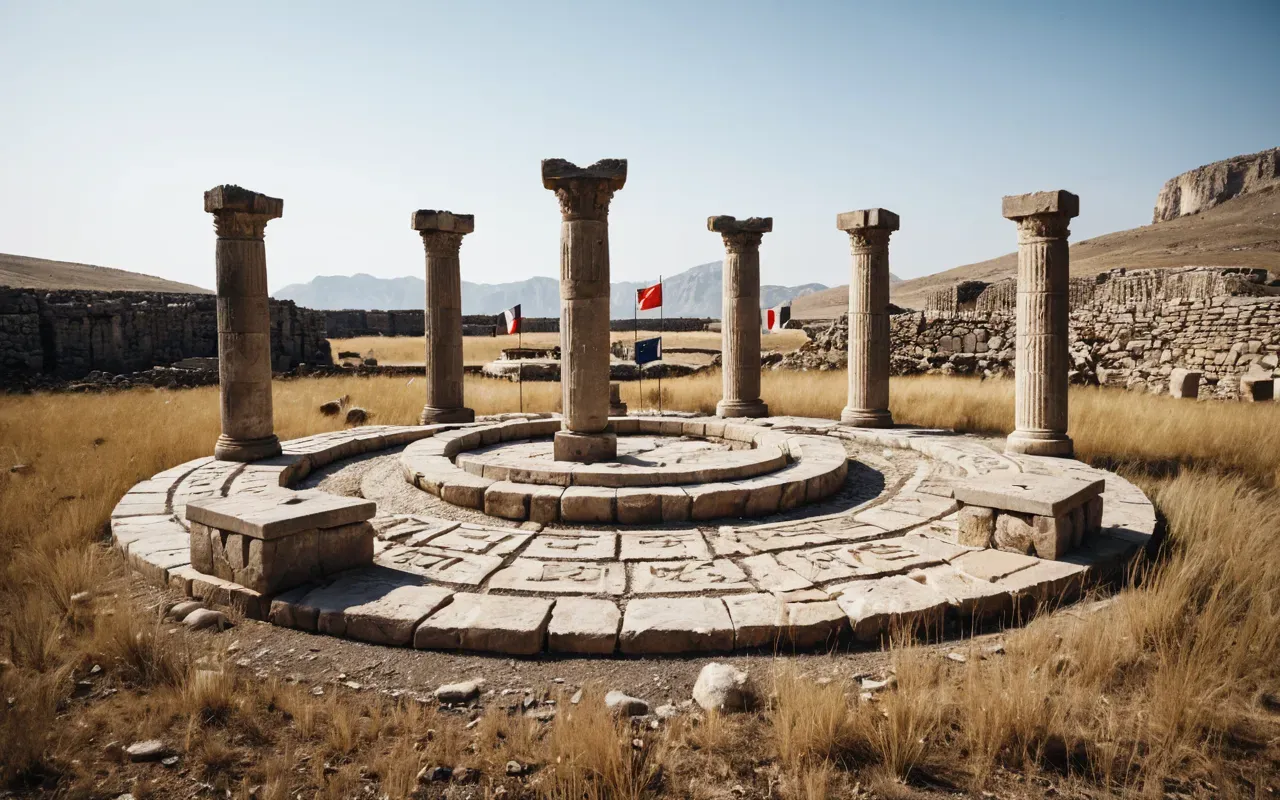
The layout of each enclosure follows a deliberate concentric pattern. Central twin pillars dominate the interior space, flanked by smaller supporting columns arranged in precise arcs. This architectural consistency across multiple construction phases suggests a shared architectural tradition passed down through generations. Knowledge transmission happened orally or through direct apprenticeship.
Notice how the pillars feature carved arms resting on waists or bellies. Some scholars interpret these as stylized human figures, while others see abstract representations of deities. Either way, the anthropomorphic details indicate a culture deeply invested in personifying natural forces. We rarely acknowledge how profoundly that mindset shaped subsequent mythologies across the entire Near East.
Builders Without Blueprints
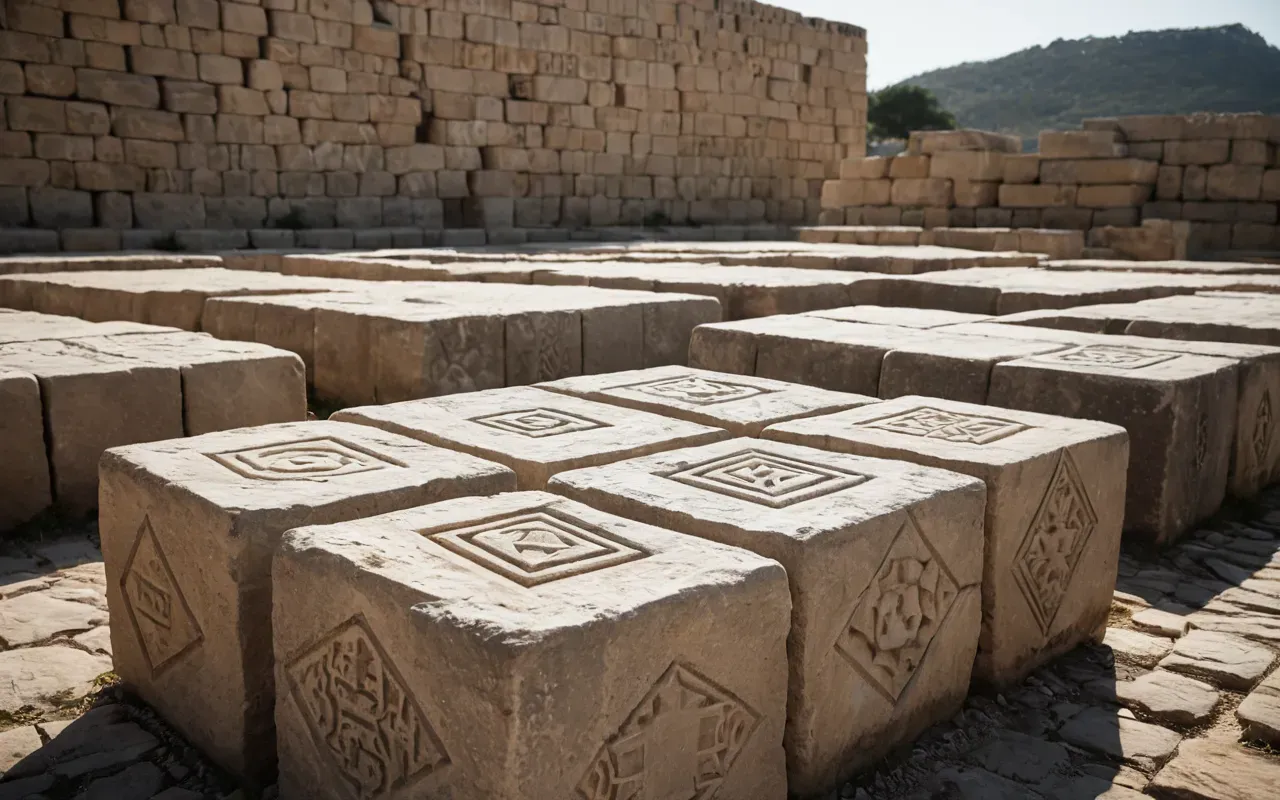
Quarrying techniques at the site reveal remarkable efficiency. Workers exploited natural fractures in the bedrock and used wooden wedges to split massive blocks. They then dragged these weights across short distances using sledges and leverage systems. No metal tools appear in the earliest layers. Copper and bronze arrived centuries later, proving that stone on stone friction was entirely sufficient.
The absence of domestic waste near the primary enclosures tells another crucial story. People likely camped on the surrounding slopes rather than living permanently inside the ritual zones. This separation between sacred and secular spaces mirrors practices found in much later religious complexes. The boundary was intentional and strictly maintained by local communities.
I find it frustrating when popular media reduces these achievements to mystical speculation. The craftsmanship is entirely explainable through accumulated practical knowledge and sustained group effort. We underestimate how quickly human innovation accelerates when shared purpose aligns with available resources. The builders knew exactly what they were doing.
How This Discovery Rewrites Modern Archaeology
Field teams now prioritize dating organic residues found in soil deposits rather than relying solely on ceramic typology. Radiocarbon samples extracted from ancient hearths provide precise chronological anchors. This methodological shift has already forced revisions across multiple regional timelines. We are slowly abandoning the rigid stage based progression models that dominated twentieth century research.
Excavation protocols have also evolved to protect fragile upper layers. Heavy machinery stays far away from the delicate plaster floors and embedded artifacts. Researchers now use fine brushes and dental picks to uncover micro remains. This careful approach preserves context and prevents irreversible damage to irreplaceable historical layers.
The broader academic community is finally acknowledging that complexity does not require urbanization. Dense population centers emerged much later in the Fertile Crescent. Meanwhile, scattered ritual nodes already facilitated long distance trade networks and cultural exchange. Information traveled faster than grain. That reality reshapes our entire map of prehistoric connectivity.
The Shift From Survival To Symbol
Human cognition underwent a profound reorganization during this period. Abstract thinking expanded beyond immediate environmental threats. People began tracking celestial cycles, recording seasonal patterns, and embedding those observations into permanent stone structures. The mind started projecting meaning onto the landscape itself. That cognitive leap matters more than any technological invention.
We still struggle to measure non material progress in ancient contexts. Economies leave clear traces like storage jars and trade weights. Belief systems leave far subtler evidence. Yet the sheer volume of ritual architecture proves that symbolic investment rivaled material accumulation. Society valued meaning just as heavily as calories.
This perspective aligns perfectly with recent findings at neighboring sites. Karahan Tepe and Nevalı Çori show similar chronological patterns and architectural features. The region functioned as a dense network of spiritual centers rather than isolated villages. If you are curious about whether Karahan Tepe predates this famous temple, the current stratigraphic data strongly supports that possibility.
Why Your Textbook Is Already Outdated
Classroom curricula rarely update fast enough to reflect major excavation breakthroughs. Students still memorize linear progression charts that place hunting before farming before cities. Those models ignore the messy reality of overlapping cultural developments. Ritual infrastructure clearly operated alongside mobile foraging groups for centuries.
Educators need to emphasize contingency over inevitability. Human development followed multiple branching paths across different environments. Some regions skipped monumental construction entirely. Others built massive enclosures without ever developing pottery. We must stop treating Near Eastern patterns as universal templates for global history.
I regularly encounter readers who assume ancient builders possessed lost technologies or outside assistance. That speculation distracts from the actual evidence. Local communities generated this innovation through sustained cultural evolution. Recognizing their agency restores dignity to early human ingenuity. We owe them far more respect than pseudoarchaeological myths provide.
The Real Catalyst For Complex Human Life
Shared narrative likely served as the original binding force for large scale cooperation. Stories about origin, destiny, and cosmic order gave strangers reason to trust each other. Those trust networks enabled resource pooling, risk sharing, and coordinated construction projects. Economics followed social cohesion, not the reverse.
The stones themselves act as physical anchors for collective memory. Each generation added new layers, modified existing layouts, and eventually buried the entire complex intentionally. That deliberate burial suggests a conscious transition rather than sudden abandonment. Communities chose to close the chapter and move forward.
We stand on the shoulders of those early visionaries every single day. Modern institutions still rely on shared beliefs to maintain stability and coordinate action. The underlying mechanism has not changed. Only the scale and material expression have shifted. Understanding that continuity helps us appreciate why these ancient foundations still matter today.
History rarely follows straight lines. It spirals, adapts, and occasionally loops back to older truths. The builders of this remarkable sanctuary knew exactly what they were prioritizing. They invested in meaning first. Everything else followed naturally from that foundational choice.