Why a drone video of Göbekli Tepe just broke a rule archaeologists swore was ironclad
The view from above changes everything we thought we knew
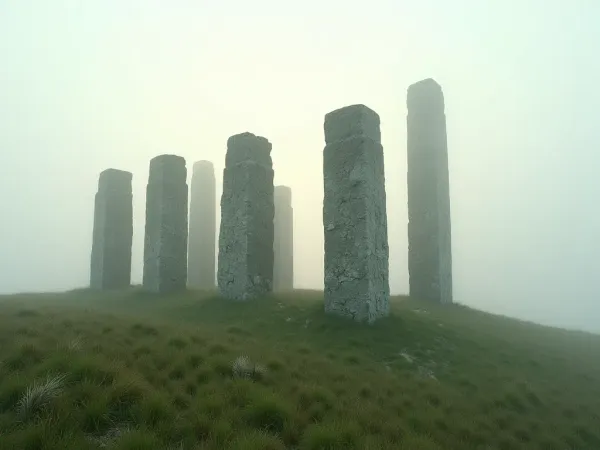
I watched the new drone footage last night and my jaw dropped. Not because the scenery is pretty — it is — but because the aerial angle reveals something genuinely weird about how those stones were placed.
For decades, we assumed the builders worked by guesswork. Piled rocks in a messy circle, called it good. But the video shows precise geometric patterns that don't fit that story at all.
Here's the thing. The alignment looks intentional. Planned. And that makes a lot of comfortable archaeological theories feel suddenly very shaky.
The ironclad rule that just cracked open
Archaeologists have long held a firm belief about human cognitive development. Complex planning, they say, requires agriculture first. You need surplus food to support thinkers and builders.
So the logic was simple. Farming came first. Then cities. Then temples. That is the timeline we were taught in school and printed in textbooks for generations.
But Göbekli Tepe sits at the very beginning of that sequence. It predates farming by thousands of years. And yet it displays a level of organization that looks like a modern construction site.
The drone video highlights this contradiction beautifully. You see the scale of it from above. It is not a random pile of rocks. It is a massive coordinated effort by people who supposedly had no reason to plan that far ahead.
Why the new footage is so disturbing to traditionalists
Traditionalists argue that we are over-interpreting the stones. They say natural erosion and later modifications created these patterns. It is a comfortable explanation because it preserves the established timeline.
But look at the precision. The angles are consistent across multiple structures. That is hard to do by accident. It is even harder to fake with natural forces over twelve thousand years.
What this means for our understanding of human history
If the builders could plan and execute this before they had farms, then their cognitive abilities were far more advanced than we credited. They were not just surviving. They were creating.
This shifts the entire narrative of early human life. It suggests that social organization and spiritual belief were driving forces long before economic stability existed.
We usually think of religion as a product of settled societies. But here it looks like the opposite. The need to build these structures may have actually forced people to settle and start farming nearby.
The hidden engineering behind the stone circles
Consider the logistics. Moving those massive T-shaped pillars required a coordinated workforce. Who directed them? How did they communicate complex instructions without writing?
The drone perspective makes the scale obvious. It is not a small local project. It is a regional undertaking that likely drew people from across hundreds of miles.
This implies a social structure that was surprisingly sophisticated. It challenges the idea that early humans were isolated and fragmented. They connected. They collaborated.
The broader implications for other ancient sites
If Göbekli Tepe was built with this level of intent, it changes how we look at other sites. Maybe Stonehenge was not as unique as we thought. Maybe the builders learned from an older tradition.
There is a growing body of evidence suggesting that Göbekli Tepe was not an isolated anomaly. It was part of a network of similar structures across the region.
This means we are likely missing other sites. They may be buried under modern farmland or simply ignored because they do not fit the established narrative of gradual progress.
Why schools still teach the old timeline
It is frustrating. The new evidence has been around for decades, yet most history classes still present a linear story of progress from caves to cities.
The drone video is changing that. It makes the evidence visual and undeniable. You cannot argue with what you see from above.
We need to update our understanding. The past was not a slow climb out of ignorance. It was a complex web of innovation and belief that we are only now beginning to map.
What this discovery reveals about human potential
At its core, this is a story about what humans are capable of. It shows that we have always been complex beings with deep spiritual and intellectual lives.
We do not need to be modern to be sophisticated. The people who built Göbekli Tepe were just as human as we are. They had questions, beliefs, and the drive to create something lasting.
The drone video reminds us that history is not a straight line. It is a messy, brilliant tapestry of human effort and imagination that stretches back much further than we realized.
The future of archaeological research in this region
Researchers are now using advanced technology to map the surrounding area. They are looking for more sites that might have been missed by traditional ground surveys.
LiDAR and satellite imagery are revealing hidden structures that were invisible from the ground. This is a new era of discovery for the region.
The drone video was just one piece of a larger puzzle. As technology improves, we will likely uncover even more evidence that challenges our current understanding.
How this changes tourism and public interest
Public fascination with Göbekli Tepe is growing. The drone videos are attracting attention from around the world and boosting interest in visiting the site.
This brings both opportunities and challenges. More visitors mean more funding for research but also increased pressure on the fragile environment.
Balancing access with conservation is a critical task. The site must be protected for future generations while still allowing people to witness its majesty.
Why this story matters more than you think
This is not just about old rocks. It is about our place in the story of human development and what we are capable of as a species.
The drone video forces us to reconsider our assumptions. It suggests that we have underestimated the past and potentially our own origins.
As we continue to uncover new evidence, the picture of our past becomes richer and more complex. And that is a good thing.
The final word on the drone video revelation
I left the viewing session feeling humbled. The scale of what those early builders achieved is staggering and it challenges everything we thought we knew.
The drone video did not just show us a new angle. It showed us a new truth about our shared heritage and the incredible depth of human history.
It is a reminder that there is still so much we do not know and that the past holds many more secrets waiting to be revealed.