Why a new jade find in China is forcing historians to rewrite what we know about early ritual life
The Jade That Changed the Argument
Hold a jade artifact from 5,000 years ago in your hand. It fits in your palm, yet it's heavy with meaning. In the Jiaolai River basin of Inner Mongolia, archaeologists have uncovered over 100 such pieces. And trust me, these weren't just ornaments.
They came from the Yuanbaoshan site. Excavations in 2024 confirmed it was a ceremonial complex, complete with tombs and sacrificial remains. The find challenges the timeline many textbooks still cling to, suggesting organized ritual life emerged far earlier than we assumed.
What struck me was the sheer scale. More than 100 jade artifacts, found alongside human remains and pits. This isn't a lucky strike. It's a pattern, a deliberate cultural fingerprint.

What the Symposium Actually Revealed
The eighth edition of an academic symposium on frontier archaeology drew over 80 experts to Hulunbuir. The focus? The northern frontier and its overlooked role in ancient governance.
Shi Jinsong from the Institute of Archaeology at CASS put it plainly: this region holds mysteries written records can't answer. Historical texts are scarce here, so archaeology becomes the primary source. It's a different kind of detective work.
The event featured 45 academic presentations, covering everything from frontier governance to East-West cultural exchanges. Honestly, it wasn't just a lecture series. It was a collective effort to stitch together fragments of a forgotten past.
The Role of New Technologies
One subforum zeroed in on new technologies applied to frontier archaeology. These tools let researchers analyze soil composition and artifact distribution with startling precision. Things we couldn't even measure a generation ago.
And this is where the work gets exciting. Technology reveals patterns that were invisible just ten years back. It turns educated guesswork into data-driven insight. That shift matters.
Why the Hongshan Culture Matters More Than You Think
The Hongshan culture dates back roughly 4,800 to 6,500 years. Researchers have identified over 1,400 sites across five major areas of Inner Mongolia. The numbers alone are staggering.
Hu Chunbai from the Inner Mongolia Institute noted that the Jiaolai River basin was likely a central hub of this culture. If he's right, it radically shifts our understanding of where key developments actually happened.
To be fair, this isn't just about one site. It's about a network of communities that shared beliefs and practices over thousands of years. A web of connection, not isolated dots.
The Gangga Cemetery and the Origins of Mongolian People
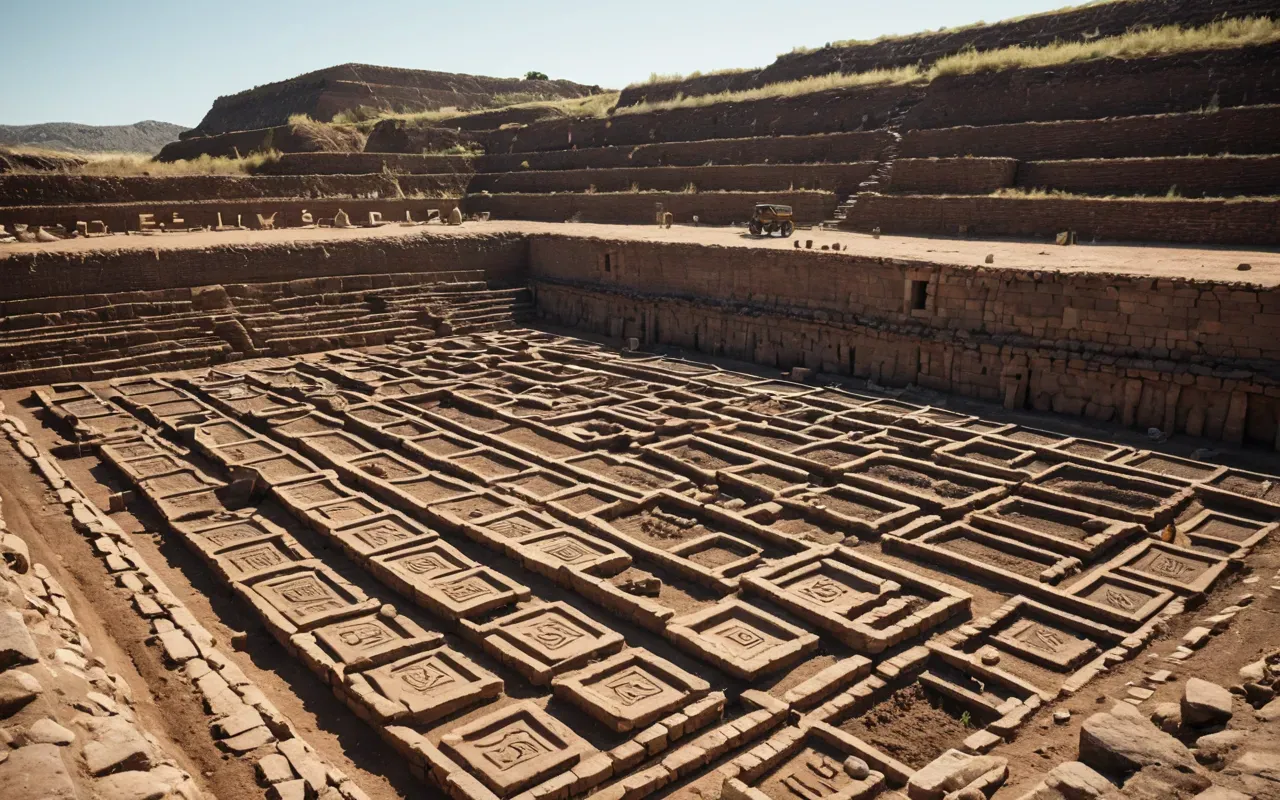
At the Gangga cemetery in Hulunbuir, evidence points to a link with the Shiwei people. They thrived during the Tang Dynasty and continued into later periods. The threads run deep.
This discovery offers new clues about the origins of the Mongolian people. It's a small piece, sure. But it fits into a much larger puzzle we're only beginning to assemble.
Challenging the Periphery Narrative
Wang Jianxin from Northwest University makes a bold argument: these borderlands were not peripheral. Far from it. They were integral to the development of a unified yet pluralistic society.
That's a bold claim, and I think it's right. The edges of civilization were often where innovation and exchange happened most intensely. The margins were the engine room.
What This Means for Our Understanding of Human History
If complex rituals existed in the Neolithic period, it changes how we view early human societies. These people weren't just surviving. They were building meaning, constructing worlds.
This echoes findings from other parts of the world. Sites like Göbeklitepe show that monumental construction and ritual weren't exclusive to later empires. They were human impulses from the start.
The implication is profound. For decades, we may have underestimated the cognitive and social capabilities of prehistoric humans. Badly.
The Bigger Picture and What Comes Next
Wang Jianxin noted that answering fundamental questions about China's formation will require sustained commitment across generations. This is a long-term project, not a quick win.
But the momentum is building. With new technologies and a growing body of evidence, we're closer to a nuanced understanding than ever before. The pieces are falling into place.
This isn't just an academic exercise. It reshapes how we see ourselves and our place in the story of human development. It's personal, in a way.
The next few decades will likely bring even more surprises. The past is still speaking. We just have to be willing to listen.