Gobeklitepe Tools That Prove Humans Were Engineers First
The Misunderstood Builders of the World's First Temples
You're probably reading this because you think history starts with the wheel. Or writing. Wrong. The real story begins with a hammer and a piece of flint in a steady hand.
For decades we've assumed farming made us smart — that agriculture forced our brains to grow, which gave us cities, which gave us technology. The evidence at Göbeklitepe says otherwise.
These people were engineers long before a single grain of wheat went into the ground. They calculated weight, balance, load distribution — with tools that look primitive and functioned with terrifying precision.
If you want to understand this shift in perspective, look at the tools they left behind. They're not just rocks. They're evidence of a mind that planned.
Why the Standard Timeline Fails at Göbeklitepe
The conventional story is simple. Humans were nomads. Then they farmed. Farming created surplus, surplus allowed specialization, specialization built cities.
Clean story. Feels logical. But it ignores the physical reality of what was built at Göbeklitepe.
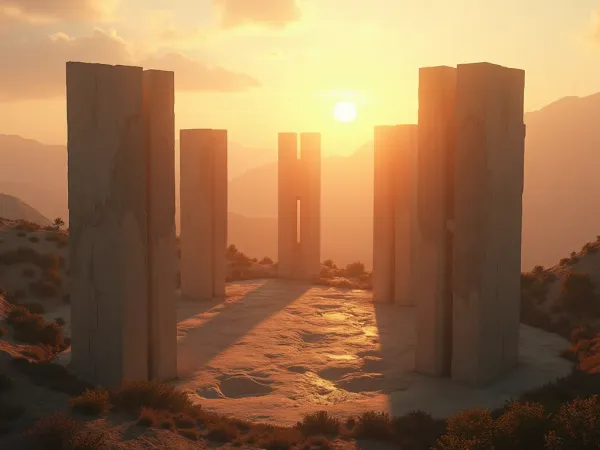
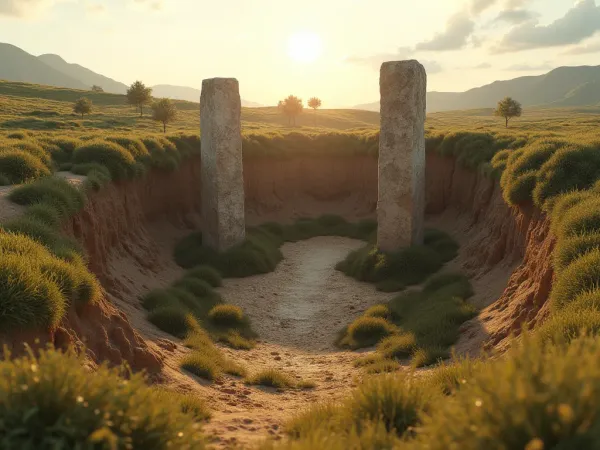
Look at the scale. T-shaped pillars weighing up to ten tons each. That's heavy — heavier than a large truck loaded with bricks.
Moving and placing those stones takes more than brute strength. It takes logistics. It takes knowing exactly where the center of gravity is.
A nomadic group hunting deer doesn't have that kind of mathematical intuition. You need a structured society to pull off an engineering feat like this.
And that's the contradiction. We found the complex structure before we found the simple farm. The engineering came first.
The Specific Tool That Changes Everything
I want to focus on one specific type of artifact. Popular media usually skips it. But it tells a louder story than the big pillars.
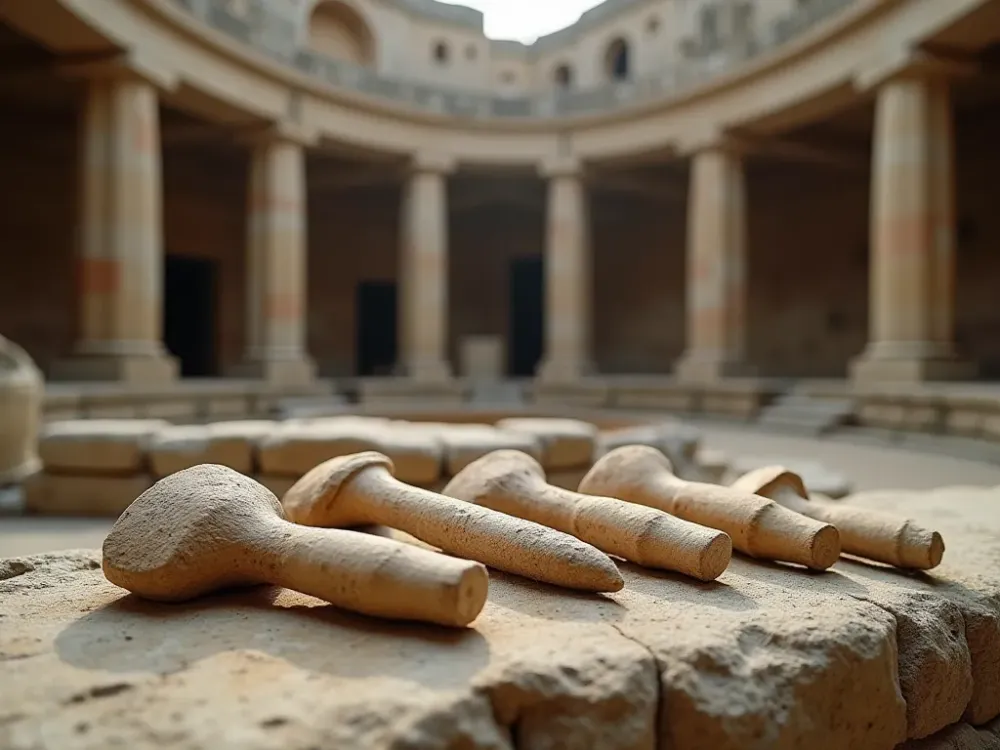
A grinding stone. Not just any rock — one with specific wear patterns on its edges. Those marks show repeated, controlled friction.
In a typical hunting camp you might find sharp points for spears. Here, the tools are designed for shaping and smoothing large surfaces.
Which implies a workshop. A place where materials were prepared for construction. This is the birth of industrial thinking.
The Physics Behind The T-Shaped Pillars
Now, the pillars themselves. They're not just decorative faces carved in stone.
Structurally, they act as load-bearing elements. The T-shape isn't random. It distributes weight efficiently across the base.
Modern architects use similar principles in skyscrapers. These ancient builders understood that a wide base supports a heavy top.
With no metal tools to cut the stone, they had to use abrasion. They ground these massive shapes into existence with grit and patience.
That's a feat of endurance. Thousands of hours of labor. Why would a group do that? Because they had the capacity to organize it.
Evidence of Precision Without Metal
Here's the thing that surprises me. The joints are tight. Very little gap between the fitted stones.
In masonry, a tight joint means stability. It keeps the structure from shifting under wind or seismic activity.
Achieving that without chisels requires a deep understanding of material properties. They knew how the stone would break and where it was strongest.
This isn't trial and error. This is applied science. They had a theory of construction that worked.
What This Means for the Definition of Civilization
We usually define civilization by cities. But Göbeklitepe has no city layout.
No roads leading to a palace. Just the circular complex and the surrounding landscape.
So if it's not a city, what is it? An engineering project. A monumental feat of cooperation and technical skill.
Which suggests civilization isn't about where you live. It's about what you can build.
The ability to coordinate labor and execute complex plans is the true marker of a society's intelligence.
The Hidden Logic in Their Stone Tools
I've looked at photos of these tools many times. They look rough to a modern eye.
But that's because we're used to metal edges. We forget what it takes to shape rock with other rocks.
The wear patterns tell a story of consistency. The same angle, used repeatedly to grind the surface flat.
That implies a standard. A method that was taught and followed by multiple workers.
This is the essence of technology. Not just a tool — knowledge that can be shared and replicated.
Comparing These Tools to Later Inventions
Look at Bronze Age tools from Egypt or Mesopotamia and they're sharper. But not necessarily more precise in their application.
The Göbeklitepe builders achieved stability through mass and friction. No need to cut perfect edges if the fit was tight.
Different engineering philosophy. It prioritizes robustness over elegance.
And honestly? That's a smarter approach for a structure that needs to last ten thousand years.
Why We Are Still Debating This Interpretation
Some scholars still argue these were ritual sites only. That the engineering was secondary to belief.
I don't think we can separate the two. In many ancient cultures, the ability to build is a spiritual act.
To move ten tons of stone is to defy gravity. That feels like magic to anyone who tries it.
So maybe the engineering was the ritual. The act of building was the worship.
This changes how we view ancient civilizations. They weren't just primitive people making simple tools.
The Lesson for Modern Engineers and Historians
We often look down on prehistoric methods. We think we know better because we have computers.
But Göbeklitepe stands. It has survived earthquakes and centuries of neglect.
Our modern buildings often fail within decades. We use materials weaker than the stone they used.
Maybe we should learn from their simplicity. Maybe strength comes from understanding the material deeply.
That lesson applies to any field. Master the basics before you add complexity.
The Human Element in Ancient Construction
Behind every tool is a person. A worker with calluses and a plan.
No machines. Just bodies and minds working in sync.
That's the most impressive part. The technology was human scale.
Frequently Asked Questions