The South American Map Gap That Hides The Oldest Builders
The Map We All Trust Is Wrong
Grab a globe. Point to South America. Now point to the Middle East. Roughly , miles apart. But in most people's heads, the story of human history starts on that South American coast. It feels right. The Andes are dramatic. The Amazon is vast. The Inca are famous. They're the story we tell ourselves about where we came from.
I've got a problem with that map, though. It's missing a chapter. A big one. Actually, it's missing the whole first act. We talk about ancient civilizations in South America like they're the beginning. They're not. They're the middle. And the beginning is hiding in plain sight, buried under a hill in a place most travel guides ignore.
This isn't a theory. Not a conspiracy either. It's stone. It's bone. It's carbon dating that's been checked and re-checked for decades. The site is Göbeklitepe. , years old. That's , years before the first stone was laid in the Andes. It changes everything we think we know about who built what, and when.
Why The Andes Feel Like The Origin Point
Look, I get it. The Andes are spectacular. Machu Picchu is the poster child for ancient engineering. The Nazca Lines are mysterious. The Moche and Chavin cultures are sophisticated. They're the ones that make the documentaries. They get the movie soundtracks. And honestly? They're impressive.
But here's the thing. They came later. Much later. The Inca Empire didn't even exist until the th century. The Moche flourished around AD. The Chavin culture started around BC. All incredible. But all of it happens after a massive gap in time — a gap where, according to our current textbooks, humans were just... wandering around. Gathering berries. Hunting deer. Not building anything that would last.
That wandering period is what we call the Paleolithic. It's a dull, gray stretch in the history books. Not many paintings of it. Not many songs about it. It's the unglamorous part of the story. Which is exactly why it's so easy to skip. But if you skip it, you miss the moment humans first decided to build something permanent. And that moment did not happen in the Andes.
The Site That Broke The Rules
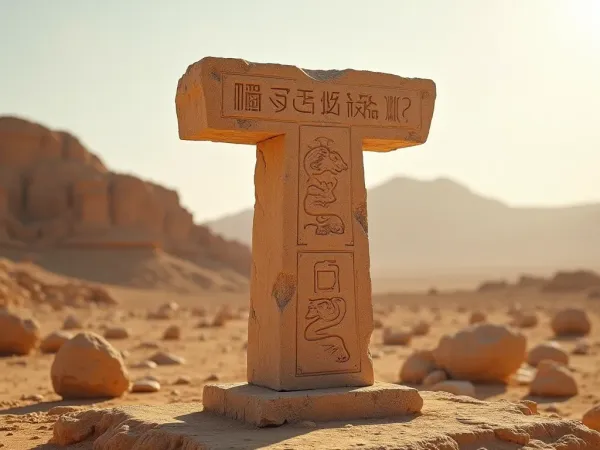
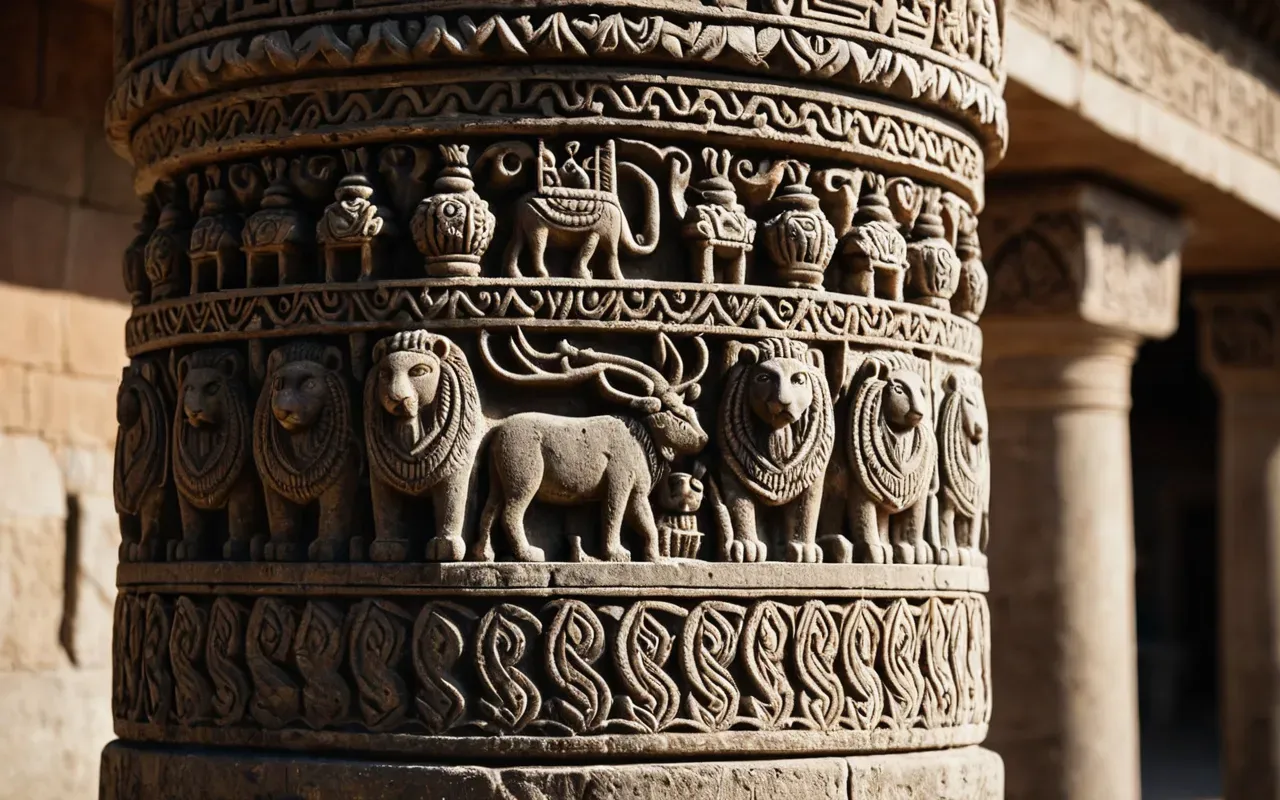
In , a German archaeologist named Klaus Schmidt arrived at a hill in southeastern Anatolia. He wasn't looking for a holy site. He was looking for a Neolithic village — a small, boring settlement of farmers. What he found instead made him drop his tools. T-shaped pillars. Each one weighed between and tons. Carved with animals. Vultures. Foxes. Boars. Scorpions. Arranged in a circle.
This was not a village. This was a temple. A massive, circular temple. And it was built by hunter-gatherers. Not farmers. Not kings. Not priests with armies. Just people who followed the seasons, hunted wild game, and had no writing, no metal tools, and no wheels. They did this , years ago. That's , years before the pyramids of Egypt. , years before the great walls of China.
The Weight of The Evidence
The numbers are staggering. The central pillars in the largest enclosures are . meters high. Taller than a two-story house. The builders had to move these stones from a quarry meters away. They had to dig deep pits to sink them into the ground. They had to cover them with earth to protect them. All of it with flint tools and bone levers. No metal. No draft animals. Just human hands and human brains.
I have stood in front of these pillars. I've tried to imagine what it was like to be there in BC. The air was different. The sky was clearer. The people who built this had a society complex enough to organize hundreds of workers. They had a shared belief system. They had a reason to build. And that reason was not agriculture. It was faith. It was ritual. It was something we're still trying to understand.
The Missing Link Between Continents
Now here's where it gets tricky. We're talking about South America. So why does a site in the Middle East matter so much to the South American story? The timeline. The timeline is the only thing that matters. If you want to understand ancient civilizations in South America, you have to understand what came before them. And that 'before' is not in South America. It's in the Middle East.
The standard narrative goes like this: agriculture started in the Middle East and then spread out. Farming led to cities, and cities led to civilization. Göbeklitepe breaks that. The temple was built before farming. The builders were nomads. They built the temple, and then, maybe, they started farming. Or maybe the temple inspired them to settle. Cause and effect, reversed. And that reversal ripples across the globe.
When we look at South America, we see the Chavin culture. We see the Moche. We see the Inca. But we rarely ask where the idea of building a permanent structure came from. The impulse to create a sacred space, to gather in a circle, to carve meaning into stone. That impulse did not start in the Andes. It started on a hill in Anatolia. And it spread. It evolved. It became the architecture we see in South America , years later.
What The Stones Tell Us About Us
I've been thinking about this. What does it mean that humans built a temple before they built a house? It means we're not just survival animals. We're meaning-making animals. We need to feel connected to something bigger than ourselves. We need to build. We need to leave a mark. And we do it even when we have nothing else. No food surplus. No political power. No technology. Just a belief.
This is the secret. This is what South American history books miss. The impulse to build is older than agriculture. Older than writing. Older than the wheel. It's the first thing we did. And it started in a place most people have never heard of. If you want to understand the ancient civilizations in South America, you have to start there. You have to start with the hill.
The Gap In Our Education
I was in a history class once. My teacher was talking about the Inca — their roads, their terraces, their quipu. Fascinating stuff. But when I asked him about the time before that, he just shrugged. Said it was a long time ago. Said we don't know much. And I believed him. Because that's what we're taught. The past is a blur. The present is sharp. But the past is not a blur. It's just missing from the map.
We need to fix this. Teach the full timeline — all of it. Students should know that the story of human civilization didn't start in the Andes. It started in a hill in Anatolia. And it spread. It evolved. It became the world we live in. Skip this, and we're not just missing a fact. We're missing the foundation. That's a big deal.

Why This Matters Now
We live in a world obsessed with the new. The latest phone. The newest car. The fastest app. Meanwhile we're forgetting the old — and that's a mistake. Because the old is the only thing that tells us who we are. The only thing that gives us a sense of continuity. Lose that, and we lose ourselves.
When I think about the people who built Göbeklitepe, I'm not just thinking about archaeology. I'm thinking about us. About what we're capable of. About what we'll do for a belief. And I'm thinking about the gap — the gap between what we know and what we're told. How do we close it? How do we bring the full story into the light? How do we show the world that the map is wrong, and that the truth is far more interesting?
Frequently Asked Questions
Why is the timeline of ancient civilizations often taught incorrectly?
The timeline is often taught incorrectly because it focuses on the most famous cultures, like the Inca, rather than the earliest ones. This creates a gap in the story. The earliest structures, like Göbeklitepe, are not always included in standard curricula. This leads to a misunderstanding of the origin of human civilization.
How does Göbeklitepe relate to South American history?
Göbeklitepe relates to South American history by providing a earlier timeline for human building and belief. It shows that the impulse to create sacred spaces existed long before the Andean cultures. This helps us understand the roots of the architectural and spiritual traditions seen in South America.
What is the most surprising fact about ancient builders?
The most surprising fact is that they built before they farmed. We assume that agriculture came first, but the evidence shows that large-scale construction happened while people were still hunter-gatherers. This challenges the idea that farming is the foundation of civilization.